50,000+ Events Insured
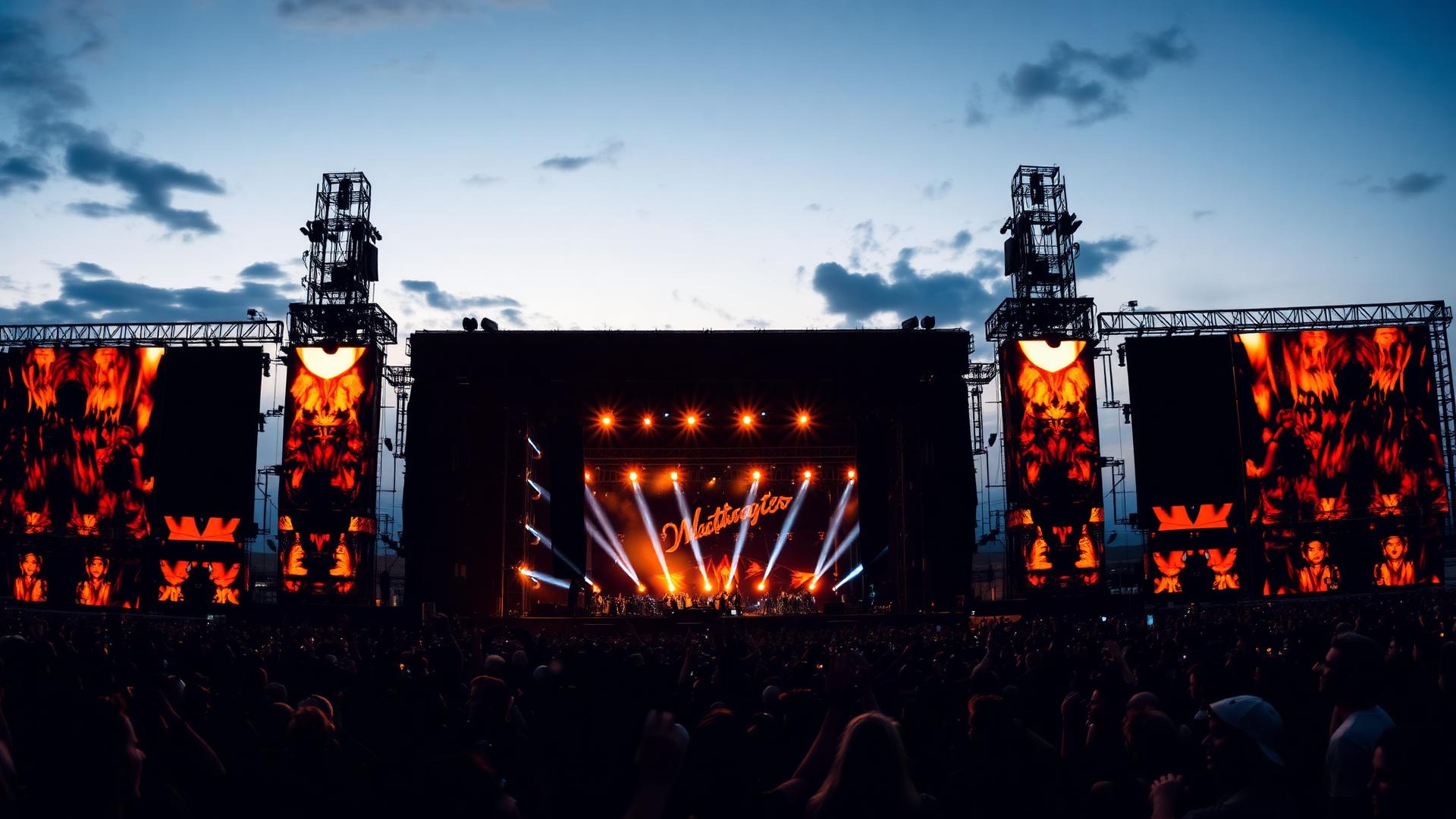
Aerial view of a lit main stage and truss rigging at a multi-day outdoor music festival at dusk with a packed crowd
EV / 34 · Multi-day outdoor music festivals

Music Festival Insurance

Thirty-two thousand attendees, three days, one main stage rated to a wind-load spec, and a weather radar that decides whether the headliner plays at all. This is underwritten off the rigging engineer's signature and the crowd plan, not the promoter's brochure.

  • Stage and rigging collapse tied to certified structural sign-off

  • Crowd crush and crowd-management staffing ratios

  • Written weather action plan for evacuation and structure securing

  • Artist non-appearance versus full event cancellation

Peak daily headcount

32,000attendees

Across a 3-day festival footprint

The underwriting problem

A music festival is not a big concert. It is a temporary city — camping, stages, beer gardens, food vendors, and tens of thousands of people moving across open ground — built and torn down in a matter of days.

Carriers do not price a festival off the promoter's brand or the lineup. They price it off three documents: the rigging engineer's structural certification for every stage and truss on site, the written crowd-management plan that sets staffing ratios and egress routes, and the weather action plan that says exactly who calls a suspension and how the field clears. A festival that cannot produce those three documents reads as an unmanaged catastrophe exposure regardless of how experienced the promoter is, and the account either gets declined or lands with conditions that make it uneconomical to bind on short notice. Beyond those three anchor documents, underwriters also weigh the site's own history — prior weather delays, any structural incident even if it never became a claim, and how the promoter's team responded when conditions actually turned. A festival that can show it suspended performances early, ahead of the wind action level rather than after a near-miss, reads as a materially better risk than one whose weather action plan exists only on paper and has never actually been exercised under real conditions.

Most common decline
No formal crowd-management or weather action plan on file
Fastest rate driver
Rigging engineer's certification for every temporary structure
Quietest exposure
Unpaid artist deposits that surface as a cancellation claim
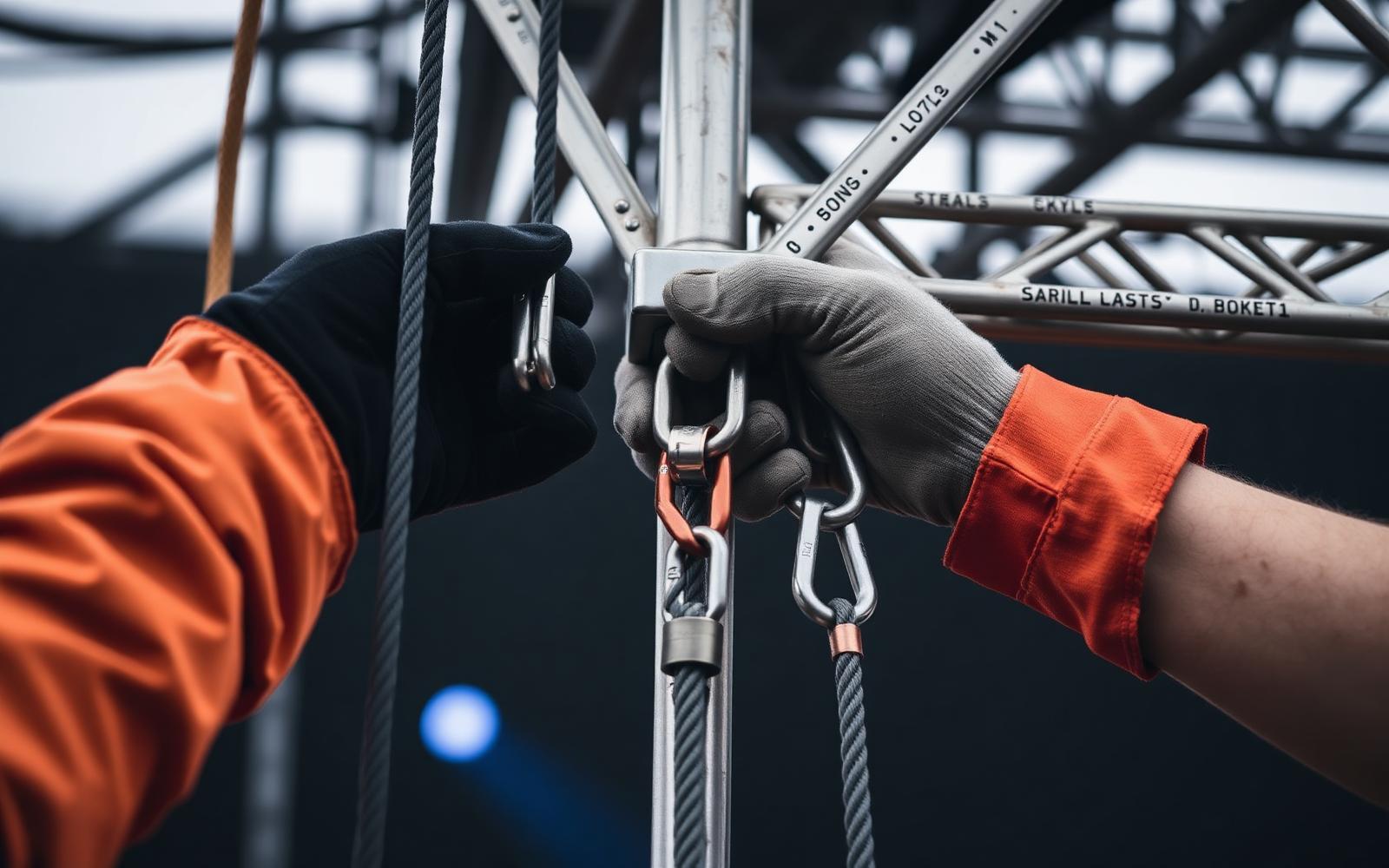
Rigging crew inspecting truss and safety cabling on a festival main stage before doors open
Music festivals · stage build and rigging
Field evidence

The stage is signed off before the gates open, not after

A wind-rated structural certification, a documented inspection, and a named rigging vendor are what separate an insurable main stage from a submission that gets tabled.

3
Days of live structural exposure on a typical multi-day bill
1
Rigging engineer signature required per stage before load-in clears
24–48 hrs
Lead time most weather action plans require for a suspension call
Direct answers

What promoters and producers actually ask us

Q01

What is music festival insurance?

A package of liability and cancellation coverages built specifically for multi-day outdoor music festivals, addressing stage and rigging collapse, crowd injury, weather evacuation, host liquor exposure at beer gardens, and the financial loss from an artist or full event cancellation.

Q02

What does the underwriting submission need to show?

The site plan and stage layout, a rigging engineer's certification, the crowd-management and weather action plans, expected daily attendance, the liquor service model, camping and vendor footprint, and prior years' loss history if the festival has run before.

Q03

What gets a submission declined?

The most common decline reasons are a missing or informal crowd-management plan, no written weather action plan, unpaid artist deposits that raise cancellation-fraud concerns, and a prior stage or structural incident that was not disclosed with corrective steps documented.

Q04

How is a music festival's rate typically set?

Off peak daily attendance, the rigging engineer's structural certification, the crowd-management and weather action plans, the alcohol service model, and the financial exposure represented by artist deposits and production spend — in roughly that order of weight.

Exposure

Where a festival's liability actually lives

Stage and rigging

Main stage, side stages, and truss-mounted lighting and video walls are temporary structures exposed to wind, ground conditions, and load beyond spec.

  • Structural engineer's certification per stage
  • Named rigging vendor's own liability and workers' comp
  • Wind-load rating tied directly into the weather action plan

Crowd management and crowd crush

Dense, standing crowds at barricades and pinch points create a crush exposure that scales faster than headcount alone.

  • Written crowd-management plan with staffing ratios
  • Barricade design at high-density pit and stage-front zones
  • Documented egress capacity for every gate and lane

Weather evacuation

Lightning, high wind, and severe storms over an open field with tens of thousands of people require a rehearsed, not improvised, response.

  • Weather monitoring protocol with a named decision-maker
  • Structure-securing procedure ahead of a suspension call
  • Camping-area evacuation routes distinct from day-guest exits

Artist and event cancellation

A headliner no-show is a different loss than the whole festival being called off, and the two exposures are underwritten and paid differently.

  • Artist non-appearance tied to deposit and guarantee amounts
  • Event cancellation tied to gross potential revenue at risk
  • Named covered perils versus promoter-driven postponement

Beer gardens and liquor liability

Fenced beer gardens and drink-ticket systems create a concentrated over-service exposure separate from the general festival footprint.

  • Liquor liability tied to the permit-holding entity
  • TIPS/RBS-certified pourers and a documented cut-off policy
  • Fenced perimeter and ID-check staffing at every entry point

Vendors, subcontractors, and temporary structures

Food vendors, art installations, camping infrastructure, and tenting all arrive with their own crews and their own gaps in coverage.

  • Certificates collected from every vendor before load-in
  • Additional insured status on every subcontracted structure
  • Permit documentation for every temporary tent and platform
Contracts

Where the paper trail exposes the promoter

  1. Layer 01

    Landowner or venue lease

    Typically asks for
    Minimum liability limits, additional insured status, and a waiver of subrogation before releasing the property for a multi-day build.
    Where it goes wrong
    A lease signed before the insurance program is placed, leaving the promoter unable to meet the landowner's exact wording on short notice.
  2. Layer 02

    Rigging and staging vendor

    Typically asks for
    A signed structural certification for every stage and truss system, matched to the site's actual wind exposure.
    Where it goes wrong
    A vendor substituted after the certification was issued, or a stage reconfigured on site without re-certifying the load.
  3. Layer 03

    Artist booking agreement

    Typically asks for
    Deposit schedule, cancellation terms, and force majeure language that defines what triggers a refund versus a claim.
    Where it goes wrong
    Unpaid or late artist deposits that create a dispute over whether a cancellation was contractual or a covered loss.
  4. Layer 04

    Local permitting authority

    Typically asks for
    Fire marshal sign-off, noise curfew compliance, temporary structure permits, and a filed crowd-management plan.
    Where it goes wrong
    A permit granted conditionally on documents the promoter has not actually finalized by opening day.
  5. Layer 05

    Pyrotechnics and laser vendor

    Typically asks for
    A separate pyro/laser permit and a dedicated liability policy naming the promoter, since most festival GL forms exclude these perils outright.
    Where it goes wrong
    Assuming the base festival policy extends to a pyro or laser show that was added to the lineup after the submission was underwritten.
Coverage

The program, layer by layer

Special event general liability

Third-party bodily injury and property damage across the full festival footprint, dated to the load-in through teardown period.

Limits scale with peak daily attendance, not average headcount

Event cancellation and non-appearance

Recovers sunk costs if the festival is cancelled, postponed, or curtailed, and separately covers financial loss from a headliner's non-appearance.

Excess liability over the primary festival GL

Standard once attendance, alcohol service, and a named-headliner lineup push the account past a modest limit.

Host liquor liability

Covers the beer gardens and any bar service, structured around whichever entity holds the liquor permit for the event.

Inland marine for staging, lighting, and equipment

Physical damage to owned or rented stage, sound, lighting, and video equipment while on site or in transit.

Workers' compensation for festival staff and crew

Covers the promoter's own hired staff and load-in crew separately from each vendor's own comp policy.

Hired & non-owned auto

Covers shuttle service, golf carts, and staff vehicles moving people and equipment across the site.

Glossary

The vocabulary of a stage-and-crowd submission

Wind action level
A specific wind speed, tied to a structure's engineered rating, at which the weather action plan requires securing or lowering that structure. Set in advance, measured on site, not judged in the moment.
Artist non-appearance
Coverage responding to the financial loss when a specific booked performer fails to appear for a covered reason, priced against that artist's deposit and guaranteed fee — distinct from full event cancellation.
Gross potential revenue
The total ticket and related revenue a festival could have earned had it proceeded as planned, used as the basis for an event cancellation limit rather than a flat guess at costs.
Rigging certification
A structural engineer's signed confirmation that a stage, truss, or rigging system was built and loaded within its rated capacity for the specific site's conditions, including wind exposure.
Egress capacity
The measured rate at which a gate, aisle, or exit can safely clear a crowd, benchmarked against peak occupancy rather than total attendance across the day.
Dram shop exposure
The liability created when alcohol is served to a visibly intoxicated or underage guest who subsequently causes injury — the underlying risk that liquor liability coverage and pour controls are built to manage.
Process

From site plan to opening gate

3–6 months out

Structural sign-off

The rigging engineer certifies every stage and truss system against the site's actual wind exposure, and the site plan is finalized with fencing and egress routes marked.

2–3 months out

Plans and permits

The crowd-management and weather action plans are written and named decision-makers are confirmed, alongside fire marshal and noise curfew sign-off.

6–10 weeks out

Submission and quote

The full file is submitted with attendance, deposits, and prior-year loss history, and terms are issued once structural and crowd documentation is complete.

Final weeks before load-in

Bind and vendor compliance

Coverage binds, and every subcontracted stage, vendor, and security or medical provider clears a certificate check before their crews are allowed on site.

Loss control

Controls that change the price

Hazard

A truss or stage structure fails under wind load or an uncertified modification.

Control

Rigging engineer's certification per stage, a fixed wind-speed threshold in the weather action plan, and a no-modification rule without re-certification.

Hazard

A dense crowd surges at the barricade or a pinch-point gate.

Control

Professional crowd-management staffing ratios, barricade design reviewed by a crowd-safety consultant, and monitored capacity counts at every gate.

Hazard

Severe weather rolls in with the crowd still on open ground.

Control

A named weather decision-maker, a rehearsed suspension protocol, and clearly marked shelter and evacuation routes distinct from normal exits.

Hazard

A headliner cancels late, taking ticket revenue and reputation with them.

Control

Artist non-appearance coverage tied to the actual deposit and guarantee amounts, plus a booking contract with clear force majeure language.

Hazard

Beer garden over-service leads to an altercation or an intoxicated-guest injury.

Control

TIPS/RBS-certified pourers, a documented cut-off procedure, fenced perimeter with ID checks, and host liquor liability naming the correct permit holder.

Hazard

A subcontracted vendor's uninsured equipment or structure causes a loss.

Control

Certificates and additional insured status collected from every vendor before load-in clears, with no exceptions for last-minute additions.

Hazard

A golf cart or utility vehicle strikes a pedestrian in a crowded camping lane after dark.

Control

Hired and non-owned auto coverage naming the specific fleet, posted speed limits and lighted paths through camping fields, and trained drivers restricted to designated lanes.

Hazard

An independent merchandise or food-truck vendor's expired certificate leaves a gap when that booth causes a loss.

Control

A certificate-tracking system checked at load-in with a hard rule that no vendor without current, verified coverage is allowed to open for business.

Submission

The submission that gets quoted first

014 items

The festival

  • Dates, site address, and full site plan showing stages, camping, and beer gardens
  • Peak daily attendance and total multi-day attendance
  • Lineup with headliners and their booking deposit status
  • Prior years' attendance and loss history, if the festival has run before

024 items

Structures and staging

  • Rigging engineer's certification for every stage and truss system
  • Named staging, sound, and lighting vendors with certificates
  • Pyrotechnics or laser show plan and vendor, if applicable
  • Temporary structure permits for tents, platforms, and towers

034 items

Crowd and weather controls

  • Written crowd-management plan with staffing ratios and egress design
  • Written weather action plan with a named decision-maker and suspension protocol
  • Liquor service model and the entity holding the permit
  • Local permitting sign-off, including fire marshal and noise curfew compliance
Compare

Artist non-appearance vs. full event cancellation

Option A

Artist non-appearance

A named headliner fails to perform

  • Triggered by illness, travel failure, or a covered contractual reason
  • Pays against the deposit and guaranteed fee at risk
  • Does not require the rest of the festival to stop
  • Underwritten around the specific artist's booking contract

Option B

Event cancellation

The entire festival is called off or curtailed

  • Triggered by weather, site loss, permitting failure, or another covered peril
  • Pays against sunk production costs and gross potential revenue
  • Applies whether one act or the whole bill is affected
  • Underwritten around the total production budget and ticket revenue at risk
FAQ

Music festival questions

Why does a festival need its own policy instead of the promoter's standing GL?

A standing general liability policy is rated on the promoter's office and normal operations, not on 32,000 people camping on open ground for three days under a temporary stage. Carriers underwrite a festival around the site plan, the rigging engineer's sign-off, and the crowd-management plan — none of which a generic GL form was priced to anticipate.

Does our policy cover a stage or truss collapse?

General liability responds to third-party bodily injury and property damage caused by a collapse, but only if the structure was erected, inspected, and certified the way the submission represented. An uncertified rigging plan, a substituted vendor, or wind loads exceeding the engineer's rating are the fastest ways to turn a covered collapse into a coverage dispute.

What is a weather action plan and why do carriers ask for one before binding?

A weather action plan is the promoter's written protocol for suspending performances, clearing the crowd from open fields, and securing or lowering temporary structures ahead of lightning, high wind, or severe weather. Carriers treat a missing plan as an unmanaged catastrophe exposure and will decline or heavily condition the account without one.

Is artist cancellation the same as event cancellation coverage?

No. Artist non-appearance covers the financial loss if a headliner cancels or fails to perform for a covered reason, while event cancellation covers the promoter's sunk costs if the entire festival is cancelled, postponed, or curtailed. Multi-day festivals with anchor headliners typically carry both, priced separately against the deposit and gross potential revenue at risk.

How does crowd size change the underwriting?

Attendance drives limits, the crowd-management staffing ratio, and the carrier's questions about ingress and egress design. A festival scaling from 10,000 to 30,000-plus attendees is treated as a materially different exposure, and most carriers want a professional crowd-management plan, not an informal security detail, once headcount crosses into the tens of thousands.

What is a wind action level and who sets it?

It is a specific, measured wind speed — set by the rigging engineer against each structure's certified rating — at which the promoter's weather action plan requires securing or lowering that structure. It is not a general judgment call made in the moment; it is a number written into the plan before the gates ever open, tied to an on-site anemometer reading.

Do camping attendees change the liability picture overnight?

Yes. Once attendees sleep on site, the festival becomes a 24-hour occupancy with cooking, fire, and welfare exposure that a single-day event never has to plan for. Underwriters ask separately about marked fire lanes, tent spacing, overnight medical and security staffing, and vehicle movement in camping fields after dark.

What happens to cancellation coverage if the festival is postponed rather than cancelled outright?

It depends entirely on how the policy defines a covered event — some cancellation forms respond to postponement the same as cancellation, others only pay if the event does not happen at all within the policy period. This distinction is negotiated at binding, not assumed afterward, and promoters running multi-day festivals with a rain date should confirm it explicitly.

How do underwriters treat a festival with a mosh pit or general-admission standing area versus a fully reserved seated show?

A general-admission standing field is priced differently than reserved seating because density is uneven and shifts fast toward the barricade whenever a headliner takes the stage. Carriers ask for the specific barrier configuration — mixed-zone barricades that split the crowd into pens, or a single continuous rail — because a single long barricade with no lateral relief valve is the configuration most associated with crush injuries once a surge starts.

Do golf carts, ATVs, and other on-site utility vehicles need their own coverage?

Yes. Utility vehicles moving staff, artists, and equipment across camping fields and backstage lanes create an auto liability exposure most promoters assume their general liability form already covers, and it often does not without a hired and non-owned auto endorsement naming the specific fleet in use. Golf cart collisions with pedestrians in crowded camping lanes after dark are a recurring, underreported claim category at multi-day festivals.

What documentation do carriers expect if the festival has run in prior years?

A clean multi-year loss run is one of the strongest underwriting assets a returning festival can bring to the table, but it has to be complete — every incident report, not just the ones that resulted in a claim. Carriers read a gap in the loss history, or a festival that changed capacity or footprint significantly year over year, as a reason to ask more questions rather than fewer, since a rate built on incomplete history is a rate built on guesswork.

How does merchandise and vendor row liability get handled separately from the main festival policy?

Independent merchandise vendors and food trucks typically carry their own general liability policy and are added to the festival's certificate as additional insureds, rather than being covered directly under the promoter's own program. A vendor row with dozens of independent operators means dozens of certificates to collect and track, and a single missing or expired certificate is enough to leave a gap if that specific booth causes a loss.

Does the festival's insurance follow the artists' own touring production, or is that a separate program entirely?

A touring artist's own production company almost always carries its own liability and equipment coverage for the gear, trucks, and crew traveling with them, and that program is entirely separate from the festival's event policy. The festival's contract with each act should specify which party's coverage responds to what — a tour bus incident in the parking lot is not automatically the promoter's claim just because it happened on festival grounds, and the booking agreement is where that line gets drawn before the gates open.

What role does a site survey play before a carrier will quote a returning festival on a new piece of land?

A new site changes the drainage, sightlines, ingress and egress routes, and ground stability an underwriter has already priced in prior years, so a festival relocating even a short distance is treated closer to a new account than a renewal. Carriers typically want a fresh site survey, an updated stage and camping layout, and confirmation that local permitting and fire marshal relationships have been re-established at the new location before quoting on the same terms as the prior site.

How does a promoter document the difference between a rain delay and a full weather cancellation for claims purposes?

The distinction matters because a delay that resumes the same day is usually an operating decision with no claim attached, while a suspension that ends the festival outright for the day, or for good, can trigger cancellation coverage depending on the policy's wording and the specific peril named. Promoters should keep a timestamped log of every weather call — who made it, what reading triggered it, and what happened next — because that log is exactly what a cancellation adjuster asks for first.

Does the festival need to disclose social media promotion or influencer partnerships to its insurance program?

Not typically, since marketing activity itself is not a rated exposure, but any activation tied to it — a sponsored stage, an influencer meet-and-greet area, or a branded photo installation drawing its own crowd — needs to be disclosed as a physical addition to the site plan just like any other structure or attraction, because it is the on-site footprint, not the marketing behind it, that changes the underwriting picture.

What is the underwriter's view on a festival that adds a fireworks finale to close out the weekend?

Fireworks sit outside standard festival general liability entirely and require a dedicated pyrotechnics permit, a licensed operator, and a separate liability policy naming the promoter as an additional insured, regardless of how briefly the display runs relative to the rest of the weekend.
Next step

Send the site plan and the rigging certification

The stage layout, the rigging engineer's sign-off, and your crowd and weather plans are what move a festival submission fastest. Send those and we will tell you where the account sits.

General information about how multi-day outdoor music festival placements are commonly structured. Crowd-management standards, weather-related suspension protocols, and local permitting requirements are jurisdiction- and venue-specific. Not legal advice; nothing here confirms coverage.

Music Festival Insurance | Eventure Insurance