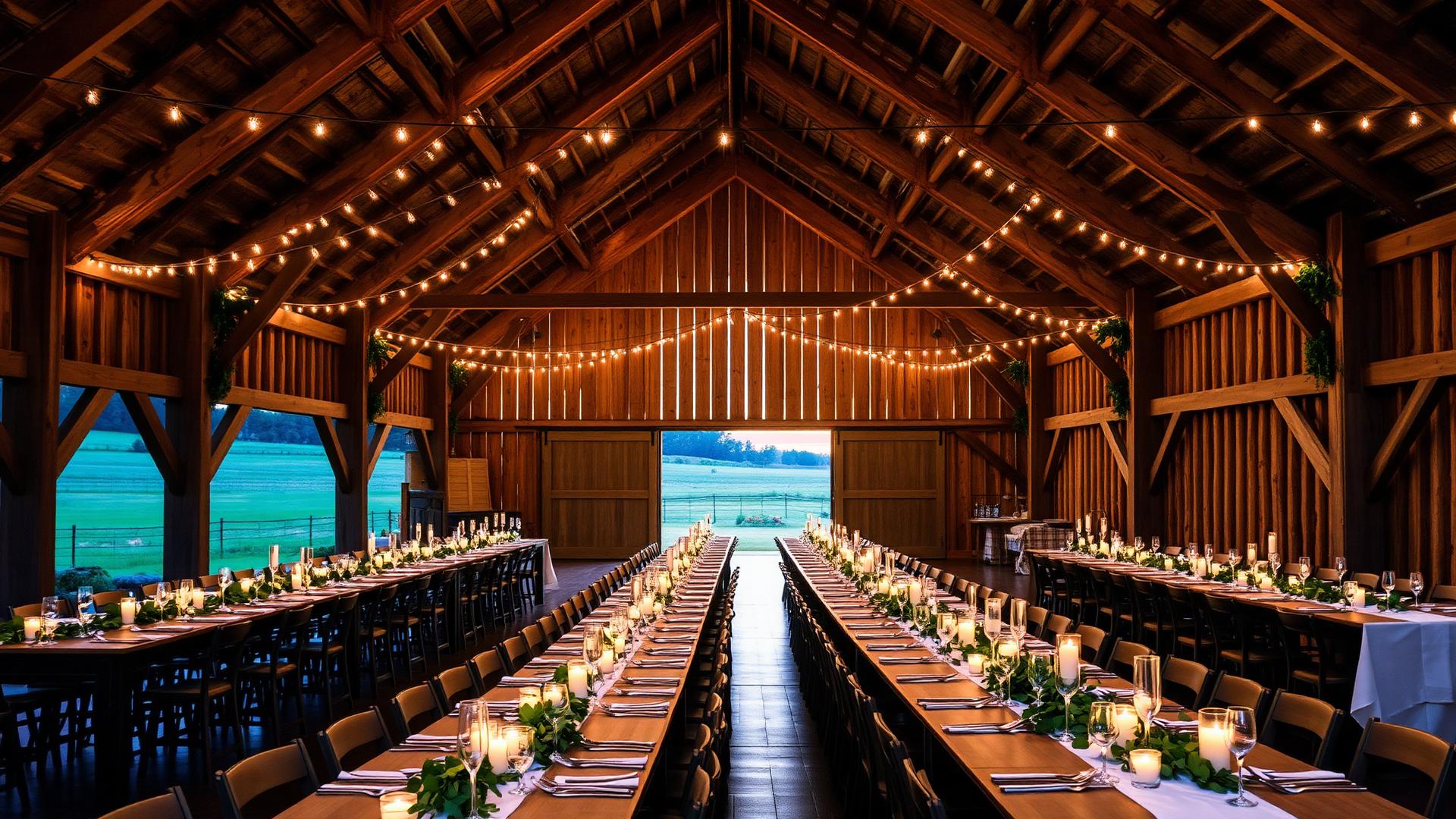
Farm Wedding Insurance
A restored barn reads as romantic to a couple and as an unpermitted assembly space, a livestock exposure, and an off-grid power problem to an underwriter. Both readings are correct, and the wedding needs two policies to answer for them.
- 01Farm's own GL vs. the couple's event policy, kept separate on purpose
- 02Agritourism statute shields, and exactly where they stop
- 03Livestock, unpaved access, and generator power as rated exposures
- 04Open flame near timber and hay, and the sign-off it actually requires
The underwriting problem
A working farm is not a venue that happens to have animals nearby. It is a livestock and equipment operation that a couple is asking to double, for one day, as a commercial assembly space for 150 guests in heels.
Every farm wedding decline traces back to that mismatch. The barn was built to store hay, not to hold an occupancy-rated crowd. The driveway was graded for a tractor, not a line of arriving sedans. The farm's insurance was rated for agricultural operations, not for a hired bar and a rented dance floor. None of this makes a farm wedding uninsurable — it makes it a two-policy problem that has to be solved in the right order, starting with what the farm's own policy will and will not extend to cover.
- Most common decline reason
- Barn never inspected or permitted for public assembly
- Most misunderstood protection
- Agritourism statute shield vs. general negligence
- Highest-severity exposure
- Open flame or string lighting near hay and dry timber
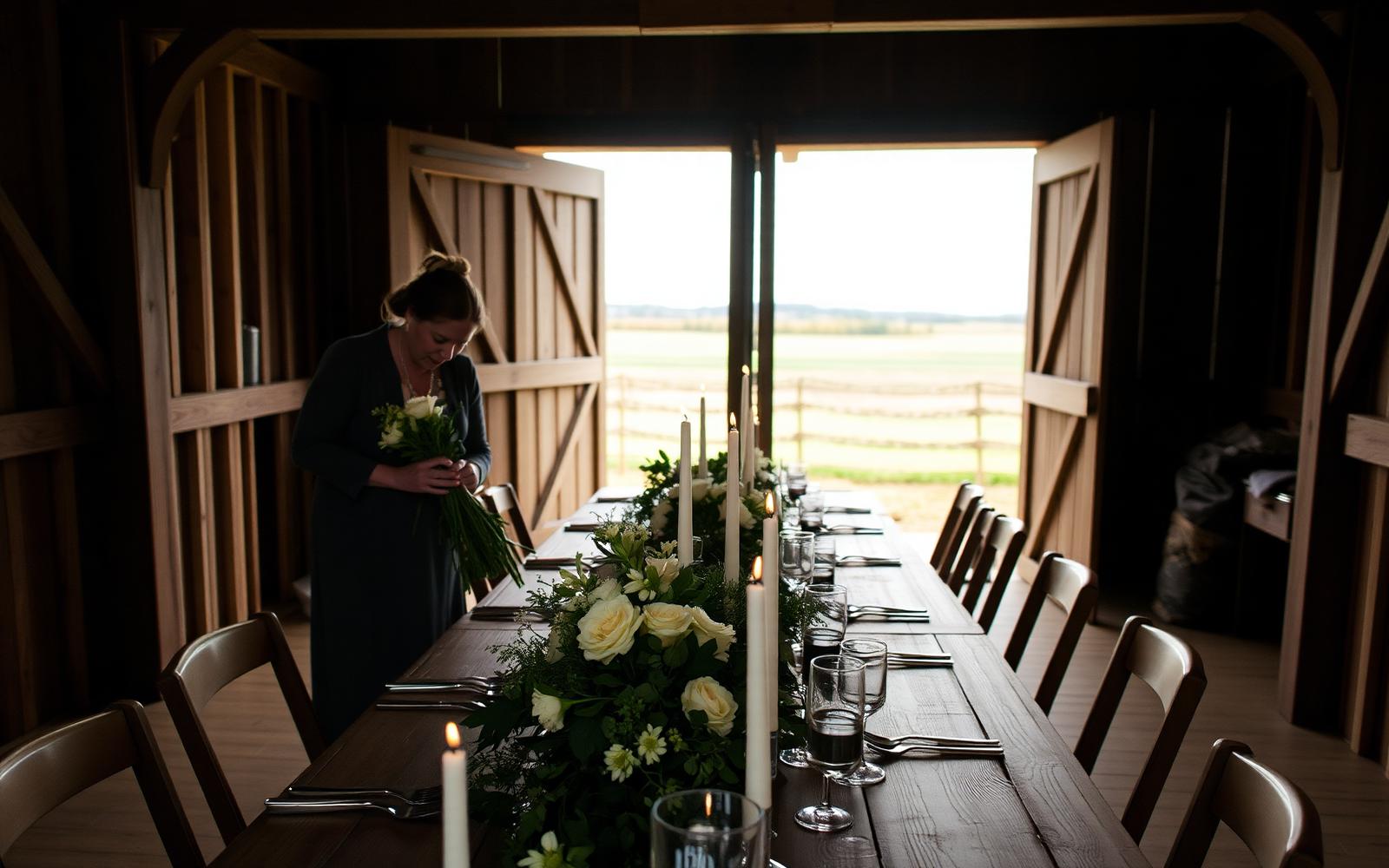
The table setting is downstream of a permit, not the other way around
Every romantic detail on this table — the candles, the linens, the proximity to timber posts — is a line item on a fire-marshal walkthrough before it is ever a styling choice.
- 2
- Separate policies a farm wedding actually needs
- $1M–$2M
- Typical farm-required per-occurrence / aggregate limits
- 50+ ft
- Common minimum livestock-to-guest-area separation requested by underwriters
Direct answers
What couples and farm owners actually ask us
What makes a farm or barn wedding harder to insure than a standard venue?
The venue itself is not a commercial assembly space by default. Livestock proximity, unpaved access and parking, generator-fed power in a historic structure, open flame near timber and hay, and no permanent restroom or bar infrastructure are all underwriting facts a purpose-built event venue has already resolved.
Who is responsible for insuring a barn wedding, the couple or the farm?
Both, on two different policies. The farm needs a special events endorsement or standalone policy covering its premises exposure for the rented day; the couple needs a special event liability policy meeting the farm's certificate requirement, and cancellation coverage if deposits or weather risk warrant it.
Does a signed liability waiver protect the farm from a lawsuit?
A waiver reduces litigation risk but does not replace insurance and rarely holds up against a true negligence claim, such as an unmaintained structure or an unmarked hazard. Carriers underwrite the farm's actual conditions and permitting, not the presence of a waiver form in the wedding packet.
Site
The farm wedding, read as an exposure chain
Arrival and parking
Guests park in a mowed field or along an unpaved farm lane, often with no lighting, signage, or attendant directing traffic after dark.
- Designated parking attendant
- Reflective markers and lighting
- Graded, drained parking surface
Grounds and livestock proximity
Guests move past pastures, coops, or working equipment on the way to the ceremony site, with animals sometimes visible or accessible from the path.
- Fenced separation from livestock
- Posted agritourism warning signage
- No unsupervised animal contact
Ceremony on open ground
Outdoor ceremony on unlevel pasture or field ground with no assembly-occupancy rating and no enclosed rain-plan capacity.
- Rain-plan indoor capacity for full guest count
- Ground and seating stability check
- Weather rider on the cancellation policy
Barn reception and power
A converted barn hosts the reception, often lit and powered by a rented generator feeding string lights, a band, and catering equipment through temporary wiring.
- Assembly-occupancy inspection or permit on file
- Generator placement and load plan
- Fire extinguishers and marked exits
Bar, open flame, and exit
Alcohol service, candles or lanterns near timber posts and hay storage, and a late-night exit across the same unlit grounds guests arrived on.
- Liquor liability if licensed vendor is pouring
- Open-flame sign-off away from hay and timber
- Lit, attended path for guest departure
Underwriting
Eight facts that set the farm wedding's rate
| Underwriting factor | Why it matters | How it can change appetite |
|---|---|---|
| Barn permitting and occupancy status | An assembly-occupancy inspection or local special-use permit tells the carrier the structure was actually reviewed for a crowd, not just for storage. | A barn with no inspection or permit history is the single most common reason a farm wedding submission is declined rather than merely rated up. |
| Livestock proximity and containment | Animals in or adjacent to guest circulation areas introduce a bite, kick, or trample exposure the couple's own policy was never priced to carry. | Fenced, clearly signed separation between livestock and the guest footprint keeps the exposure inside the farm's own agritourism program rather than spilling onto the event policy. |
| Access road and parking surface | Unpaved lanes and field parking raise slip, trip, and vehicle-recovery exposure, especially after rain or after dark. | A graded, drained parking area with attendants and lighting reads very differently to an underwriter than an unmarked mowed field. |
| Power source for lighting and equipment | Generator-fed temporary wiring inside a wood-frame barn is a materially different fire exposure than a building on permanent utility service. | A documented generator placement and load plan, with cords run clear of guest paths and hay storage, is often requested before a barn reception is bound. |
| Open flame near hay and timber | Candles, lanterns, and sparkler exits near dry hay storage or exposed timber framing sit at the sharp end of the category's severity curve. | Most carriers require a written open-flame sign-off and a minimum clearance from hay and timber before considering candlelight inside the structure at all. |
| Restroom and sanitation plan | A farm without permanent public restrooms rated for the guest count needs rented facilities and a servicing plan, or the venue is functionally uninsurable at scale. | No documented sanitation plan for guest count above roughly 75 to 100 people is a common flag on submission review. |
| Alcohol service structure | A farm with no permanent licensed bar depends entirely on who is pouring and whether drinks are sold or hosted. | A licensed bartender carrying independent liquor liability is the cleanest submission; a self-serve bar with no license behind it is the hardest to place. |
| The farm's own commercial-event exclusion | Most farm and ranch owner policies exclude fee-based commercial events by default, regardless of how the barn is otherwise insured. | A special events endorsement or a standalone farm-side event policy has to be confirmed before the couple's certificate is ever issued against it. |
Coverage
The program, layer by layer
Farm special events endorsement or standalone policy
Covers the farm's own premises liability for the rented day, since most farm-owner GL policies exclude commercial events outright.
Confirm this exists before the couple's certificate is issued against the farm
Couple's special event liability
The base policy naming the farm as additional insured with waiver of subrogation and primary-and-non-contributory wording, satisfying the venue contract.
Host liquor or vendor liquor liability
Host liquor for a free, unlicensed family-hosted bar; liquor liability carried by the bartender or caterer when drinks are sold under a license.
Event cancellation and postponement
Reimburses deposits and rebooking costs if a named peril, often weather, forces cancellation of an outdoor ceremony with no indoor backup capacity.
Agritourism liability rider (farm-side)
Supports the farm's statutory inherent-risk defense with required signage and documentation, without substituting for negligence-based coverage.
Equipment and generator liability
Covers rented generator, lighting rig, and temporary wiring exposure where the tent or production vendor's own policy does not extend to the barn structure.
Umbrella / excess liability
Layered above the base policies once guest count, alcohol service, or the farm's own requirement pushes past the primary limit.
Loss control
Controls that change the price
Hazard
Barn reception hosted with no assembly-occupancy inspection or local permit on file.
Control
Obtain the local fire marshal or building department sign-off before booking the date, and keep the documentation with the submission.
Hazard
Livestock kept in or adjacent to the guest ceremony and reception footprint.
Control
Fence and clearly sign the separation between working animal areas and guest circulation, per the state's agritourism warning requirements.
Hazard
Generator-fed temporary wiring run through a wood-frame barn with hay storage nearby.
Control
Document generator placement, load, and cord routing, and keep a minimum clearance from any hay or straw storage.
Hazard
Candles, lanterns, or a sparkler exit near exposed timber framing.
Control
Secure written open-flame approval, keep flame sources off timber surfaces, and station a staff member with an extinguisher during the reception and exit.
Hazard
No restroom or sanitation plan for the actual guest count.
Control
Contract rented restroom units sized to guest count and duration, with a servicing schedule confirmed in writing before the date.
Hazard
Farm's personal liability policy silently assumed to cover the wedding.
Control
Confirm in writing, before deposits are collected, whether the farm carries a special events endorsement or requires the couple's policy to name it as additional insured.
Contracts
What each party actually requires
Layer 01
Farm owner
- Typically asks for
- A special events endorsement or standalone event policy covering the rented day, plus a rental agreement listing the couple's insurance requirement and the farm's exact legal entity name.
- Where it goes wrong
- The farm assumes its ordinary farm-owner policy extends to a paid wedding rental, when most such policies exclude commercial events by default.
Layer 02
Couple
- Typically asks for
- A special event liability policy naming the farm as additional insured with waiver of subrogation, plus cancellation coverage if the ceremony is outdoors with no indoor backup.
- Where it goes wrong
- The couple buys a standard venue-style event policy without confirming the farm's own coverage gap, leaving both parties exposed if the farm's policy excludes the event.
Layer 03
Bartender or caterer
- Typically asks for
- Its own liability policy and, where drinks are sold or licensed, its own liquor liability policy naming the couple and farm as additional insureds.
- Where it goes wrong
- A self-serve bar is treated as host liquor when it is actually a sold-drink service, leaving the pouring party's liability unaddressed.
Layer 04
Tent, lighting, and generator vendors
- Typically asks for
- Their own liability coverage for equipment installed inside or adjacent to the barn, plus documentation of generator placement and load.
- Where it goes wrong
- A rental company delivers a generator and lighting rig with no liability coverage of its own, leaving the couple's and farm's policies as the only backstop for a wiring or fire incident.
Layer 05
Local authority having jurisdiction
- Typically asks for
- An assembly-occupancy inspection, special-use permit, or temporary event permit for the barn's guest capacity, depending on local code.
- Where it goes wrong
- The barn is treated as exempt from public-assembly requirements because it is on agricultural land, when local code often still applies once fee-based events are hosted there.
Comparison
The farm's policy or the couple's policy
Option A
Farm special events coverage
Covers the farm's own premises exposure for the rented day.
- Responds to claims tied to the farm's grounds, structures, and livestock
- Supports the agritourism statute's inherent-risk defense with required signage
- Needed because most farm-owner GL policies exclude commercial events
- Priced on acreage, animal type, structure condition, and event frequency
- Does not satisfy the couple's own certificate requirement to the venue
Option B
Couple's special event liability
Satisfies the farm's contract requirement for the wedding day.
- Responds to guest injury or property damage tied to the wedding itself
- Names the farm as additional insured with waiver of subrogation
- Can add host liquor liability for a free, unlicensed bar
- Priced primarily on guest count and alcohol service structure
- Does not cover the farm's own livestock or structural exposure
Submission
The submission that gets quoted first
013 items
The venue
- Farm name, address, and whether the barn has an assembly-occupancy inspection or permit on file
- Whether the farm carries its own special events endorsement, and its insurance requirement of the couple
- Ceremony location (pasture, field, or barn) and rain-plan indoor capacity
023 items
Livestock and grounds
- Animals kept on the property and their proximity or fencing relative to guest areas
- Parking surface, lighting, and whether an attendant will direct traffic
- Restroom and sanitation plan sized to guest count
033 items
Power, flame, and structure
- Power source for lighting and equipment (utility service vs. generator)
- Any planned candles, lanterns, or sparkler exit near timber or hay storage
- Barn construction age and any known structural or electrical concerns
043 items
Alcohol and financial exposure
- Who is providing and serving alcohol, and whether it is sold or hosted
- Guest count and total non-refundable deposits paid to date
- Whether cancellation coverage with a weather rider is wanted
Routing
Where your farm wedding overlaps
Wedding insurance
The venue is a standard commercial venue rather than a working farm or barn.
Agritourism insurance
The farm hosts weddings regularly alongside tours, u-pick, or other public agritourism activity.
Farm festival insurance
The property also runs seasonal festivals, markets, or multi-day public events beyond weddings.
Destination wedding insurance
The farm or ranch venue is outside the US or requires cross-border travel coordination.
Related coverage
Explore Coverage
FAQ
Farm & barn wedding insurance questions
Does the farm's own liability policy cover a wedding held there?
Usually not without a special events endorsement or a separate policy. Most farm and ranch owner policies are written for agricultural operations and specifically exclude commercial events, fee-based gatherings, and public assembly. Renting the barn for a wedding, even a single day, is commercial activity a standard farm policy was never rated to carry.
Does an agritourism liability statute protect the farm from a wedding-guest injury claim?
Only within narrow bounds. Most state agritourism statutes shield farm operators from claims arising from the 'inherent risks' of agritourism activity, such as uneven ground or animal unpredictability, provided required warning signage is posted. They do not shield the farm from claims rooted in negligence, such as an unrepaired barn floor, an unlit stairway, or an unpermitted structure, and a wedding reception is not always classified as agritourism activity under the statute's own definitions.
Why would an insurer decline a barn wedding outright?
The most common reasons are a barn with no assembly-occupancy inspection or local permit, livestock kept in or adjacent to guest areas with no separation plan, no sanitation or restroom plan for the guest count, and a farm liability policy that expressly excludes commercial events. Any one of these can move the account from priced-but-restricted to declined.
Is host liquor coverage enough for a barn reception with no permanent bar?
Only if the bar is genuinely free and hosted directly by the couple or family with no per-drink or per-hour charge to whoever is pouring. A barn venue with no permanent licensed bar often relies on a hired bartender or caterer selling drinks, which shifts the exposure to that vendor's own liquor liability policy rather than the couple's host liquor endorsement.
What happens if weather cancels an outdoor farm ceremony with no indoor backup?
That is a cancellation and postponement question, not a liability question, and it depends entirely on whether a weather peril is named in the policy. A farm venue advertised as 'rain or shine' with no enclosed backup capacity for the full guest count is a materially different underwriting risk than a barn large enough to host the reception indoors if the forecast turns, and carriers price and sometimes decline the difference.
Send the farm's permit status and the guest count
Whether the barn has an assembly-occupancy inspection, whether the farm carries its own special events coverage, and how alcohol is being served are the three facts that move a farm wedding quote fastest.
General information about how farm and barn wedding placements are commonly structured. Agritourism statute protections, assembly-occupancy permitting, and farm-owner policy exclusions vary by state and by carrier. Not legal advice; nothing here confirms coverage.