Destination Wedding Insurance
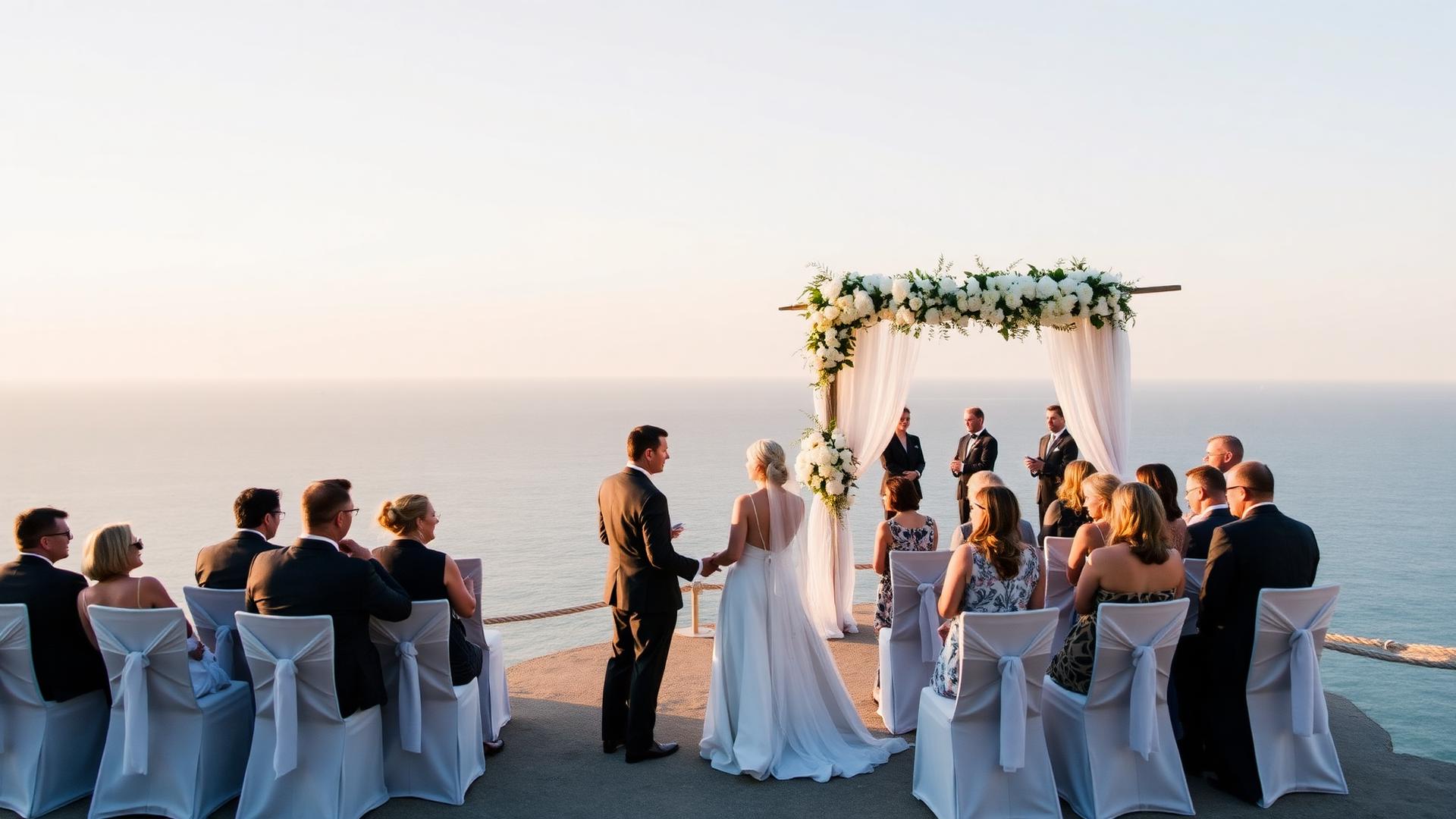
A wedding held at a resort in another country is not a bigger version of a backyard wedding. It is a multi-day, multi-venue event governed by a foreign contract, a hurricane calendar, and a certificate of insurance that has to mean something to people who have never seen a US COI form.
- 01Foreign venue contracts vs. domestic COI wording
- 02Hurricane-season timing and named-windstorm riders
- 03Multi-day itinerary as a single insured schedule
- 04Resort capacity limits and unlicensed local vendors
The underwriting problem
A destination wedding is a domestic wedding's exposure list, plus a border, a storm season, and a contract written in someone else's legal system.
Every failure mode on this page starts with a couple assuming the policy they would buy for a hometown reception simply travels with them. It does not. Foreign venues issue contracts with insurance clauses that read nothing like a US venue's addendum. Caribbean and Gulf-region dates sit inside a named hurricane season that changes what a carrier will bind and when. A three-day itinerary spread across a welcome dinner, a ceremony, and a farewell brunch is, to an underwriter, three separate events unless the policy is written to say otherwise. Layer onto that the currency the vendor contracts are written in, the jurisdiction that actually governs a dispute versus the jurisdiction that settles the claim, and a guest list traveling internationally on independent itineraries that the couple's own policy was never meant to protect, and it becomes clear why a destination wedding cannot simply borrow the domestic wedding playbook and translate it. Every one of these differences is manageable with enough lead time; almost none of them is obvious to a couple booking their first resort wedding sixty days before hurricane season opens.
- Most common decline
- Foreign venue contract with no insurable clause
- Highest-value timing error
- Buying the hurricane rider after a storm forms
- Most missed detail
- Multi-day schedule written as a single-date policy
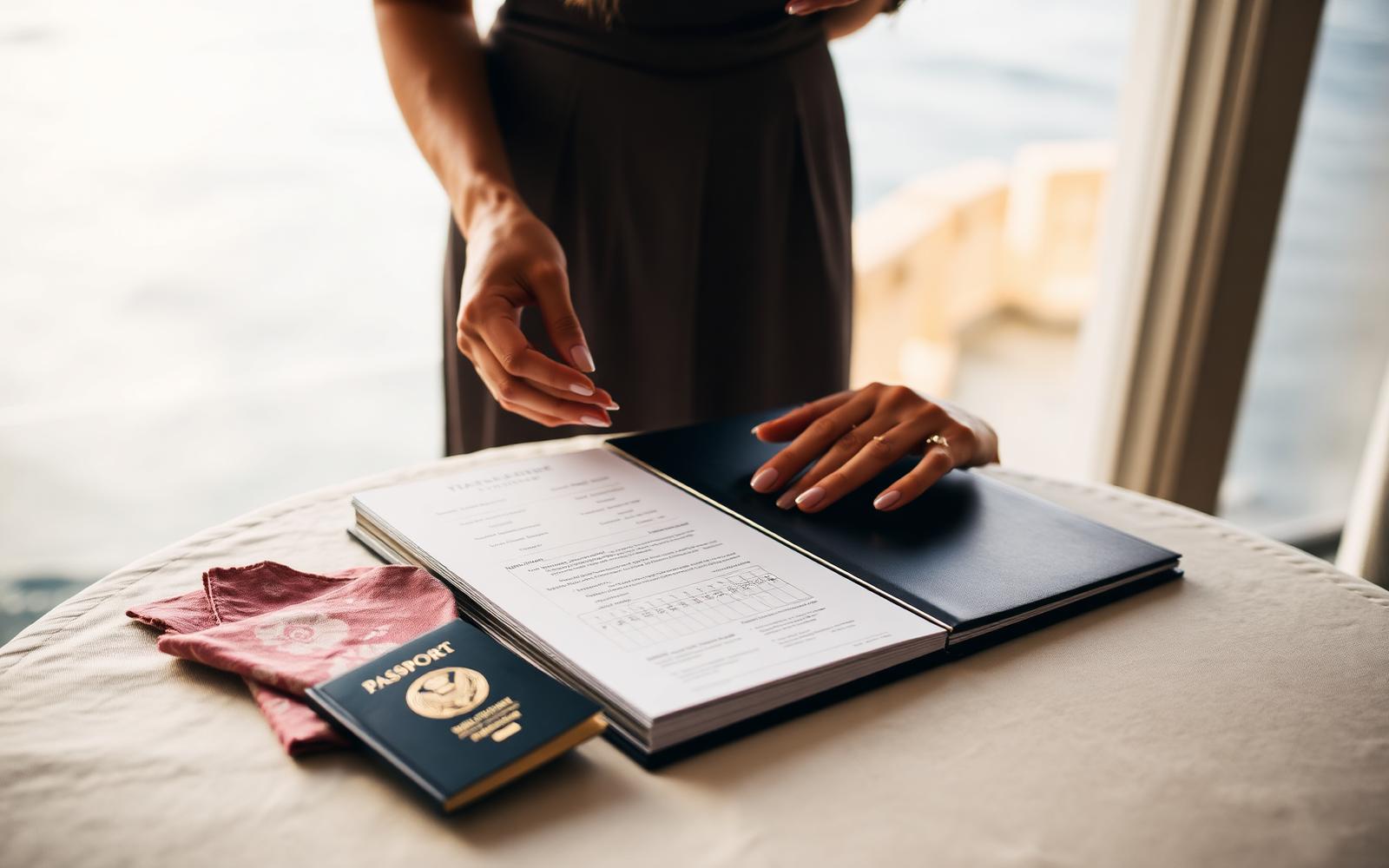
The contract on the desk is the whole underwriting file
A foreign venue's insurance clause, the couple's passports, and the resort's stated guest-capacity number are the three facts that decide whether this risk is placeable at all.
- 9–12 mo.
- When to lock cancellation and storm cover
- 3+
- Typical venues on one wedding-week itinerary
- 1
- Policy needed to cover the full multi-day schedule
Direct answers
What couples and planners actually ask us
What makes destination wedding insurance different from domestic wedding insurance?
Three things: territory, because most domestic forms exclude events held outside the US; timing, because hurricane-season dates need a named-windstorm rider bought before a storm forms; and structure, because a multi-day itinerary across two or three foreign venues needs every date and location listed on one policy.
How early should a destination wedding be insured?
Ideally at contract signing and deposit, often 9 to 12 months out, specifically so a hurricane or named-windstorm rider can be added before the season's forecast makes the risk uninsurable. Waiting until 60 days out routinely means the storm rider is no longer available at any price.
What guest-count detail does a resort wedding submission need?
The resort's contracted maximum capacity for the ballroom or beach venue and the couple's actual expected headcount for each event on the itinerary, since exceeding the resort's stated capacity is one of the fastest ways a claim gets denied after the fact.
Does travel insurance replace destination wedding insurance?
No. Individual trip travel insurance protects a single traveler's flights, baggage, and medical costs, while destination wedding insurance is a special event program covering the couple's liability exposure across every venue on the itinerary plus the wedding's own cancellation risk. Guests need the former; the couple needs both, layered as separate purchases.
Can a couple insure a destination wedding through a US carrier if the venue is in Europe rather than the Caribbean?
Yes, provided the policy's stated territory names the specific country. European venues carry a different risk profile than a Caribbean resort corridor, with less hurricane exposure but often stricter local vendor licensing and venue capacity documentation requirements that the submission still has to satisfy.
Itinerary
Wedding week, read as an exposure chain
Booking and deposit
Resort or foreign venue contract signed, deposits paid in a foreign currency, insurance clause buried in language written for local law, not US contract norms.
- Translate and review the insurance clause before signing
- Confirm resort's required limit and exact legal entity
- Flag hurricane-season dates immediately
Travel and arrival
Wedding party and guests fly in over several days; flight delays, lost luggage with attire or rings, and travel disruption stack up before the first event even starts.
- Trip-delay and baggage riders for the wedding party
- Buffer days built into the arrival schedule
- Local ground-transport vendor confirmed
Welcome dinner
First scheduled event, often at a second on-property restaurant or beach club with its own management and its own insurance requirement.
- Venue named separately on the certificate
- Host liquor structure confirmed for this event specifically
- Headcount checked against venue capacity
Ceremony and reception
The primary insured event, frequently outdoors or beachfront, exposed to wind, tide, and the region's hurricane or rainy-season pattern.
- Named-windstorm or hurricane rider in force
- Resort's stated maximum capacity respected
- Local vendor contracts reviewed for license equivalence
Farewell brunch and departure
Final event, often the least insured because couples treat it as an afterthought, followed by a multi-day guest departure window.
- Same certificate extended to cover the brunch venue
- Return-travel disruption cover for the wedding party
- Vendor final-payment and no-show terms confirmed
Underwriting
Seven facts that set your rate
| Underwriting factor | Why it matters | How it can change appetite |
|---|---|---|
| Country and venue jurisdiction | Legal system, contract enforceability, and available carrier capacity vary sharply by country, and some jurisdictions have almost no admitted market at all. | A well-known resort corridor in Mexico or the Caribbean places far more easily than a private villa in a country with no established event-insurance market. |
| Date inside hurricane or storm season | Named-windstorm exposure is priced and, past a certain point, simply withdrawn once a storm is being actively tracked in the region. | Buying the hurricane rider 9 to 12 months out, well before any storm forms, is the difference between an available option and a flat decline. |
| Number of venues on the itinerary | A welcome dinner, ceremony, and brunch at three different properties is three separate liability exposures, not one. | Every venue, date, and expected headcount needs to be listed on the same policy schedule rather than assumed to be covered by the ceremony's certificate. |
| Local vendor licensing | A US-style certificate of insurance often does not exist for a local caterer, band, or transport company operating abroad. | A signed vendor contract and proof of local business registration substitute for a COI, but a vendor with neither is treated as uninsured. |
| Resort-required liability limit | Large resort groups increasingly set their own minimum limit and additional-insured wording as a condition of the contract, independent of local law. | A resort requiring $2,000,000 in coverage with specific wording pushes many couples onto an excess layer above the base special-event policy. |
| Guest count against venue capacity | Foreign venues state a hard capacity number in the contract, tied to fire-safety and occupancy rules that a claims adjuster will check after any incident. | A guest list that exceeds the resort's stated capacity, even by a handful of people, can void the liability response entirely. |
| Wedding-party travel disruption | Flight cancellations, missed connections, and lost luggage carrying attire or rings are a distinct exposure from the event itself. | Bundling trip-delay and baggage riders for the wedding party is treated as a standard add-on for any wedding requiring international travel. |
| Currency and settlement jurisdiction | A policy settling claims in US dollars under US contract language is a materially different product from one that leaves settlement subject to a foreign jurisdiction's courts. | Confirming settlement currency and governing law in the policy itself, separate from the venue contract's own dispute clause, avoids a surprise after a claim is filed. |
| Vendor documentation quality | Cash-paid, informally arranged local vendors leave little paper trail for a carrier to evaluate a non-appearance or fraud claim against. | A signed one-page agreement and a photographed payment record for every local vendor meaningfully improves how a claim involving that vendor is evaluated. |
Coverage
The program, layer by layer
Foreign special event liability
The base policy written to actually respond outside the US, satisfying the resort or foreign venue's additional insured and limit requirements.
Confirm the policy's stated territory includes the specific country and venue
Named-windstorm / hurricane rider
Extends cancellation coverage to name windstorm as a covered peril for dates falling inside a recognized hurricane season.
Event cancellation and postponement
Reimburses non-refundable deposits and increased rebooking costs across the full multi-day itinerary, not just the ceremony date.
Wedding-party travel disruption
Trip-delay, missed-connection, and baggage riders covering the couple and immediate wedding party's international travel.
Host liquor / vendor liquor liability
Structured per event on the itinerary, since the welcome dinner, ceremony, and brunch may each use a different bar arrangement.
Vendor non-appearance
Responds when a foreign photographer, band, or caterer fails to appear, subject to the policy's named perils and the vendor contract on file.
Umbrella / excess liability
Layered above the base policy when the resort's own required limit exceeds what the standard foreign special-event form provides.
Wedding-party clergy or officiant travel rider
Covers arrival disruption for an officiant or clergy member traveling internationally on a tight pre-ceremony schedule, distinct from the general wedding-party travel rider.
Vendor documentation and fraud protection
Supports a non-appearance or fraud claim against a cash-paid local vendor where a signed agreement and payment record exist on file.
Loss control
Controls that change the price
Hazard
Foreign venue contract with vague or missing insurance wording.
Control
Have the insurance clause reviewed before signing the venue contract, and request the venue's own liability certificate directly rather than assuming one exists.
Hazard
Hurricane rider requested after a storm is already being tracked in the region.
Control
Buy the named-windstorm rider at contract signing, 9 to 12 months ahead, before any storm activity affects availability or price.
Hazard
Local caterer or band with no equivalent to a US certificate of insurance.
Control
Collect the vendor's signed contract and proof of local business registration as underwriting substitutes, and flag any vendor who cannot produce either.
Hazard
Guest list creeping past the resort's stated venue capacity.
Control
Confirm the final headcount against the contracted capacity number in writing before the final payment is due, not on arrival.
Hazard
Wedding party missing the ceremony due to a flight delay or cancellation.
Control
Build a travel buffer of at least one full day before the first scheduled event and carry trip-delay coverage for the core wedding party.
Hazard
Multi-day itinerary insured as if it were a single event.
Control
List every venue, date, and expected headcount on one policy schedule so the welcome dinner and brunch carry the same coverage as the ceremony.
Contracts
What each party actually requires
Layer 01
Resort or foreign venue
- Typically asks for
- A liability certificate meeting its stated limit, naming the resort's exact legal entity, plus written confirmation of maximum guest capacity for each space used.
- Where it goes wrong
- Couples assume the resort's own property insurance extends to their private event, when the contract requires the couple to bring separate coverage.
Layer 02
Local caterer, band, or transport vendor
- Typically asks for
- A signed vendor contract and proof of local business registration, standing in for the COI a US vendor would normally provide.
- Where it goes wrong
- A vendor is booked informally through a resort recommendation with no written contract, leaving no underwriting basis to confirm coverage exists.
Layer 03
Wedding-party travel
- Typically asks for
- Trip-delay, missed-connection, and baggage coverage for the couple and immediate wedding party's international itinerary.
- Where it goes wrong
- A missed connection strands the officiant or a parent the day before the ceremony with no coverage in place to rebook or reimburse costs.
Layer 04
Insurer / carrier
- Typically asks for
- A policy whose stated territory names the actual country and region, plus a hurricane or named-windstorm rider bound before season risk is active.
- Where it goes wrong
- A domestic single-event form is purchased by mistake, and the carrier later confirms the territory never included the country where the wedding was held.
Layer 05
The couple
- Typically asks for
- One policy schedule covering every venue and date across the wedding week, plus cancellation coverage sized to the full non-refundable deposit exposure.
- Where it goes wrong
- Only the ceremony date is insured, leaving the welcome dinner and farewell brunch with no liability coverage at all.
Comparison
Domestic form or dedicated foreign program
Option A
Domestic single-event wedding policy
Built for a US venue on a US contract.
- Territory limited to the US and its territories
- Assumes a US-style certificate of insurance from every vendor
- No named-windstorm rider built for a foreign hurricane season
- Priced for a single date at a single domestic venue
- Not built to schedule a multi-day, multi-venue itinerary
Option B
Foreign / destination wedding program
Built for a venue and itinerary outside the US.
- Stated territory includes the actual country and region
- Accepts vendor contracts and local registration in place of a COI
- Named-windstorm rider available when bound early enough
- Schedules every venue and date on one policy
- Adds trip-delay and baggage coverage for the wedding party
Submission
The submission that gets quoted first
013 items
The itinerary
- Country, resort or venue name, and dates for every event on the schedule
- Whether any date falls inside a recognized hurricane or storm season
- Expected headcount for each event against the venue's stated capacity
023 items
Contracts and vendors
- A copy of the venue's insurance clause from the signed contract
- Local vendor names with either a certificate, contract, or business registration
- Who is providing alcohol at each event and under what arrangement
033 items
Travel and wedding party
- Number of wedding-party members traveling internationally
- Arrival buffer built in before the first scheduled event
- Any known travel disruption risk, such as a tight connection window
043 items
Financial exposure
- Total non-refundable deposits paid across all vendors and the venue
- Currency the contracts are denominated in
- Lead time remaining before the wedding week begins
Routing
Where your wedding overlaps
Domestic wedding liability and cancellation
The wedding is held inside the US on a single domestic venue.
Farm or barn venue wedding
The venue is a working farm or agricultural property, domestic or otherwise.
Single foreign event
The event abroad is a one-time booking rather than part of a recurring program.
Foreign event insurance guide
You want the full explanation of how territory, currency, and local licensing affect placement.
Related coverage
Explore Coverage
FAQ
Destination wedding insurance questions
Does a US wedding insurance policy cover a wedding held abroad?
Rarely, and this is the most expensive assumption a couple can make. Most domestic single-event wedding forms are territorially limited to the US and its territories. A wedding at a resort in Mexico, the Caribbean, or Europe has to be placed on a dedicated foreign or international event program that is actually built to respond outside US jurisdiction.
Can we get cancellation coverage if the wedding falls inside hurricane season?
Yes, but the window matters enormously to the carrier. A binding contract in place before a named storm forms, combined with a hurricane or named-windstorm rider purchased well ahead of the date, is what separates an insurable risk from a wedding a carrier will decline outright once a storm is already being tracked in the region.
Will the resort's own liability insurance cover our wedding?
A resort's property liability policy protects the resort's own operations, not the couple's private event. Most resort contracts require the couple to bring their own certificate meeting a stated limit, name the resort as additional insured, and separately cover any outside vendor the resort does not manage directly, such as an independently booked photographer or band.
What happens if a foreign vendor is not licensed the way a US vendor would be?
Licensing categories that a US certificate of insurance assumes, such as a state liquor license or a municipal event permit, often do not exist in the same form abroad. Underwriters ask for the vendor's actual contract and local business registration instead, and a vendor who cannot produce either is treated as functionally uninsured for placement purposes.
Does one certificate cover the welcome dinner, ceremony, and farewell brunch?
Only if the policy is written for the full multi-day schedule and every venue on it is listed by name and date. A single-day certificate covering only the ceremony leaves the welcome dinner and brunch, often held at a second property or a beach club, with no liability coverage at all.
What currency and legal jurisdiction actually governs a claim on a foreign wedding policy?
The policy itself, not the venue contract, and this is worth confirming in writing before deposits are paid. A US-based carrier writing a foreign special event program typically settles claims in US dollars under US policy language even though the loss occurred abroad, while the venue contract's own dispute-resolution clause may separately point to the country's local courts for a contractual dispute with the resort. Couples should understand that these are two different legal questions handled by two different documents, not one unified process.
How does a destination wedding handle a vendor who only accepts cash and has no formal invoice?
This is common in smaller resort markets and it complicates both the insurance submission and any later cancellation claim, because a carrier evaluating a vendor non-appearance or fraud claim wants a paper trail showing what was promised and what was paid. Couples working with informal local vendors should request at minimum a signed one-page agreement listing the service, date, and price, and should keep a photographed receipt or bank transfer record, even where a full invoice is not the local custom.
Do wedding guests traveling separately need their own travel insurance, or does the couple's policy extend to them?
The couple's destination wedding policy generally protects the couple's own financial exposure and the wedding-party principals named on the schedule; it does not extend trip-delay or medical coverage to the broader guest list who booked their own flights and hotels. Guests attending a destination wedding should be encouraged, in the invitation materials, to buy their own travel insurance rather than assume the couple's policy covers their individual itinerary.
What happens if the resort itself closes or changes ownership before the wedding date?
A resort closure, forced relocation, or change in management that voids the original contract is exactly the kind of event a well-structured cancellation policy is built to respond to, provided the peril is named and the contract change is documented. Couples booking a newly opened resort or one with a history of ownership turnover should flag this scenario specifically with the agent, since not every cancellation form treats venue-side business failure the same way it treats weather.
Is a religious ceremony performed by clergy traveling from the couple's home country treated differently for insurance purposes?
The clergy member is underwritten the same way any traveling officiant or vendor would be, with the added wrinkle of international travel disruption risk layered on top. If the officiant is essential to the ceremony and traveling internationally on a tight schedule, the couple should build in an arrival buffer and consider trip-delay coverage for that individual specifically, since a missed flight the day before is one of the more common and entirely foreseeable disruptions on a destination wedding timeline.
Send the resort contract's insurance clause
Country, dates for every event on the itinerary, and the resort's stated capacity and required limit are what move a destination wedding quote fastest. Send those and we will tell you where the account sits.
General information about how destination and foreign wedding placements are commonly structured. Venue contract terms, local licensing rules, and named-windstorm availability vary by country and by carrier. Not legal advice; nothing here confirms coverage.