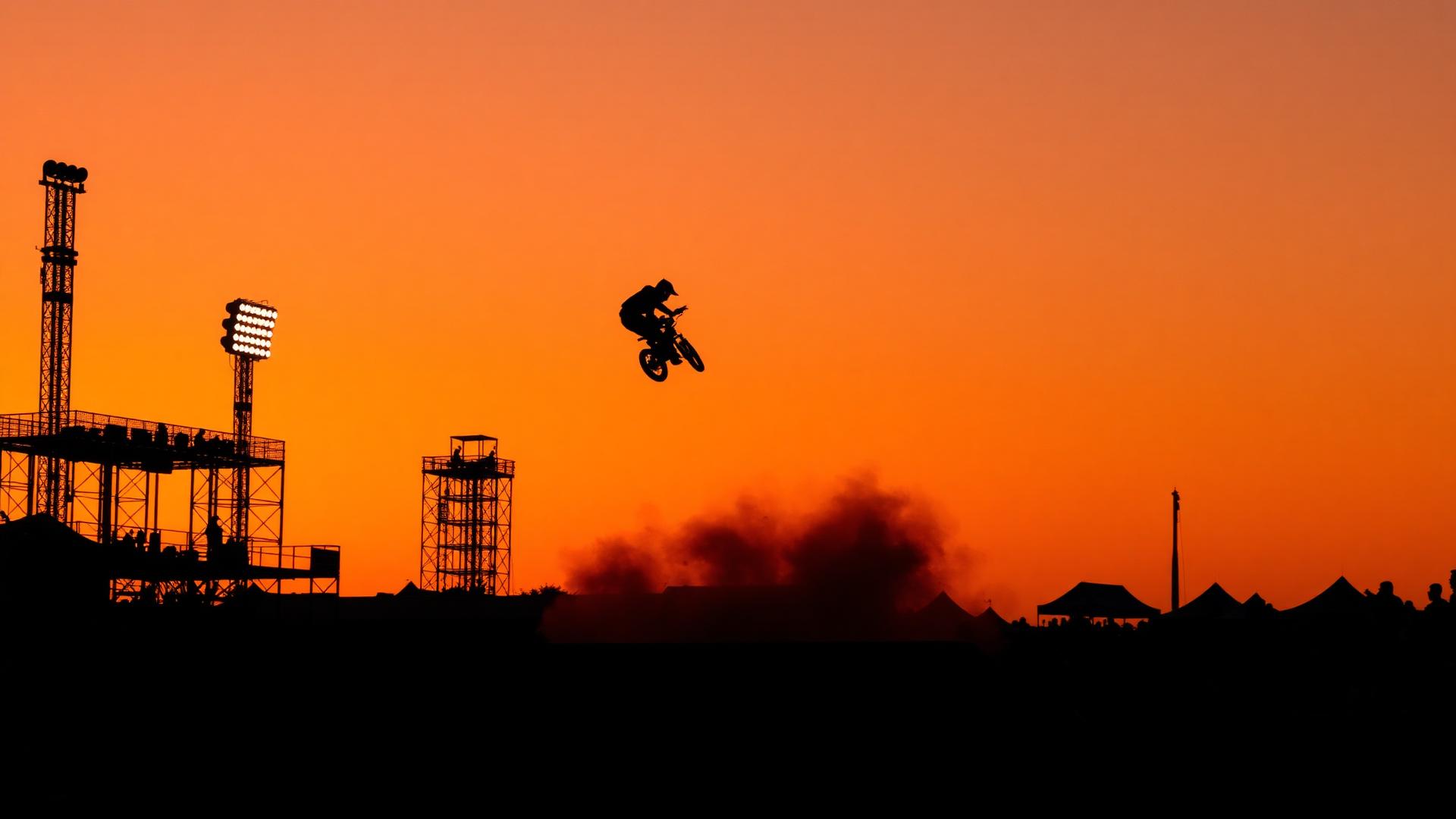
Extreme Sports Event Insurance
Your BMX qualifier, moto freestyle jam, skate contest, or obstacle course race got declined by the same sports-league carrier that insures your rec soccer league. That is not a mistake — it is a facility rule. The market that actually writes this class asks different questions and wants different documentation.
- 01
Participant accident split from spectator/bystander liability
- 02
Ramp, jump, and course structure engineering review
- 03
On-site EMS, ambulance, and extraction plan verification
- 04
Professional athlete appearance and stunt disclosure
Carrier language
The terms your underwriter actually uses
Submissions get stuck when a promoter answers questions in event-planning language and the underwriter is scoring them in legal and actuarial language. Knowing these four terms before the call shortens the underwriting cycle considerably.
- Participant vs. third-party bodily injury
- Carriers split claims by who was hurt and what they knew when they showed up. A rider who signed a waiver and understood the sport's risk is a participant claim; a parent standing at the fence line who never signed anything is a third-party claim, and the two are underwritten, defended, and reserved completely differently.
- Attractive nuisance / structural liability
- This is carrier language for the exposure created by an unengineered or unsecured feature that draws people onto or near it outside sanctioned hours — a half-built ramp left standing overnight is exactly the fact pattern this term describes, and it is a common basis for denying coverage after the fact.
- Assumption of risk (primary vs. express)
- Primary assumption of risk is the legal doctrine that a participant accepts the ordinary dangers inherent to the sport itself; express assumption is what a signed waiver documents in writing. Underwriters credit accounts that have both a strong doctrinal argument and a well-drafted waiver — either one alone is a weaker defense.
- Gross negligence carve-out
- Nearly every waiver a court will enforce still carves out gross negligence — reckless disregard for safety, such as running a competition on a feature already flagged as unsound. No waiver, however well written, will hold up as a defense to a claim built on that fact pattern.
The underwriting problem
Extreme sports events are not a harder version of a 5K or a softball tournament — they are a different class of business that mainstream sports and event carriers are not authorized to write.
A treaty reinsurer's manuscript wording draws a hard line around 'organized amateur sports' and excludes anything scored by degree of difficulty, height, or speed. That line puts BMX, motocross, freestyle skate, parkour, and obstacle course racing outside the facility entirely, regardless of how well the promoter runs the event. The fix is not persuading a declined market to make an exception — it is going straight to the handful of surplus-lines carriers whose facilities were built for this exposure, and arriving with the documentation those underwriters actually read: engineering sign-off on every built feature, a contracted EMS plan matched to the venue's transport time, a jurisdiction-checked waiver, and full disclosure of any professional demo or signature trick on the schedule. Promoters who arrive with that packet already assembled routinely bind in days instead of the multi-week back-and-forth that a thin, event-flyer-style submission produces, because the underwriter is not spending the first three rounds of questions extracting information that should have been in the file from the start.
- Most common outright decline
- Unengineered ramp, jump, or course structure
- Second most common decline
- No contracted on-site ambulance or ALS unit
- Quietest exposure
- Media/film crew working inside the course perimeter, uninsured
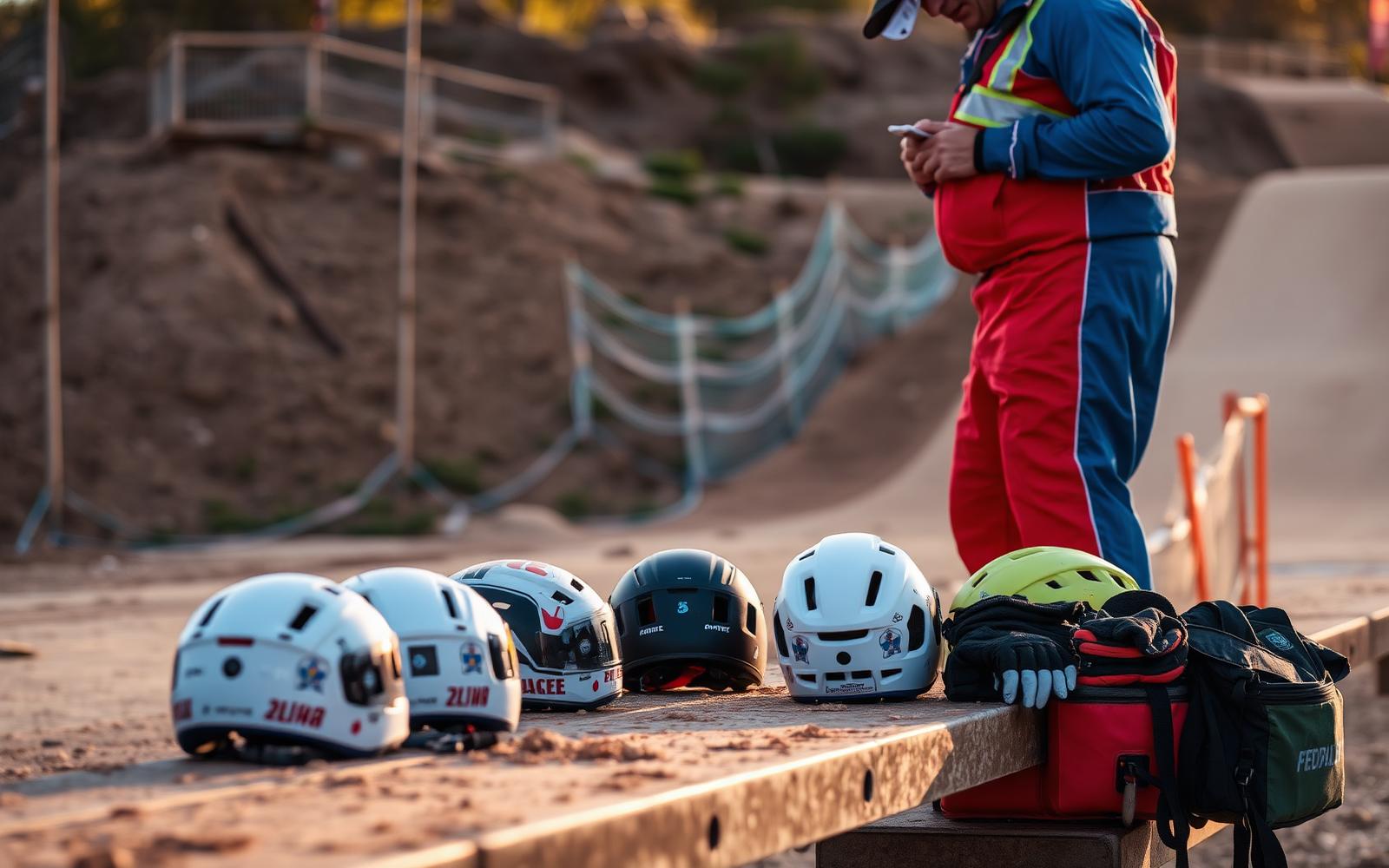
The account is underwritten at the medic tent, not the entry table
A carrier that writes action sports reads your EMS contract, response-time map, and extraction plan before it reads your entry-fee structure — because that plan is what turns a catastrophic fall into a documented, well-handled claim instead of an uninsured lawsuit.
- ALS-level
- Minimum on-site medical standard most action-sports markets require
- State-specific
- Waiver enforceability review needed before relying on assumption-of-risk defense
- 100%
- Of scheduled pro stunts and demos that must be disclosed before binding
Direct answers
What promoters and course operators actually ask us
What is extreme sports event insurance?
Specialty liability and accident coverage for action-sports competitions — BMX, motocross, skateboarding, parkour, and obstacle course races — placed through surplus-lines or action-sports-focused carriers after mainstream sports and event markets decline the class outright due to injury severity and unengineered course exposure.
What does it typically cover?
General liability for spectators and bystanders, participant accident or excess accident medical for competitors, course/structure liability tied to engineering documentation, and often coverage for professional athlete appearances, on-site EMS contracts, and media/film crews working inside the course perimeter.
What gets an extreme sports submission declined?
Unengineered ramp or jump construction, no contracted on-site ambulance or advanced life support unit, undisclosed professional stunts or signature tricks, and a prior catastrophic injury claim on the promoter's loss run are the four most common outright decline reasons across surplus-lines action-sports markets.
Site
The course, read as an exposure chain
Course and feature build
Ramps, jumps, rails, and obstacle towers are assembled from wood, steel, or engineered modular systems, often on a compressed load-in schedule.
- Engineer stamp or manufacturer load spec for every built feature
- Pre-event structural walkthrough documented in writing
- Weather-hold protocol for wet or high-wind conditions
Participant check-in and waiver
Riders and racers sign assumption-of-risk waivers that must actually hold up under the law of the state where the event runs.
- Waiver language reviewed against state enforceability rules
- Minor-participant guardian signature and age-verification process
- License or skill-tier verification for restricted course lines
Competition run
The highest-severity window: riders attempt scored tricks, jumps, and lines at speed in front of judges, spectators, and cameras.
- Course marshals stationed at blind landings and merge points
- Red-flag/stop protocol communicated to all riders before the heat
- Professional stunt or signature-trick schedule disclosed to the underwriter
Spectator and bystander perimeter
Fans, parents, and passersby occupy the zone just outside the course line, which is exactly where an errant vehicle, board, or bike lands.
- Engineered fencing or barrier spec matched to feature height and speed
- Clear sightline separation between spectator zone and landing area
- Crowd-control staffing scaled to expected attendance
Medical response and extraction
A crash at speed or from height needs an on-site response within minutes, not a 911 call routed through a rural dispatch center.
- Contracted on-site ambulance or ALS crew matched to venue transport time
- Pre-arranged trauma-center routing and helicopter extraction plan if remote
- Certified spotters and medics stationed at the highest-severity features
Media and film crew access
Photographers, drone operators, and broadcast crews frequently work inside or at the edge of the course line to get the shot.
- Media crew certificates collected and verified before course access
- Fixed camera positions approved by the course marshal, not chosen ad hoc
- Drone operation cleared against FAA rules and named on the policy where required
Underwriting
Seven facts that set your rate
| Underwriting factor | Why it matters | How it can change appetite |
|---|---|---|
| Course and feature engineering documentation | A structural failure under a rider's weight produces catastrophic, high-severity claims that dwarf a routine fall. | An engineer's stamp or manufacturer load-rating on every built feature, plus a documented pre-event walkthrough, is close to non-negotiable for most action-sports markets. |
| On-site medical and EMS contract | Response time to a spinal or head injury directly drives outcome severity, which drives claim size. | A contracted ALS-level ambulance or medic crew on site, matched to the venue's distance from the nearest trauma center, is the clearest single credit an underwriter will give. |
| Professional athlete and stunt disclosure | A signature trick or first-attempt stunt by a sponsored professional carries a different severity curve than an amateur riding a sanctioned line. | Full disclosure of the demo schedule, plus an appearance rider naming the athlete, keeps the policy intact instead of contestable after a loss. |
| Spectator and bystander separation | Bystander claims carry weaker assumption-of-risk defenses than participant claims because the spectator never signed anything. | Engineered barrier height matched to jump distance and speed, with a documented sightline plan, supports broader appetite. |
| Waiver language and state enforceability | Several states will not enforce a liability waiver against gross negligence or for minor participants, regardless of the signature on file. | A waiver reviewed against the venue state's case law, rather than a generic template, is treated as real risk transfer instead of paperwork. |
| Prior loss history and claim severity | A single catastrophic injury claim on the loss run signals to every subsequent underwriter that the account carries tail risk. | A clean loss run, or a documented corrective action following a prior claim, is often the deciding factor between a quote and a flat decline. |
| Media and film crew course access | Uninsured photographers and drone operators working inside the course line are an uncontrolled exposure the promoter did not budget for. | Certificates collected from every crew member with course access, plus fixed and pre-approved camera positions, narrow this gap materially. |
Coverage
The program, layer by layer
Special event / sports general liability
Third-party bodily injury and property damage to spectators, bystanders, and non-participants arising from the event and the course itself.
Confirm the course structure exclusion, if any, before binding
Participant accident / excess accident medical
Medical expense coverage for competitors injured while riding or racing, structured as primary or excess over the athlete's own health insurance.
Course and structure liability
Covers claims tied to a ramp, jump, or obstacle failure, typically conditioned on the engineering documentation submitted at binding.
Professional athlete appearance / non-appearance
Protects promoters against the cost of a scheduled professional athlete's injury, no-show, or contract dispute affecting a headline attraction.
Media and broadcast crew liability
Extends coverage to contracted photographers, drone operators, and broadcast crews working inside the course perimeter.
Excess/umbrella over the primary event program
Standard once a professional demo, a large expected crowd, or a prior claim pushes the account past a modest limit.
Products/completed operations for course builders
Where the promoter also owns or manufactures the ramp and obstacle systems rather than renting them, this closes a gap the GL alone will not.
Loss control
Controls that change the price
Hazard
A ramp, jump, or obstacle tower fails under load during competition.
Control
Engineer stamp or manufacturer load spec on every feature, a documented pre-event walkthrough, and a weather-hold protocol for wet or high-wind conditions.
Hazard
A rider or racer is seriously injured and reaches definitive care too late.
Control
Contracted ALS-level ambulance or medic crew matched to venue transport time, plus a pre-arranged trauma-center routing and helicopter extraction plan for remote sites.
Hazard
A spectator or bystander is struck by an errant vehicle, bike, or board.
Control
Engineered barrier height matched to feature speed and distance, documented sightline separation, and crowd-control staffing scaled to attendance.
Hazard
A professional athlete's undisclosed stunt causes a catastrophic claim.
Control
Full disclosure of the demo schedule before binding, an appearance rider naming the athlete, and a course marshal briefing before every professional attempt.
Hazard
A waiver is challenged and found unenforceable after a serious injury.
Control
Waiver language reviewed against the venue state's case law, separate guardian consent process for minors, and accident medical coverage purchased regardless of waiver strength.
Hazard
An uninsured photographer or drone operator is hurt inside the course line.
Control
Certificates collected from every media and film crew member before course access, with fixed, pre-approved camera positions rather than ad hoc placement.
Submission
The submission that gets quoted first
014 items
The event and course
- Event date, venue, course layout diagram, and feature list (ramps, jumps, rails, obstacles)
- Engineer stamp or manufacturer load-rating documentation for every built feature
- Expected participant count, spectator count, and ticketing/entry structure
- Skill tiers or divisions competing, including any youth or amateur categories
024 items
Medical and safety
- On-site medical provider contract with EMS/ALS credentials and headcount
- Nearest trauma center distance and helicopter extraction plan if remote
- Course marshal and spotter staffing plan for high-severity features
- Weather-hold and stop-work protocol for the venue
034 items
Disclosure and documentation
- Signed participant waiver reviewed against the venue state's enforceability rules
- Full schedule of any professional athlete appearances, demos, or signature-trick attempts
- List of media, photography, drone, and broadcast crews with course access, with certificates
- Prior event loss run and any corrective action taken after a past incident
Routing
Where your calendar overlaps
Marathon & race insurance
The obstacle course race is closer to an endurance run than a scored trick competition.
Tournament insurance
The event is a bracketed competition series rather than a single freestyle jam or exhibition.
Paintball event insurance
The program also runs a projectile or combat-sport activity alongside the action-sports course.
Related coverage
Explore Coverage
FAQ
Extreme sports questions
Why did our regular sports league insurer decline our BMX or OCR event outright?
Most sports-league markets are rated for organized team sports with predictable contact patterns and are simply not built to underwrite gap jumps, vert ramps, or a five-mile mud course with fire and electrical obstacles. Their treaty and reinsurance facilities exclude action sports by class of business, so the decline is a facility rule, not a judgment about your specific event — which is why a surplus-lines action-sports market is the right first call, not the fifth. Chasing a fifth mainstream carrier after four declines usually just burns weeks you do not have before the event date.
Is a skatepark contest treated the same as a motocross freestyle jam?
No — underwriters split action sports by mechanism of injury and kinetic energy involved, not by how extreme the activity looks on video. A skate contest on a built park course reads differently than a gas-powered motocross freestyle jam with a 300-foot gap jump, because the second carries fuel, mechanical failure, and far higher-speed impact exposure. Expect the submission questions, and the price, to differ meaningfully between the two even though both sit under the same 'extreme sports' umbrella.
Do we need separate coverage for participants and spectators?
Yes, functionally. Participant accident coverage responds to the athlete who signed a waiver and assumed the risk of the sport itself; general liability responds to the spectator, parent, or bystander who never assumed that risk and was hurt by a course failure, a stray vehicle, or inadequate crowd separation. Carriers underwrite and price these two exposures separately because the legal defenses available differ sharply.
Will a signed waiver protect us if a rider is seriously hurt?
A waiver reduces exposure but does not eliminate it, and enforceability varies significantly by state — several jurisdictions refuse to enforce liability waivers for gross negligence, unengineered structures, or minors regardless of parental signature. Underwriters read your waiver language and your state's case law before crediting it as a rate offset, so a generic template pulled off the internet buys you far less than a waiver reviewed against your actual venue's law.
What does 'course engineering' mean to an underwriter, and why does it matter so much?
It means a licensed engineer or a manufacturer's certified spec sheet stands behind every ramp, jump, rail, and obstacle load rating — not a builder's word that 'it's held up before.' Unengineered wood or dirt features built without documented load calculations are the single most common reason action-sports submissions get declined, because a structural failure under a professional athlete's weight produces catastrophic, not incidental, claims. A one-page engineer's letter referencing the actual dimensions and materials used, rather than a generic template pulled from a prior event, is what separates a bindable submission from a follow-up request.
Do we need to tell the underwriter if a professional athlete is doing a demo or a signature trick?
Disclose it before binding, every time. A professional performing a signature or first-attempt trick carries a materially different severity profile than amateur participants riding a sanctioned course line, and carriers price appearance riders, non-appearance protection, and sometimes a named-exclusion or higher retention specifically around that athlete. Binding coverage without disclosing a scheduled pro demo is the fastest way to void the claim when it matters most.
Send the course layout and the EMS contract
Your feature list with engineering documentation and your on-site medical plan are the two facts that move an extreme sports quote fastest. Send those and we will tell you which markets will actually look at it.
General information about how extreme and action-sports event placements are commonly structured. Waiver enforceability, structural engineering standards, and EMS staffing requirements are jurisdiction- and venue-specific. Not legal advice; nothing here confirms coverage.