50,000+ Events Insured
EV / 13 · Recreation · participant risk

Paintball Event Insurance

Paintball is not a spectator event with an unusual attraction. It is a participant-injury class where the whole placement rests on four controls: masks, velocity, refereeing, and containment.

  • Participant-inclusive form, not a standard event policy

  • Chronograph limits with logged pre-play checks

  • Mask discipline and physically separated safe zones

  • Netting, perimeters, and mobile setup containment

The underwriting problem

Paintball is an intentional-impact sport sold to people who removed their mask once and will do it again.

Eye injuries drive the class, and every credible control leads back to mask discipline: chrono limits, barrel socks, marshal ratios, and a dead-zone layout that makes taking the mask off physically inconvenient. Waivers matter, but only as evidence. Underwriters also read the field's own honesty about its worst days — a loss run broken out by cause, not a bare claim count — because a field that can point to a documented chronograph log and a clean eye-injury record is a fundamentally different risk than one that simply asserts its rules are followed. Terrain, format, and whether the field hosts corporate groups or tournament weekends all shift the loss pattern even when the headline velocity limit is identical.

Severity driver
Eye injuries from mask removal on field
Rating lever
Chronograph limits and marshal ratio
Overlooked hazard
Minors, waivers, and parental consent
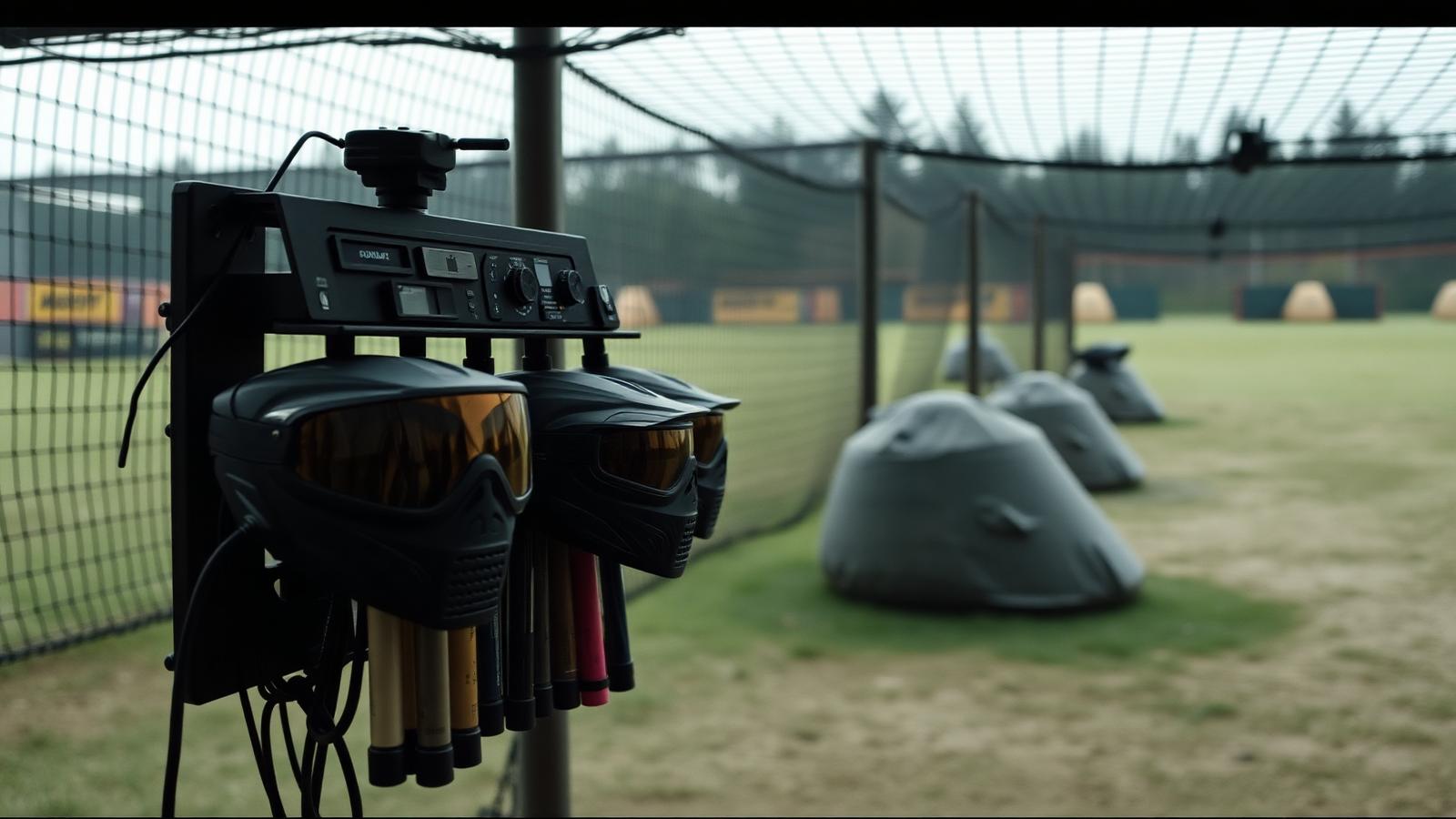
Chronograph station with masks and markers racked beside a netted paintball field
Paintball facility · chrono and netting
Chrono station

Velocity and eye protection are the entire conversation

Participant-versus-participant risk is priced on two controls: a chronograph procedure nobody bypasses, and a mask-on rule enforced by staff, not signage.

Standard velocity ceiling verified at the chrono
280 fps
Rule enforced by marshals inside all netted areas
Mask-on
Every chrono reading, every player, every game
Logged

Direct answers

What field operators ask first

What is paintball insurance?

Liability written for paintball operations on a participant-inclusive basis, covering injury to players as well as spectators and third parties. It is placed by specialist recreation carriers and is conditioned on mask discipline, chronographed velocity limits, refereeing, and field containment.

Who needs it?

Permanent commercial fields, mobile and pop-up operators, event organizers adding paintball to a larger event, tournament promoters, and venues hosting corporate or stag-party bookings.

What gets a submission declined?

No chronograph procedure, no documented referee ratio, unnetted perimeters near public areas, permitting mask removal anywhere near a live field, and serving alcohol on the same site as active play.

Safety chain

The player journey, which is also the control chain

01

Check-in and waiver

Identity and age verified, participant agreement signed, minors' consent handled separately.

  • Age check
  • Signed agreement
  • Minor consent

02

Equipment issue and fit

Mask fitted and checked, marker issued, barrel cover installed before leaving the counter.

  • Mask fit check
  • Barrel cover
  • Marker condition log

03

Chronograph

Every marker chronographed to the field limit before play and re-checked through the day.

  • ≤300 fps
  • Logged results
  • Spot re-checks

04

Briefing and field entry

Rules brief covering surrender distance, masks-on rule, and how to call a stoppage.

  • Scripted brief
  • Surrender rule
  • Ref authority stated

05

Play and safe zone return

Refereed play, then exit through a controlled gate into a physically separated masks-off area.

  • Ref ratio
  • Gated exit
  • Separated safe zone
Each link is a documented procedure in a well-run operation. A submission that describes them in this order is quoted very differently from one that does not.

Exposure map

Four risk lanes and who actually carries each

On the field — participant

Direct-impact injury between players, including eye injury after mask removal.

  • Drives the class and sits on the participant-inclusive GL grant
  • Frequency tracks velocity control and mask discipline directly
  • Severity concentrates almost entirely in eye-injury claims

Off the field — spectator and bystander

Stray paint or a wandering player reaching a road, parking area, or a neighbouring property.

  • Netting height and perimeter distance are the primary controls
  • Mobile setups carry materially higher exposure here
  • Nuisance complaints can escalate outside the liability grant

Equipment and air systems

Rental markers, masks, compressors, and CO2 or compressed-air fill stations.

  • Hydro-test currency on tanks is reviewed directly
  • Fill stations are separated from waiting players as a control
  • Player-owned equipment needs mandatory check-in inspection

Staffing and refereeing

Marshals working inside a live area all day, enforcing rules in real time.

  • Referee injury is itself a workers' compensation exposure
  • Documented ratios per field size are reviewed at underwriting
  • Authority to eject or stop play must be explicit, not implied

Configuration

Permanent field or mobile setup

Option A

Permanent field

Fixed site, known layout

  • Installed netting with documented height and condition checks
  • Established safe zone away from all live areas
  • Consistent referee team and repeatable briefings
  • Property exposure in buildings, bunkers, and air systems
  • Rated on annual player numbers and site controls

Option B

Mobile / pop-up

Rebuilt on unfamiliar ground

  • Containment rebuilt at every host site
  • Surrounding public not expecting projectiles
  • Host site agreements and additional insured chains
  • Low-impact formats common at corporate and family events
  • Rated per event, with setup quality as the key variable

Underwriting

What sets a paintball rate

Underwriting factorWhy it mattersHow it can change appetite
Velocity controlImpact energy scales sharply with velocity; it is the difference between a bruise and an injury claim.A written chronograph procedure with logs is close to a precondition; no procedure is a common decline.
Referee-to-player ratioReferees enforce masks, surrender distance, and stoppages in real time.Documented ratios per field size earn credits; unrefereed open play is generally uninsurable.
Containment and nettingPaint leaving the field reaches roads, neighbours, and uninvolved spectators.Netting height, condition inspection, and perimeter distance to public areas are all reviewed directly.
Participant age profileYouth programs carry different consent, enforceability, and impact considerations.Low-impact formats with reduced velocity broaden appetite; standard-impact play for young minors narrows it.
Alcohol on siteIntoxicated players and projectile weapons is a combination carriers will not accept.Any alcohol service before or during play typically ends the placement; post-play licensed areas need hard separation.
Equipment ownershipRental fleets can be inspected and controlled; player-owned markers cannot.Bring-your-own play requires mandatory chronograph and inspection at check-in to remain acceptable.
Air fill operationsCompressed air and CO2 systems are a pressure-vessel exposure separate from the game.Inspection records for tanks, compressors, and fill stations are requested on any permanent field.
Field terrain and course formatWooded natural terrain and artificial speedball courses produce different slip, trip, and collision loss patterns at the same velocity limit.Documented ground maintenance and marked hazards on woods courses; congestion management on tight speedball layouts.
Private group and tournament mixFirst-time corporate groups and visiting tournament teams bring unfamiliar players onto the field in concentrated numbers.A standardized orientation brief for private groups and a gate-side chrono check for every visiting tournament marker are expected controls.

Coverage

The program, layer by layer

Participant-inclusive general liability

The core grant: injury to players as well as spectators and third parties, on a form that does not exclude the activity.

A standard event GL will not do this

Products and equipment liability

Rental markers, masks, and air systems issued to participants, including any equipment failure.

Property — bunkers, netting, buildings

Inflatables, structures, compressors, and the pro shop, plus weather and vandalism exposure on an outdoor site.

Workers' compensation

Referees and field staff who spend the day inside the live area and take hits as a matter of routine.

Hired and non-owned auto

Essential for mobile operators moving netting, inflatables, and air systems between host sites.

Participant accident

Medical benefit cover irrespective of fault, often the difference between an incident and a liability suit.

Umbrella / excess

Frequently required by host venues, municipalities, and corporate bookers above the primary limit.

Loss control

The four controls that carry the class

Hazard

Player lifts a mask on the field to clear fog or paint.

Control

Masks-on rule enforced by immediate ejection for a first offense, plus paint-clearing stations only inside the separated safe zone.

Hazard

A marker shoots above the field limit after a fill.

Control

Chronograph before play and randomised re-checks during the day, with results logged and markers pulled on failure.

Hazard

Paint or a stray ball leaves the field toward a road or neighbour.

Control

Netting height and condition inspected on a schedule, with perimeter distances documented in the site plan.

Hazard

Point-blank shot at surrender distance.

Control

A stated surrender rule briefed to every player and enforced by referees with authority to stop play.

Hazard

Air tank failure during a fill.

Control

Hydro-test currency checked on every tank, trained fill operators only, and a fill station separated from waiting players.

Calendar

A booked event weekend, start to finish

6–10 weeks out

Booking and site scoping

Confirm host site or field availability, expected player count, and whether the booking includes alcohol before or after play.

2–4 weeks out

Waiver and roster collection

Participant agreements and minor consent forms collected in advance, not signed hastily at check-in on the day.

48 hours out

Equipment and containment check

Netting, chronograph equipment, and rental markers inspected and tagged ready before the first group arrives.

Day of

Event day

Chrono log, referee briefing, and safe-zone signage confirmed before the first whistle; incident log kept live throughout.

Contracts

Host sites and bookers

  1. Layer 01

    Host venue (mobile setups)

    Typically asks for
    AI status, evidence of participant-inclusive limits, and ground restoration terms.
    Where it goes wrong
    Venue assumes its own event policy responds to paintball injuries; it almost certainly excludes them.
  2. Layer 02

    Corporate bookers

    Typically asks for
    Certificate naming the client company, often $2M–$5M, and sometimes their own waiver language.
    Where it goes wrong
    Corporate group booked with alcohol on the same schedule as play.
  3. Layer 03

    Landlord (permanent fields)

    Typically asks for
    Lease-mandated limits, AI status, and containment obligations for paint leaving the site.
    Where it goes wrong
    Neighbour complaints about paint over-flight escalate into a nuisance claim outside the liability grant.
  4. Layer 04

    Tournament organizers

    Typically asks for
    Event-specific certificates and evidence that the visiting field meets the tournament's safety standard.
    Where it goes wrong
    Visiting teams bring their own markers with no chronograph enforcement at the gate.

Claims scenario

How a mask-removal claim actually plays out

A player lifts their mask mid-game to wipe paint from the lens, believing play has paused nearby. A shot from an adjacent bunker strikes them in the eye before a referee can call a stop. The incident report becomes the entire case: what the chrono log showed for that marker, whether the field's stated velocity limit was being enforced that day, and whether the referee ratio on the field matched what was on file with the carrier.

If the chrono log is current and the referee was positioned and empowered to call immediate stops, the claim narrows to a genuine accident within a properly run operation. If the log is missing, stale, or the referee ratio on the day fell short of what was represented at binding, the carrier's defense weakens considerably and the field's own representations become part of the dispute.

The lesson underwriters draw from claims like this is consistent: a rule printed on a waiver is not a control. A rule enforced by a positioned referee, with a log to prove it, is the only version of "mask discipline" that survives a claim.

Submission

The submission that gets quoted first

014 items

The operation

  • Permanent site address or mobile host site profile
  • Annual player numbers and average group size
  • Field count, layout, and netting specification
  • Age policy and whether low-impact formats are offered

024 items

Controls

  • Written chronograph procedure and sample log
  • Referee ratio per field and their training
  • Safe zone layout and mask policy in writing
  • Air fill procedures and tank inspection records

034 items

Paperwork

  • Participant agreement and minor consent form
  • Host site agreements for mobile operations
  • Incident log and injury reporting procedure
  • Three to five years of loss runs

Glossary

Terms that show up in a paintball quote

Participant-inclusive GL

A general liability grant that covers injury to players themselves, not just third parties, which a standard event form typically excludes.

Chronograph (chrono)

The device and procedure used to measure and log a marker's firing velocity before and during play.

Barrel sock / plug

A cover required over the barrel outside live play to prevent accidental discharge in safe zones.

Surrender rule

A briefed rule requiring a player to call 'out' rather than be shot at close range once tagged.

FAQ

Paintball questions

Why do standard event policies exclude paintball?

Because the injury is intended by the activity. General liability contemplates accidental third-party harm; paintball involves participants deliberately shooting each other. Most event forms carry an athletic or sports participant exclusion, so paintball has to be written on a participant-inclusive form by a carrier that underwrites the class.

What velocity limit do carriers expect?

The industry standard is 280 to 300 feet per second, chronographed before play and spot-checked during the day. A written chronograph procedure with logged results is one of the clearest indicators of a professionally run field, and its absence is a frequent decline reason.

What is the single most important control?

Mask discipline. Almost every catastrophic paintball claim involves an eye injury after a mask was removed inside a live area. Carriers look for a barrel-cover rule, a designated masks-off zone physically separated from play, and referees empowered to eject for a first offense.

Can minors play, and does that change the placement?

Yes with restrictions, and yes it changes the placement. Minimum ages and low-impact formats vary, parental consent is required, and parental waivers are unenforceable for minors in several states. Youth and low-impact programs are often written with lower velocity limits and higher referee ratios.

Are mobile and pop-up paintball setups treated the same?

They are usually harder. A permanent field has fixed netting, established safe zones, and a known layout; a mobile setup rebuilds all of that on unfamiliar ground each time, often at events where the surrounding public was never expecting projectiles. Expect questions on netting height, perimeter distances, and who owns the host site relationship.

Does low-impact or 'foam dart' paintball avoid the participant-injury issue entirely?

It reduces the severity profile but does not eliminate the underwriting conversation. Low-impact formats using lighter projectiles and lower velocities are commonly used for youth or corporate groups and can broaden appetite, but eye protection, refereeing, and a written operating procedure are still expected. Carriers rate the format, not the marketing label.

What loss history do underwriters actually want to see?

Three to five years of loss runs broken out by cause — eye injury, fall, collision, equipment failure — rather than a single aggregate number. A field with a handful of minor bruising claims and zero eye-injury claims tells a very different underwriting story than one with the same claim count concentrated in a single severe category.

How does a tournament weekend differ from routine open play?

Tournaments concentrate visiting teams, unfamiliar equipment, and spectator crowds into a single weekend, often with sponsor booths and vendor tents added to the field. The host field's own controls do not automatically extend to visiting markers, so a gate-side chronograph check for every visiting player is treated as a near-mandatory control for tournament coverage.

Are corporate team-building bookings underwritten differently than public open play?

Often more favorably, provided the group is briefed and refereed the same as any other session. Corporate groups tend to be first-time or infrequent players, which raises orientation risk, but the private-group format also allows tighter control of numbers, alcohol, and session length that public walk-in play does not.

What happens if a player brings a personal marker that was never chronographed?

It should never reach the field without a check-in chronograph reading logged the same as house equipment. Unverified personal markers are a frequent source of claims because velocity can drift well above field limits without any visible sign, and an operator who waives the check for a familiar regular is treated the same as one with no chronograph procedure at all.

Does field terrain — woods versus a speedball course — change the underwriting?

Yes. Natural woodsball terrain adds uneven ground, roots, and drop-offs as a slip-and-fall exposure layered on top of the projectile risk, while artificial speedball courses concentrate players closer together at higher engagement speed. Carriers ask which format a field runs because the loss pattern differs even at identical velocity limits.

Next step

Send your chronograph procedure and referee ratios

Those two documents plus your field layout tell a specialist market almost everything it needs about how the operation is run.

General information about how paintball placements are commonly structured. Minimum ages, waiver enforceability, and local regulation vary by state. Not legal advice; nothing here confirms coverage.