Annual Event Organizer Insurance
A promoter's exposure is a calendar, not an event. This page covers how a season is scheduled onto one policy, where aggregate limits quietly fail, and what a submission needs before an underwriter will write the whole year.
- 01
Scheduled vs. unscheduled dates and reporting deadlines
- 02
Per-event aggregate vs. shared annual aggregate
- 03
Blanket additional insured for repeat venues
- 04
Audit exposure on projected attendance and receipts
Placement support
50STATE
One promoter program spanning every date, venue, and state on the calendar.
The underwriting problem
A promoter running a calendar of events is not buying insurance for an event. They are buying it for a business that happens to be made of events.
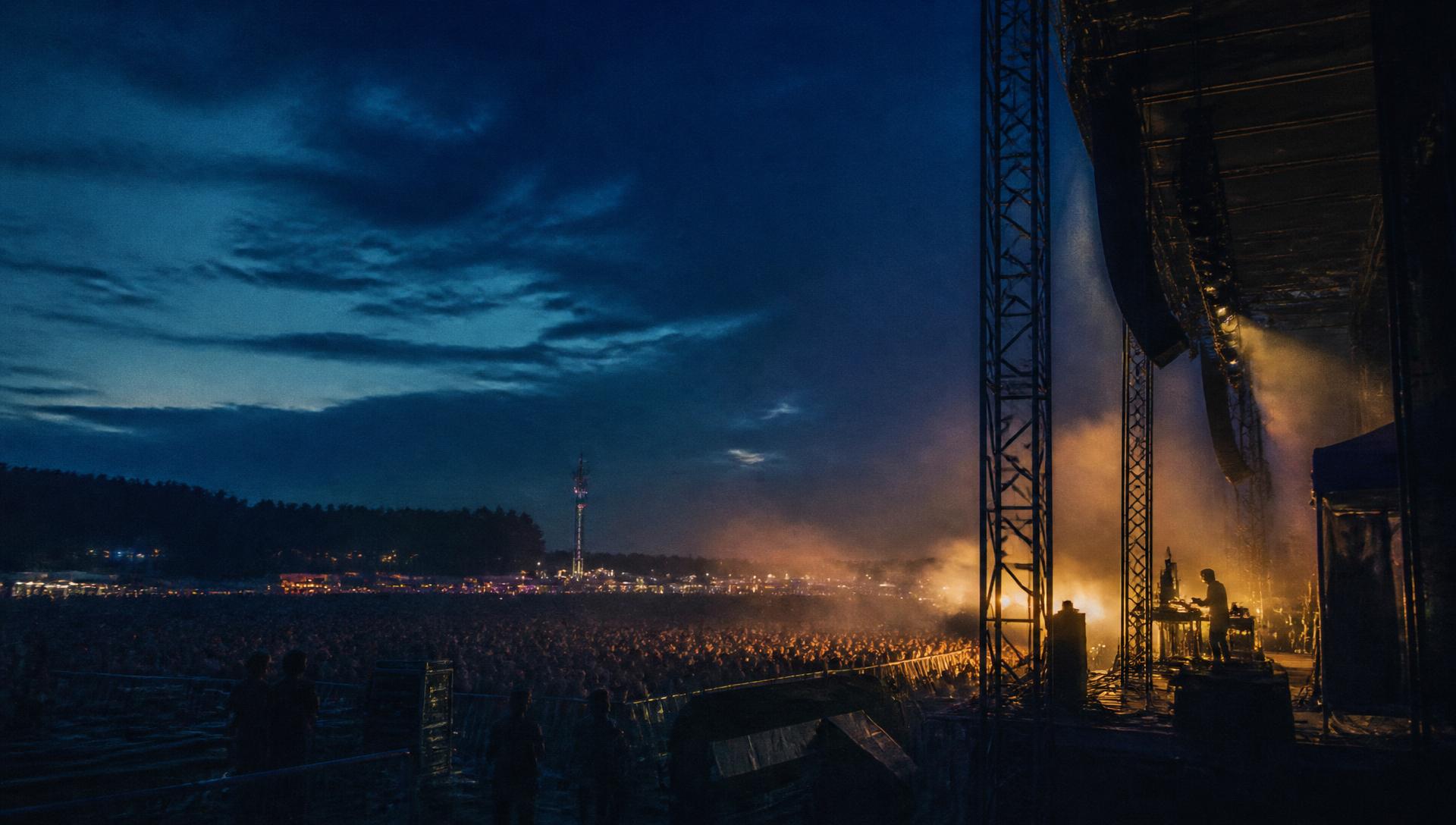
Annual programs are underwritten on aggregate: total attendance, the worst single day, the mix of classes across the year, and how consistently controls travel from show to show. One outlier date can rate the entire schedule. A promoter who runs forty club nights and one large outdoor festival is not underwritten as forty-one similar events — the festival is scored as its own hazard band, and depending on how far it sits outside the club-night attendance range, it can either be absorbed into the annual program at a higher rate or pulled out entirely and placed as a standalone policy. The same logic applies to controls: a promoter who runs a consistent security ratio, a documented medical plan, and the same vendor-vetting process at every venue reads as a single, well-managed operation regardless of how many stops are on the calendar. A promoter whose controls vary by venue — tight security downtown, informal staffing at a rural fairground date — reads as an inconsistent risk even if the average across the season looks fine, because underwriters know the loss usually shows up at the weakest link, not the average one.
- Rating basis
- Aggregate attendance and peak single day
- Structural lever
- Consistent controls across every date
- Overlooked exposure
- One outlier class rating the whole book
The promoter carries every contract in the building
Vendor indemnities, venue hold-harmless clauses, and artist riders stack up into one liability position — and it is the promoter's name on all of them.
- All
- Vendor COIs collected and tracked before doors
- Named
- Venue as additional insured on the promoter policy
- Annual
- Aggregate limits sized to the full calendar
The short version
Written for promoters comparing an annual program against stacking one-off policies.
What is annual event promoter insurance?
It is a twelve-month liability program written for a promoter or production company rather than for a single date. The schedule of events, not one venue contract, is the underwriting object: the carrier rates the whole season by event count, attendance bands, venue types, and activity mix, then issues certificates per venue as dates come up.
Who needs it instead of per-event coverage?
Promoters who run roughly six or more events a year, work with repeat venues that require named additional insured status, or need to produce certificates on short notice. Below that volume, per-event policies are usually cheaper and simpler.
How is it priced?
Most programs rate on projected attendance or gross receipts across the schedule, adjusted for the highest-hazard events in the mix, then audit at term end. The rating exposure is the season, so an accurate projection matters more than any single date.
Annual program or per-event policies?
Volume alone does not decide this. Consistency of the schedule does.
Option A
Annual promoter program fits
One policy, scheduled dates, certificates on demand
- Six or more dates a year in a consistent event class
- Repeat venues that demand additional insured status
- Short lead times where a per-event bind would miss the deadline
- A production entity with staff, gear, and contracts that persist between dates
- Sponsors or municipalities requiring proof of continuous coverage
Option B
Per-event coverage fits
Underwrite each date on its own facts
- Fewer than six dates, or a single flagship annual event
- Wildly mixed hazard: club nights alongside a rodeo or airshow
- One outlier date far outside the normal attendance band
- A one-time co-promotion where the partner carries the policy
- Events in states or venues outside the annual program's territory
What actually moves the quote
Promoter submissions are declined or surcharged on a small number of recurring facts.
| Underwriting factor | Why it matters | How it can change appetite |
|---|---|---|
| Event count and attendance bands | The schedule is the rating exposure. Underwriters band dates by attendance rather than pricing each one. | A single date above the band ceiling can pull the entire schedule into a different rating tier or force that date off the program. |
| Activity mix | Crowd-only events, amplified music, mechanical rides, combat or motorsport, and alcohol service are separate hazard classes. | Adding one excluded class (rides, aviation, pyro) can move the whole account to a surplus-lines market. |
| Aggregate structure | A shared annual aggregate means one severe loss can strip protection from every remaining date. | A per-event aggregate endorsement raises premium but is often the difference between real and nominal coverage. |
| Contractual risk transfer | Venue leases, artist riders, and vendor agreements each push liability in a direction. | Broad hold-harmless clauses the promoter has signed in favor of venues expand the insured obligation and are priced for. |
| Alcohol arrangement | Who holds the license and who profits determines whether liquor liability attaches to the promoter. | Promoter-held licenses or revenue sharing require scheduled liquor liability; declining it is usually not an option. |
| Security and medical staffing | Ratio of trained staff to attendees is the clearest proxy for crowd-loss frequency. | Documented licensed security ratios and on-site EMS can earn credits; undocumented volunteer staffing can decline a schedule. |
| Prior loss history across all dates | Loss runs are read at the season level, including events run under prior entity names. | Frequency of small assault or slip claims affects appetite more than one large isolated loss. |
How a program runs over twelve months
60–90 days pre-inception
Schedule build
Confirm every known date, venue, attendance projection, and activity. Flag the outliers before they are quoted as routine.
Inception
Bind and certificate setup
Establish blanket additional insured wording where required by written contract, plus the certificate issuance path for repeat venues.
Rolling
In-term additions
Report new dates within the policy's reporting window. Anything outside the described class needs endorsement before doors open.
Term end + 60 days
Audit and renewal
Actual attendance or receipts are audited against projection. Under-projecting produces an audit premium, not a discount.
What sits inside a promoter program
Every line below is a separate conversation with the underwriter, not an automatic inclusion.
Commercial general liability
The spine of the program: third-party bodily injury and property damage across all scheduled dates, including load-in and load-out.
Confirm per-event vs annual aggregate
Blanket additional insured
Automatic AI status for venues, landlords, and municipalities where a written contract requires it — the single biggest administrative saving.
Liquor liability
Scheduled separately whenever the promoter holds the license, serves, or shares alcohol revenue on any date in the schedule.
Hired and non-owned auto
Rented box trucks, shuttle vans, and staff running errands in personal vehicles are a routine promoter exposure and rarely covered by the GL.
Inland marine on production gear
Owned and rented lighting, audio, staging, and barricade traveling between dates, including while in transit and in storage.
Event cancellation and non-appearance
A separate policy, usually placed per flagship date rather than blanket, protecting sunk costs and expected revenue.
Excess / umbrella
Frequently venue-mandated at $5M or above; needs to follow form over the GL, the auto, and the liquor line.
Who is asking the promoter for what
Layer 01
Venue or landlord
- Typically asks for
- $1M/$2M CGL minimum, additional insured status for the venue and its owner, waiver of subrogation, primary and non-contributory wording.
- Where it goes wrong
- Certificates issued to the operating company while the lease names a separate property-holding entity; the AI endorsement then does not respond.
Layer 02
Municipality or park authority
- Typically asks for
- Permit-tied certificate naming the city, sometimes with higher limits and a specific cancellation notice clause.
- Where it goes wrong
- Permit issued weeks before the certificate arrives, and the event is technically operating unpermitted at load-in.
Layer 03
Artists and their agents
- Typically asks for
- Rider language obliging the promoter to carry liability and often to name the artist's touring entity as additional insured.
- Where it goes wrong
- Riders demanding coverage for the artist's own equipment or personnel, which the promoter's GL was never intended to fund.
Layer 04
Vendors and food operators
- Typically asks for
- Their own certificates naming the promoter as additional insured before they are allowed to set up.
- Where it goes wrong
- Unverified vendor certificates that lapsed mid-season; the promoter's policy then absorbs the loss.
Layer 05
Sponsors
- Typically asks for
- Evidence of continuous annual coverage and often indemnity flowing to the sponsor.
- Where it goes wrong
- Sponsor indemnity signed without checking whether the contractual liability coverage supports it.
Controls that carry across every date
Hazard
A crowd surge or crush at a general-admission date with undersized security staffing.
Control
A documented security-to-attendee ratio applied consistently across the schedule, not improvised per venue.
Hazard
A vendor's expired certificate is discovered only after a loss.
Control
A centralized vendor-certificate tracker checked before every load-in, regardless of how many times that vendor has worked with the promoter before.
Hazard
An artist's rider quietly shifts uninsured obligations onto the promoter.
Control
Every rider reviewed against the current policy's contractual liability coverage before it is countersigned.
Hazard
A new date is added mid-season without being reported.
Control
A standing internal rule that no date goes on sale until it has been reported to the broker and confirmed within the schedule's described class.
Program language, translated
- Scheduled date
- An event formally reported to the carrier and endorsed onto the annual program, as opposed to a date the promoter simply assumes falls under the described class of business.
- Blanket additional insured
- Automatic additional insured status extended to any venue, landlord, or municipality that requires it by written contract, without needing a separate endorsement request for every date.
- Per-event aggregate
- A limit structure that resets for each scheduled date, rather than sharing one pool of coverage across the entire season — the opposite of a flat annual aggregate.
- Audit premium
- An additional charge billed after term end when actual attendance or gross receipts exceed what was projected at inception — the consequence of under-projecting the schedule.
- Contractual liability
- Liability the promoter assumes by signing a hold-harmless or indemnity clause in a venue lease, artist rider, or sponsor agreement — broader than the liability the promoter would otherwise carry by law.
- Follow form excess
- An umbrella policy structured to mirror the terms and conditions of the underlying general liability, auto, and liquor policies, so coverage does not narrow once the primary limits are exhausted.
- Named insured
- The specific legal entity or entities the policy is written to protect — a mismatch between the entity running a given date and the entity named on the declarations page is a common, avoidable coverage gap for promoters who form a new company per tour.
- Manuscript endorsement
- A custom-drafted policy modification negotiated for a specific promoter's schedule, rather than a standard form off the shelf, often used to address an unusual venue mix or a recurring outlier date.
- Loss run
- A carrier-issued history of a promoter's prior claims, requested across every named entity used in past seasons, and read at the season level rather than the individual-date level during underwriting.
Two ways an annual schedule turns into a claim
The unreported outlier date
A promoter's regular schedule is club nights under a thousand attendees. A one-off outdoor date at five times that attendance is added to the calendar and sold on the same ticketing page, but never reported to the carrier because it "felt like the same kind of show." A crowd-control incident at that date results in a claim the carrier declines, because the date sits well outside the attendance band the annual program was rated on and was never endorsed.
The exhausted aggregate
A single severe incident early in the season results in a large settlement paid from a flat annual aggregate limit. Two months later, an unrelated claim at a different venue finds the remaining limit thin enough to leave the promoter exposed to the difference. A per-event aggregate endorsement, priced at renewal but declined as an unnecessary cost, would have kept the two claims from drawing on the same pool.
What to send before asking for a number
A complete promoter submission is quoted in days. An incomplete one is quoted with load.
014 items
The schedule
- Every known date with venue, city, and indoor/outdoor status
- Projected attendance per date, not an annual total
- Activity type per date (DJ, live band, market, competition)
- Which dates are ticketed vs free entry
024 items
Entity and finances
- Legal entity names, including any DBAs used on tickets
- Projected gross receipts across the season
- Five years of loss runs, all prior entity names included
- Current or expiring policy declarations
034 items
Operations
- Security contractor name, license, and staffing ratios
- Medical provider and on-site level of care
- Alcohol arrangement per date and who holds the license
- Crowd management and emergency action plan
044 items
Contracts
- Sample venue lease showing the indemnity clause
- Standard vendor agreement
- Sponsor agreements with insurance requirements
- Any signed rider with unusual insurance obligations
Related coverage and next steps
Explore Coverage
Related coverage
Promoter questions we get weekly
Can one annual policy cover every event a promoter runs in a year?
Often yes, when the events are similar in type, attendance band, and venue class. A schedule mixing a 200-person club night with a 20,000-person outdoor festival usually splits: the routine dates sit on the annual program and the outlier is underwritten as a standalone special event.
Do annual promoter policies issue certificates for each venue?
Yes. The annual policy is the source, and each venue gets its own certificate — usually with an additional insured endorsement naming the venue and, where the lease requires it, the landlord and municipality. Blanket additional insured wording where required by written contract removes most of the per-date certificate friction.
Is the general aggregate shared across every event on the schedule?
That is the single most important limit question for a promoter. A flat annual aggregate can be exhausted by one bad date, leaving the rest of the season effectively uninsured. Ask whether a per-event aggregate endorsement is available, and price it against the schedule value.
What happens when a promoter adds a date mid-term?
Added dates are typically reported and endorsed. Some programs allow automatic coverage for new dates inside the described class and attendance band with a reporting deadline; others require pre-approval. Adding an unscheduled date without reporting it is a common source of denied claims.
Does the annual program include liquor liability?
Not automatically. If the promoter holds the license, serves, or shares in alcohol revenue, liquor liability has to be scheduled explicitly. If a licensed caterer or venue serves under their own license, underwriters will want that contract and their certificate.
What happens if a venue on the schedule requires higher limits than the program carries?
Either the base program's limits are raised across the board, which affects every date's premium, or an excess layer is placed specifically to satisfy that one venue's contract. Promoters running a mix of small clubs and large municipal venues often carry an umbrella precisely so a single high-limit requirement does not force a rewrite of the whole schedule.
Can a promoter self-report attendance for the audit, or is documentation required?
Most carriers expect supporting documentation — ticketing platform reports, door counts, or gross receipts records — rather than a self-reported estimate. Promoters who keep clean per-date attendance records typically move through the audit faster and with fewer questions than those relying on memory or rough projections.
What happens if the promoter's entity structure changes mid-season, such as forming a new LLC per tour?
Report the change immediately. Many promoters set up a new legal entity for each tour or festival brand for tax or liability-isolation reasons, but an annual program is written to a named insured, and an event run under an unlisted entity may not be covered at all. Carriers can usually add a new entity as a named insured mid-term, but only if it is reported before the date, not discovered afterward during a claim investigation.
Does the annual program cover a co-promoted event where another company shares billing?
Only if the co-promotion arrangement is disclosed and the policy is structured to reflect it. Co-promoted events often involve shared revenue, shared risk, and sometimes a separate joint venture entity, and carriers want to know upfront whether the promoter is the sole party responsible for the date or splitting that responsibility contractually with a partner who may be carrying their own, separate policy.
How does a promoter's touring versus fixed-venue model change the underwriting?
A promoter who owns or long-term leases a single venue is underwritten more like a venue operator, with a stable, known physical plant and a consistent egress and capacity profile. A promoter who tours through dozens of third-party venues each year is underwritten more on contractual risk transfer and consistency of controls, since the physical plant changes every date and the promoter has far less control over fixed building conditions like exits and structural capacity.
Send the season schedule, get a real number
Send the dates, venues, and attendance projections and a specialty broker will tell you which dates fit an annual program and which need standalone treatment.
This page describes how annual promoter programs are commonly structured in the US specialty market. It is general information, not a quote, binder, or confirmation of coverage. Terms, limits, and exclusions vary by carrier, venue, and jurisdiction.