50,000+ Events Insured
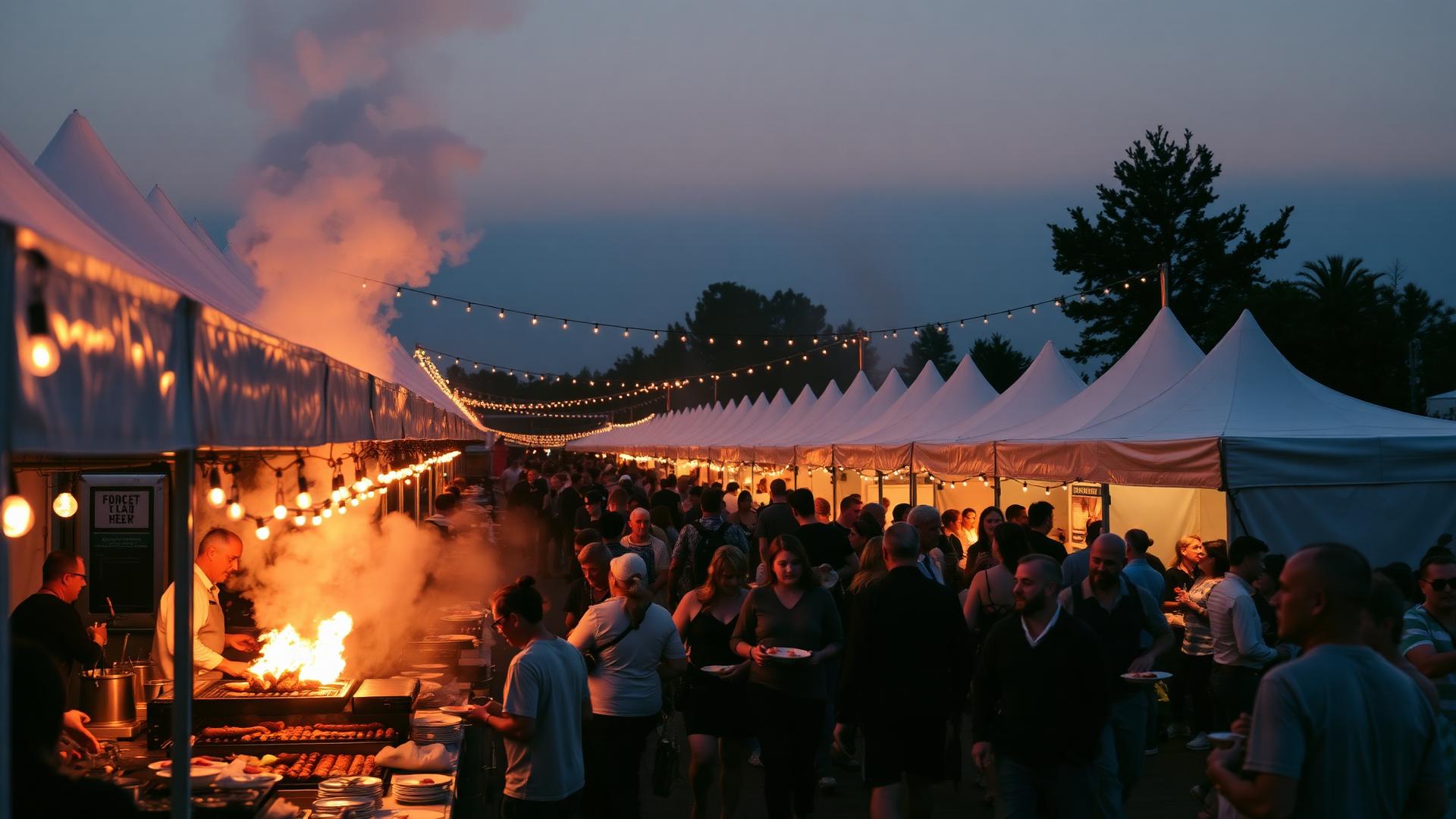
A row of food festival vendor tents with open-flame grills and propane cooking equipment under an amber evening light
EV / 34 · Food, beer, wine & spirits festivals

Food Festival Insurance

Forty vendors, forty propane rigs, and one tasting-ticket bar do not read to a carrier as a single event. They read as forty separate food-safety accounts and a liquor operation stacked under one gate — and the underwriting starts with whether you can prove every one of them is covered.

  • Foodborne illness exposure across an entire vendor roster

  • Temporary health permits and commissary rules per stall

  • Propane and open-flame cooking near tents and crowds

  • Tasting-pour and self-serve alcohol controls

The underwriting problem

A food and beverage festival is not one exposure — it is dozens of small food-service businesses, each with its own equipment, permit, and food-safety discipline, operating simultaneously under a single organizer's gate and a single set of aisles.

Carriers do not price the festival the way the organizer sees it, as one ticketed event with a stage and a beer garden. They price it as a concentration risk: how many independently-run cooking and pouring operations are packed into how tight a footprint, how the organizer verifies each one is licensed and insured before the gate opens, and what happens the moment a guest at one booth gets sick, a grease fire spreads past a tent line, or a tasting pour turns into an over-service claim. The organizer who can produce a clean, verified vendor file — permits, COIs, and equipment inspections collected before load-in, not chased down afterward — is underwritten as a materially better risk than one running on a spreadsheet of names and phone numbers. Judged competitions and sampling formats add a further wrinkle that a straight vendor-row festival does not carry. A chili cook-off or homebrew showcase routes dozens of small tasting portions past a panel of judges and then, often, past the general public in a second open-sampling round, multiplying the number of hands that touch each dish or pour beyond what a single transaction at a food truck window would involve. Underwriters treat that repeated-handling pattern as its own foodborne-illness variable distinct from the vendor-permit question, and ask specifically how sampling portions are held at safe temperature between the judging tent and the public tasting line, not just whether the original dish was prepared under a valid permit.

Most common decline reason
No formal vendor COI collection and verification program
Fastest liquor red flag
Self-pour tasting stations without a licensed attendant
Quietest exposure
Packaged goods sold for take-home consumption after the gate closes
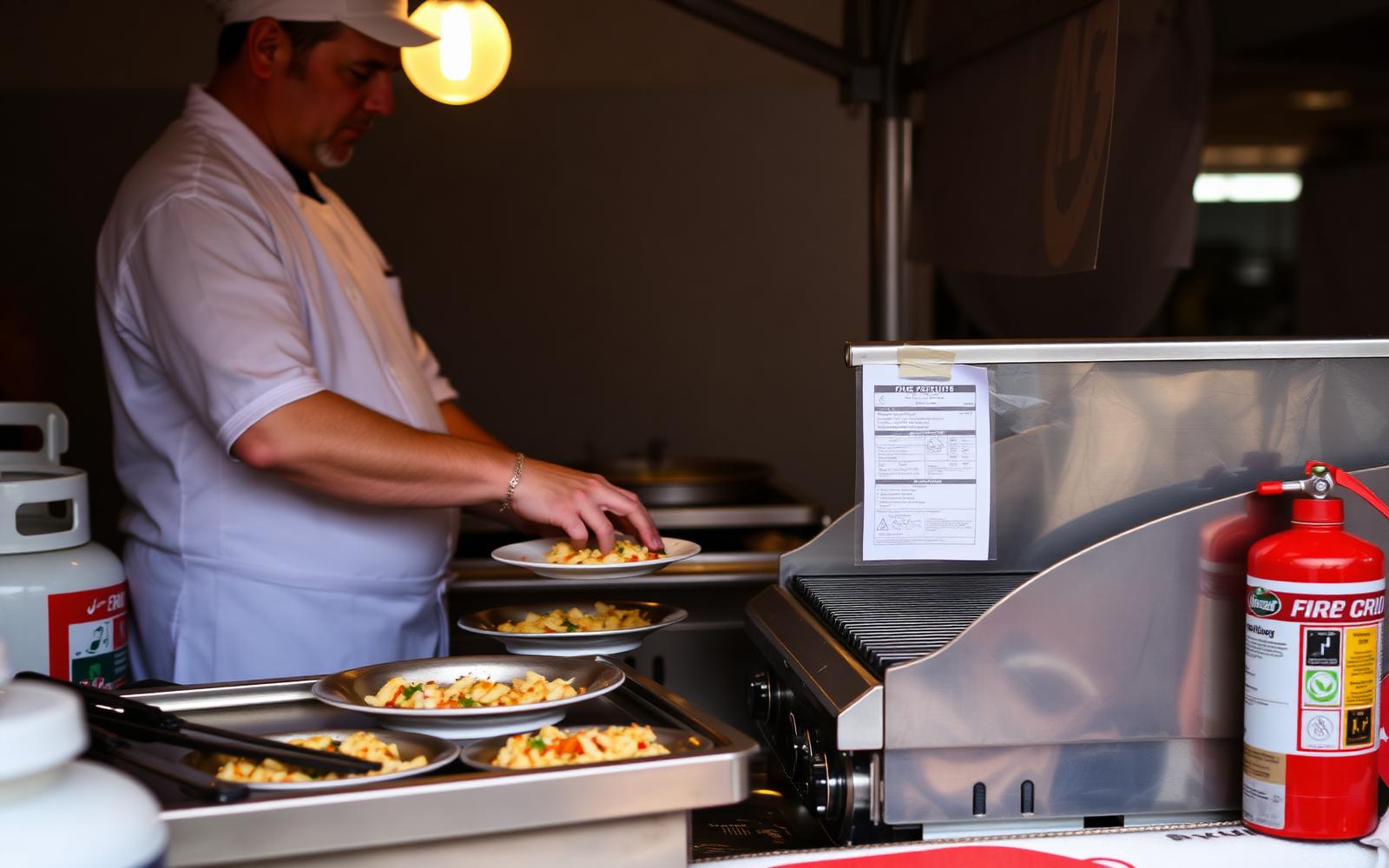
Close-up of a food festival vendor booth with food-safety gloves, sanitizer, and a temporary permit posted at the counter
Food & beverage festivals · vendor row
Field evidence

The permit taped to the booth is the underwriting file in miniature

A visible temporary health permit, a certified food handler, and a fire extinguisher within reach of the fryer are the three things an inspector — and an underwriter — look for first.

100%
Of vendors that should have a COI on file before load-in
3 ft
Typical minimum clearance required around open-flame cooking stations
1
Missing permit needed to hold up the entire festival's binder

Direct answers

What festival organizers actually ask us

01

What is food and beverage festival insurance?

Liability coverage purchased by the organizer of a food truck rally, beer, wine, or spirits festival, or a chili/BBQ cook-off, that addresses foodborne illness, liquor liability, propane and open-flame cooking exposure, and the compounding risk of dozens of independent vendors operating under one event permit.

02

What does it typically include?

General liability for the organizer's own operations, liquor liability where the organizer pours or licenses on-site alcohol sales, vendor certificate compliance tracking, and often event cancellation coverage tied to a health-department shutdown or a weather event affecting outdoor cooking stations.

03

What triggers a decline instead of a quote?

No vendor COI collection program, self-pour alcohol stations without licensed servers, a prior foodborne illness outbreak claim on the account, and missing or unverifiable health-department permits for the vendor roster are the four fastest ways an underwriter passes on a food and beverage festival submission.

04

Who carries the risk for a packaged item taken home from the festival?

Primarily the vendor that made and sold it, under a products liability grant, since the exposure extends beyond the festival's own dates and footprint. The organizer's role is to confirm that exposure is actually insured before approving the vendor to sell take-home goods, not to absorb it directly.

Exposure

How the festival reads to a carrier

Four lanes carry most of the loss activity at a food and beverage festival, and each one is underwritten with its own set of questions.

Foodborne illness across the vendor roster

One contaminated batch at one booth can produce a cluster of claims traced back to the festival's gate rather than a single vendor, especially when several stalls serve similar dishes.

  • Health-department temperature logs requested from high-risk vendors
  • Commissary or licensed-kitchen requirement for pre-made items
  • Organizer's own products liability exposure for shared condiments or water stations

Temporary permits and commissary rules

Every jurisdiction issues its own temporary food establishment permit, and the rules for hand-washing stations, commissary check-ins, and ice sourcing vary by county.

  • Permit roster matched one-for-one against the vendor list
  • Commissary or approved-kitchen documentation on file for prepared foods
  • Local health department walkthrough scheduled before doors open

Propane and open-flame cooking

Fryers, grills, and propane tanks packed into a tent row create a fire and burn exposure that scales with vendor density, not attendance.

  • Fire extinguisher and clearance requirement enforced at every cooking booth
  • Propane tank storage and exchange plan reviewed in advance
  • Fire marshal sign-off on tent and cooking-station layout

Liquor liability and tasting-pour controls

Beer, wine, and spirits tastings introduce dram-shop exposure that is priced very differently depending on who is pouring and how consumption is limited.

  • Licensed servers staffing every pour station, including self-pour walls
  • Ticket, token, or ounce-limit system capping total consumption per guest
  • ID verification and cut-off procedure documented and enforced

Underwriting

Six facts that set your rate

Hazard

A vendor's uninspected fryer or grease trap starts a booth fire that spreads to the tent line.

Control

Fire marshal-approved cooking layout, mandatory extinguishers at each open-flame booth, and a grease disposal and containment plan collected during vendor onboarding.

Hazard

A cluster of guests reports illness after eating at multiple booths on the same afternoon.

Control

Temperature logging for high-risk vendors, a commissary requirement for pre-made items, and a documented incident-response plan that can trace symptoms back to a specific stall quickly.

Hazard

A self-pour beer wall or unmonitored tasting table leads to visible over-service.

Control

Licensed attendants staffing every pour station, a ticket or token system capping consumption, and a written cut-off and ID-check procedure enforced at the gate and the bar.

Hazard

A vendor operates without a current health permit or a valid certificate of insurance.

Control

A formal vendor onboarding checklist that blocks load-in until the permit and COI are received and verified, not merely requested.

Hazard

A guest slips on spilled grease, ice melt, or standing water between vendor rows.

Control

Designated grease and waste disposal stations, mats or absorbent material at high-traffic cooking booths, and a walking sweep schedule for aisles during peak hours.

Hazard

A jarred sauce or bottled beverage sold on-site causes a delayed reaction after the festival ends.

Control

Vendor-carried products liability confirmed for any packaged take-home goods, with labeling and allergen disclosure reviewed before the vendor is approved.

Hazard

Judged competition samples sit unrefrigerated between the judging tent and the public tasting line.

Control

Temperature holding equipment staged at both the judging tent and tasting line, a documented time limit for samples out of refrigeration, and a competition steward trained to pull entries that exceed it.

Hazard

An unlicensed amateur producer pours homebrew or hobbyist spirits without oversight.

Control

A licensed attendant assigned to any amateur-producer table, confirmation the state and event's liquor license actually permits unlicensed pouring, and the same ticket or ounce-limit system applied as at commercial stations.

Glossary

How carriers talk about a vendor-heavy event

These terms show up in nearly every food and beverage festival submission, and getting them right shortens the quote cycle.

Dram shop liability
The legal exposure that arises when an establishment or event serves alcohol to a visibly intoxicated or underage guest who then causes injury. It sits underneath liquor liability coverage and is priced around service controls, not attendance.
Host liquor liability
Coverage for an entity that serves or arranges alcohol service without holding a commercial liquor license itself — the typical structure for an organizer running a beer garden through a licensed caterer or bar service.
Temporary food establishment permit
A short-term health department authorization allowing a vendor to prepare or serve food at a specific event and location, distinct from — and in addition to — any permanent food-service license the vendor may hold elsewhere.
Commissary requirement
A rule requiring certain prepared foods to originate from a licensed, inspected kitchen rather than being made on-site at an uninspected booth, common for items with higher contamination risk.
Completed operations
The part of a liability policy that responds to injury or damage happening after the vendor's work is finished — the relevant grant for a packaged sauce or bottled drink consumed well after the festival ends.
TIPS/RBS certification
Recognized training programs for alcohol servers covering intoxication recognition, ID verification, and refusal procedures. Carriers treat certified staffing as a material control on a liquor liability submission.

Process

How a vendor-heavy submission moves to a bound policy

Week 1

Roster and permit intake

The organizer sends the vendor roster, cuisine or beverage type per booth, and whatever permits and COIs have been collected so far.

Week 1–2

Gap identification

The broker flags which vendors are missing a permit or certificate and which alcohol stations lack a named licensed server, before drafting terms.

Week 2

Quote issued

Terms are issued once the layout, fire marshal sign-off, and pour-control method are confirmed, with any outstanding vendor gaps listed as subjectivities.

Days before the event

Bind and load-in

The policy binds once subjectivities clear, and the vendor compliance checklist is used at the gate to keep any last-minute, uninsured booth from setting up.

Structure

Who is responsible for what

  1. Layer 01

    Individual food and beverage vendors

    Typically asks for
    Their own general liability and, where applicable, liquor liability policy, a current health permit, and a certificate naming the organizer as additional insured before load-in.
    Where it goes wrong
    A vendor arrives with an expired permit or no COI on file, becoming an uninsured gap the organizer inherits by allowing them to operate.
  2. Layer 02

    The festival organizer

    Typically asks for
    An event general liability policy covering the grounds, aisles, and shared infrastructure, plus a vendor compliance program that verifies every permit and certificate before the gate opens.
    Where it goes wrong
    No formal collection process means vendor compliance is assumed rather than confirmed, and the organizer's own coverage is left to absorb claims that should have sat with the vendor.
  3. Layer 03

    Alcohol service provider or licensed bar operator

    Typically asks for
    A liquor license matching the event's jurisdiction, host or liquor liability coverage, and trained, TIPS/RBS-certified staff at every pour point, including self-serve stations.
    Where it goes wrong
    Self-pour walls or volunteer pourers without licensing turn a routine tasting event into an uninsurable liquor exposure the moment a carrier reviews the submission.
  4. Layer 04

    Venue or municipality hosting the festival grounds

    Typically asks for
    Additional insured status, a waiver of subrogation, and often proof of fire marshal sign-off on the vendor and tent layout before permits are issued.
    Where it goes wrong
    A layout that does not match the fire marshal's approved plan can void the municipal permit and, with it, the coverage that was written to match it.

Placement path

Two ways this account gets written

Option A

Verified vendor program

The organizer collects and checks every permit and COI before load-in and enforces licensed pouring at every alcohol station.

  • Vendor roster cross-checked against health department permits
  • COIs collected and verified, not just requested
  • Licensed servers staffing all tasting and pour stations
  • Broader carrier appetite and materially better pricing

Option B

Informal vendor sign-up

Vendors register online with no permit or COI verification, and alcohol service is left to whoever volunteers to pour.

  • Uninsured or unlicensed vendors discovered only after a claim
  • Self-pour or unmonitored tasting stations
  • Missing commissary or temperature-control documentation
  • Frequent decline or heavily subjectivity-laden quote

Submission

The submission that gets quoted first

014 items

The festival

  • Event dates, venue or municipal grounds, and expected attendance per day
  • Full vendor roster with cuisine or beverage type and booth count
  • Layout plan showing tent spacing, cooking stations, and fire lanes
  • Prior years' claims or outbreak history for the same event, if any

024 items

Food safety and permits

  • Temporary health department permits for every vendor
  • Commissary or licensed-kitchen documentation for prepared foods
  • Fire marshal sign-off on cooking station layout and clearances
  • Grease disposal and waste management plan

034 items

Alcohol and vendor compliance

  • Liquor license and licensed server roster for any beer, wine, or spirits service
  • Consumption-control method — tickets, tokens, or ounce limits — for tastings
  • Vendor COI collection log confirming additional insured status
  • Packaged-goods vendor list with products liability confirmation

FAQ

Food & beverage festival questions

Does the organizer's policy cover a foodborne illness outbreak from a vendor's booth?

Rarely on its own. The vendor that prepared and served the contaminated item carries the front-line products liability exposure, typically through their own COI. The organizer's event policy is a second layer that responds to the organizer's own negligence in vendor selection, spacing, or refrigeration oversight — not a substitute for verified vendor coverage.

Can we run a self-pour beer wall without a licensed bartender at every station?

Most carriers will not quote self-pour tasting without a licensed server or attendant monitoring consumption, checking IDs, and enforcing a per-person pour limit. Unmonitored self-pour is one of the fastest ways to get a liquor liability submission declined outright, regardless of the festival's overall size or reputation.

What happens if one vendor never sends a health department permit?

That vendor becomes an uninsured gap inside an otherwise clean event. Underwriters increasingly ask for the full vendor roster cross-checked against permits on file, and a single missing or expired temporary food establishment permit can trigger a subjectivity that holds up binding for the entire festival.

Why does a prior outbreak or recall claim matter so much to underwriters?

A documented foodborne illness cluster or product recall tied to a past event is treated as loss history on the account, not the vendor. Carriers will ask what changed operationally — vendor vetting, temperature logging, commissary requirements — before they will consider quoting the next occurrence of the same festival.

Do we need product liability coverage separate from general liability?

Yes, when vendors sell packaged goods — sauces, jarred preserves, bottled beverages — that guests take home and consume later. That exposure extends past the festival gates and is underwritten as a completed-operations and products liability question distinct from the on-site slip-and-fall or grease-fire exposure.

What is the difference between host liquor liability and a vendor's own liquor coverage?

Host liquor liability is carried by the entity that holds the permit to pour — often the organizer or a licensed beverage vendor — and responds to injury caused by an intoxicated guest at that specific service point. A separate vendor's own liquor liability, where it exists, is scoped to that vendor's booth alone. Confirming which entity holds the pouring permit is what tells an underwriter which policy actually has to respond.

Can a chili cook-off or amateur BBQ competition be insured the same way as a commercial food festival?

Largely yes, but competition formats add a wrinkle: many cooks are unlicensed hobbyists rather than commercial vendors, which shifts more of the food-safety exposure onto the organizer. Underwriters typically ask for a signed waiver and food-safety briefing for every competing team, plus proof that judged samples are prepared and handled under the same temperature and sanitation rules as any licensed booth.

How does a rain-out or a health-department shutdown affect a bound policy mid-event?

General liability keeps responding to injury or property damage that occurs before or during a shutdown, but the financial loss from lost ticket or vendor revenue is a cancellation question, not a liability one. Where cancellation coverage was bound with weather and authority-order triggers named, a health-department closure or a severe storm can qualify; where it was not, the lost day is an uninsured cost to the organizer.

Does a judged tasting round need different food-safety controls than a regular vendor booth?

Yes. Judged samples and public tasting portions get handled and held far more times than a single food-truck transaction, which multiplies temperature-abuse and cross-contamination opportunities. Underwriters ask how sampling portions are held between the judging tent and any public tasting line, separate from whether each competing team's original dish was prepared under a valid permit.

Can amateur homebrewers or hobbyist distillers pour at a tasting festival?

Only where state law and the event's liquor license permit unlicensed producers to serve, and even then a licensed attendant should still staff the pour and enforce the same consumption limits as a commercial vendor's station. An amateur producer pouring without a licensed attendant present is treated the same as an unmonitored self-pour station on the submission.

Next step

Send the vendor roster and the alcohol plan

How many vendors are cooking versus pouring, and whether alcohol service is licensed and staffed, are the two facts that move a food and beverage festival quote fastest. Send those and we will tell you where the account sits.

General information about how food and beverage festival placements are commonly structured. Health department permitting, liquor licensing, and fire marshal requirements are jurisdiction-specific. Not legal advice; nothing here confirms coverage.

Food Festival Insurance | Eventure Insurance