Farm Tour Insurance
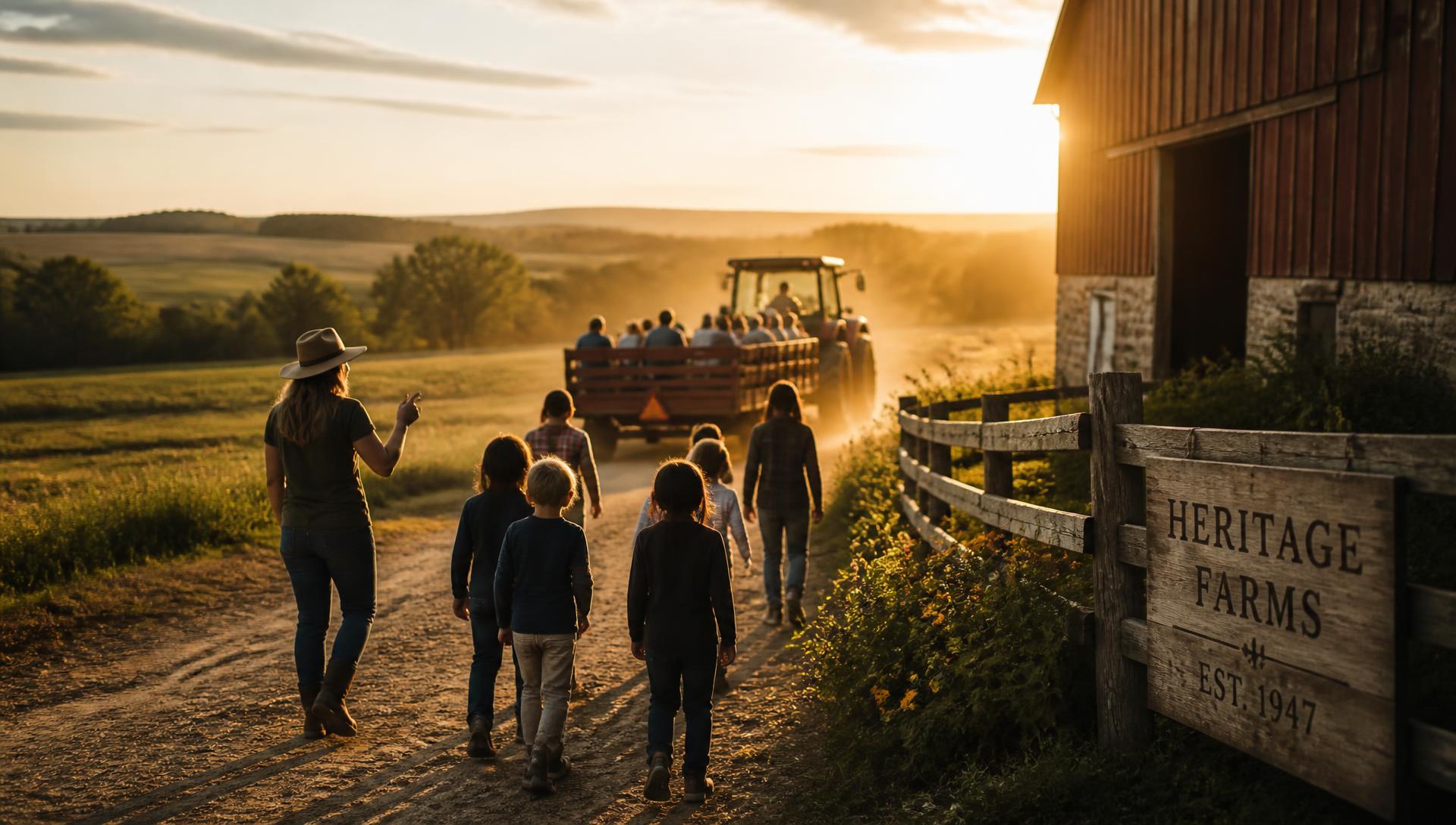
A tour walks the public through the parts of a farm that are genuinely industrial: livestock housing, machinery yards, silage and grain. Low frequency, high severity, and usually with children in the group.
- 01Supervision ratios and a fixed walked route
- 02Zoonotic controls and handwashing at animal exits
- 03Abuse and molestation cover for school groups
- 04Working equipment scheduled around the tour
The underwriting problem
A farm tour puts a stranger's children inside a working agricultural business and asks the same staff to run both at once.
School groups, wagon rides, and animal contact each carry their own claim history. Layer them onto live machinery and a public that has never been on a farm, and the rating question becomes supervision ratios and route control, not acreage.
- Severity driver
- Animal contact and wagon transport
- Rating lever
- Adult-to-child supervision ratio
- Overlooked hazard
- Zoonotic illness and handwashing provision
The wagon is the account's severity, not the barn
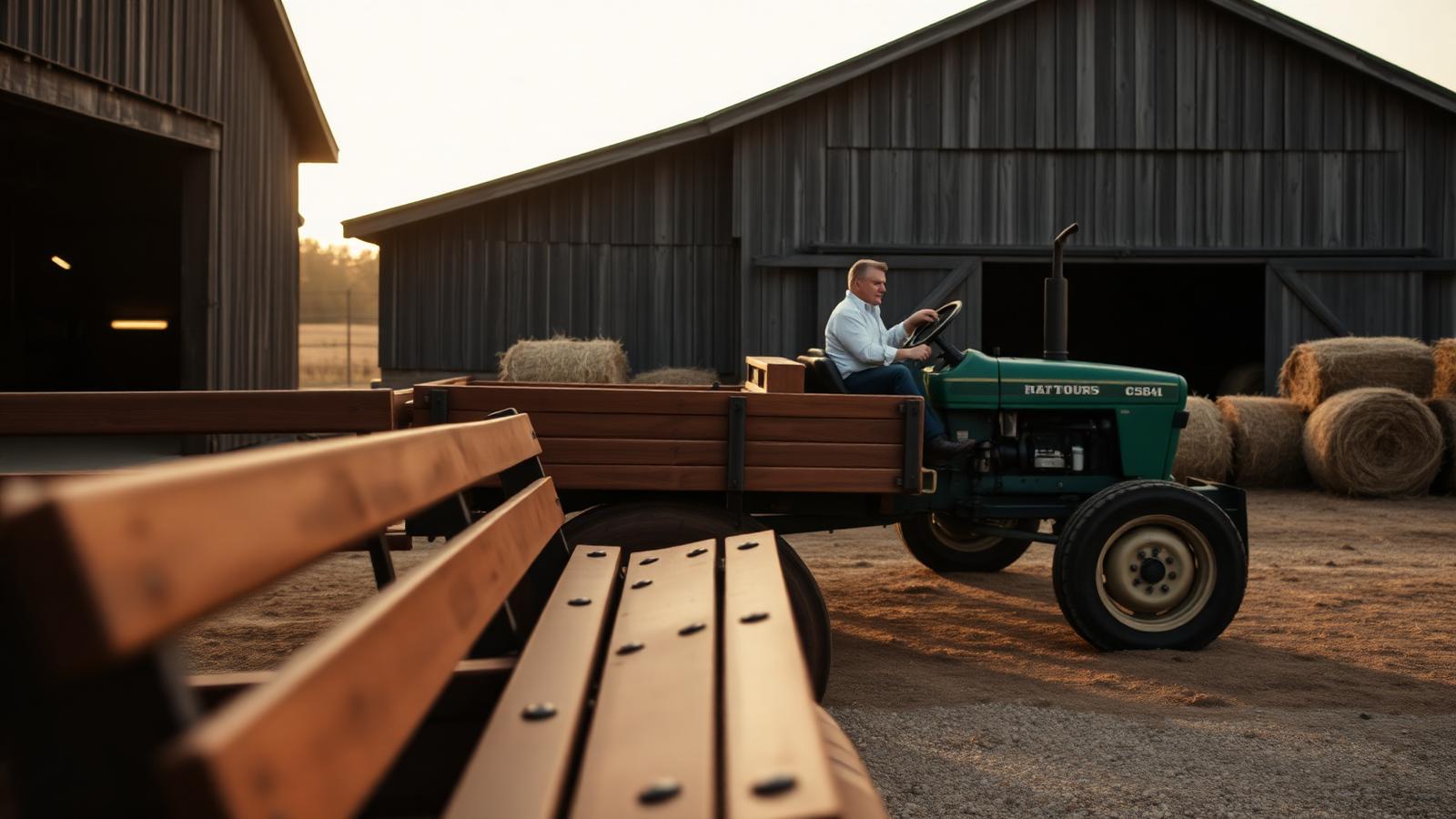
Every farm tour submission turns on passenger transport: boarding, rails, driver training, and the moment a tractor moves with people on board.
- 1
- Trained driver named per wagon in a clean file
- Full stop
- Boarding standard underwriters expect in writing
- ≤ 5 mph
- Posted wagon speed on public routes
Direct answers
What tour operators ask first
What is farm tour insurance?
Farm liability extended to cover guided public and educational visits on an operating farm. It contemplates supervised groups moving through livestock, equipment, and production areas, and typically adds animal contact, abuse and molestation, and products liability where food or samples are served.
Who needs it?
Dairy, livestock, and mixed farms hosting school trips, agritourism operators running guided tours, vineyards and creameries running tasting tours, and any farm charging admission for an educational visit.
What is the biggest single control?
Supervision ratio combined with a fixed, walked route. A guide-to-visitor ratio the farm can actually maintain on its busiest booking day is worth more to an underwriter than any signage or waiver.
What is the single most common gap in a farm tour submission?
A route description without stated control points. A submission that says 'guided farm tour' with no mention of where livestock, equipment, or wagon transport intersect the walked path leaves an underwriter to assume the worst case at every stop, which slows the quote and often narrows the terms offered.
Does umbrella coverage matter for a small farm running occasional tours?
Increasingly yes. School districts and larger tour operators now routinely request $1M in umbrella or excess limits above the primary policy for any booking involving minors, and a farm without that layer already in place can lose a contracted booking to renewal-timing delays rather than to price.
Classification
Guided tour or open agritourism?
The distinction sets the form. Farms that run both need both scheduled.
Option A
Guided farm tour
Booked, supervised, routed
- Group size known in advance and led by a named guide
- Fixed route through production areas
- Access to livestock and equipment areas under supervision
- Frequently school or institutional bookings with contracts
- Severity driven by animals, machinery, and zoonotic risk
Option B
Open agritourism access
Ticketed, self-directed, dispersed
- Visitors move freely through designated public areas
- Production areas fenced off rather than visited
- Attractions, retail, and food drive the visit
- Peak-day volume is the dominant exposure
- Frequency driven by slips, parking, and play areas
Route
A tour route, read as an underwriting document
Arrival and muster
Coach or minibus drop-off, headcount, group briefing, and allocation of guides before anyone moves.
- Coach turning area
- Headcount log
- Scripted safety brief
Livestock housing
Barns, pens, and milking areas — animal behavior, gates, slurry channels, and slip surfaces.
- No entry to pens
- Gate discipline
- Guide-led only
Animal contact point
Supervised petting or feeding, the highest zoonotic exposure on the route.
- Handwash at exit
- No food/drink
- Under-5 supervision rule
Equipment and production
Machinery yard, grain handling, and processing areas with moving plant and confined spaces.
- Movement embargo
- Marked walkway
- No-touch rule
Sampling and retail
Tastings, farm shop, and packed lunch areas — where allergens and food handling enter the picture.
- Allergen list
- Handwash before eating
- Separate eating area
Underwriting
What sets a tour rate
| Underwriting factor | Why it matters | How it can change appetite |
|---|---|---|
| Group composition | School groups of young children carry a different severity and legal profile from adult agritourism tours. | Minors on site typically require abuse and molestation coverage and background-check evidence. |
| Supervision ratio | The ratio the farm maintains on a peak booking day, not the ideal ratio, is what matters. | A stated maximum group size per guide is one of the most effective terms improvements available. |
| Animal contact | Direct contact drives both bite/kick injury and zoonotic illness exposure. | No-contact viewing broadens appetite substantially; contact with young stock requires the full hygiene control set. |
| Route interaction with working operations | Tractors, telehandlers, and livestock movement crossing a pedestrian route is the classic severe-claim setup. | A written movement embargo during tour windows is expected on any farm with machinery on the route. |
| Food and sampling | Raw milk, unpasteurised cheese, and cider carry specific product exposures beyond general food service. | Unpasteurised product sampling is separately underwritten and frequently excluded. |
| Transport on site | Trailer or wagon transport between areas re-introduces passenger transport severity. | Walking tours are simpler to place than any tour involving towed passenger transport. |
| Weather and seasonal scheduling | Heat, cold, mud, and ice change the same route's hazard profile without changing the route on paper. | A stated temperature or precipitation threshold for rerouting or cancellation reads as active risk management rather than an afterthought. |
| Guide staffing model | Volunteer, teenage, or seasonal guides carry different training, background-check, and workers' compensation questions than year-round paid staff. | A written training checklist signed by every guide before their first solo tour narrows this exposure considerably. |
Coverage
The program, layer by layer
Farm liability with agritourism / tour grant
Guided public access to production areas, scheduled explicitly rather than treated as incidental visitors.
Confirm educational tours are named
Animal contact liability
Bites, kicks, crush injuries, and zoonotic illness arising from supervised contact.
Abuse and molestation
Routinely required when minors are on site, and increasingly a stated requirement in school district contracts.
Products and food liability
Tastings, farm shop sales, and anything consumed on site, including any unpasteurised product.
Farm property and equipment
Buildings, plant, and machinery, including anything parked on or adjacent to the tour route.
Workers' compensation
Guides, farm staff, and seasonal tour leaders, with guiding classified distinctly from field labour.
Umbrella / excess
Commonly required by school districts and institutional bookers above the primary limit.
Commercial auto / on-site passenger transport
Any towed wagon, tram, or vehicle moving visitors between stops, rated distinctly from field and delivery vehicle use.
Environmental / pollution liability
Manure and slurry runoff reaching a waterway or neighboring property during or immediately after a tour season.
Rarely automatic under a standard farm liability form
Claims scenario
How a school visit turns into a serious claim
A class of second-graders visits for a scheduled animal-contact session. The handwashing station at the exit of the petting area has been temporarily moved for a plumbing repair and not yet reinstated, so the guide substitutes hand sanitizer without flagging the change. Several children fall ill in the following days with a confirmed E. coli infection. Because the farm's submission described a permanent handwashing installation and the incident occurred while it was out of service with no documented interim control, the claim becomes materially harder to defend than an outbreak that occurs despite a fully functioning, documented hygiene program.
A second pattern involves the working side of the farm rather than the animals. A telehandler moving feed crosses the tour route between two scheduled stops because the farmhand operating it was not told a group was on site that hour. No one is struck, but a parent chaperone reports the near-miss to the district afterward, and the district's insurance requirement tightens at renewal to require written proof of a movement embargo policy, not just its existence. Farms that can produce that proof before being asked keep the booking; farms that cannot often lose the contract at the next renewal cycle regardless of whether an injury ever occurred.
A third pattern involves the wagon itself rather than either the animals or the equipment yard. A tour operator adds a tractor-drawn wagon ride midway through a booking season to make the visit more attractive to school groups, but the addition is never reported to the broker and the driver receives only an informal walkthrough rather than documented training on boarding procedure and speed limits. When a bench rail gives way on a turn and several children are thrown, the resulting claim exposes two separate problems at once: the passenger transport exposure was never scheduled or rated, and no record exists of driver training or a pre-season inspection of the rails. Carriers treat an undisclosed material change of this kind very differently from an incident occurring within an operation that was fully and accurately described at binding, even when the injury itself looks identical on paper.
Loss control
The control set carriers expect
Hazard
Child develops a serious zoonotic infection after an animal contact session.
Control
Handwashing stations with running water at every animal-area exit, a no-eating rule in animal areas, and signage at each contact point.
Hazard
Telehandler crosses the tour route while a group is walking it.
Control
Written vehicle movement embargo during booked tour windows, communicated at the morning briefing.
Hazard
A child separates from the group inside a barn.
Control
Stated maximum group size per guide, headcount at each stop, and a rear-marker adult on every tour.
Hazard
Allegation involving a staff member and a minor.
Control
Background checks, a two-adult rule with no one-to-one contact, and a documented safeguarding policy.
Hazard
Visitor slips on a wet parlour or barn floor.
Control
Route walked and scraped before each tour, with an alternative viewing point available in wet conditions.
Hazard
Wagon rolls, tips, or a passenger falls while boarding or riding.
Control
Named trained driver, full-stop boarding rule, posted speed limit, and rails inspected before each departure.
Hazard
Visitor suffers heat exhaustion during a peak-summer tour.
Control
Stated heat-index threshold for rerouting to shade or shortening the tour, and water available at the muster point.
Contracts
What bookers require
Layer 01
School district
- Typically asks for
- CGL certificate naming the district and school as additional insured, abuse and molestation limits, and background-check confirmation.
- Where it goes wrong
- Certificate issued naming the school only; the district rejects it days before a booked visit.
Layer 02
Coach and transport operator
- Typically asks for
- Their own liability and evidence the farm can safely receive a full-size coach.
- Where it goes wrong
- No suitable turning area, so the coach reverses across the visitor walking route.
Layer 03
Tour operator or DMC
- Typically asks for
- Contractual indemnity from the farm and evidence of limits, sometimes above $2M.
- Where it goes wrong
- The farm accepts an indemnity broader than its own policy would fund.
Layer 04
Third-party guides and educators
- Typically asks for
- Their own liability and background checks if they lead groups independently.
- Where it goes wrong
- Contract guides treated as staff for supervision but as contractors for insurance.
Layer 05
Insurance broker of record
- Typically asks for
- Accurate, current disclosure of route changes, new attractions, or added transport before the next renewal, not at claim time.
- Where it goes wrong
- A wagon ride added mid-season is never reported, and the endorsement gap surfaces only after a passenger injury.
Season calendar
How a tour program is underwritten
Off-season
Route and ratio review
Route walked fresh, supervision ratios reset against last year's peak-day bookings, and safeguarding policy reviewed.
Pre-season
District contracting
School district certificates, abuse and molestation limits, and background-check evidence prepared ahead of booking season.
Spring through fall
Booking season
Group sizes confirmed against guide capacity, with large bookings flagged before the day they arrive.
Late fall
Post-season review
Incident log and any near-miss reports reviewed, and the route or ratio adjusted for next year's renewal submission.
Submission
The submission that gets quoted first
015 items
The tours
- Annual number of tours and total visitors
- Typical and maximum group size, and guide ratio
- Proportion of school and minor groups
- Season, days of week, and hours tours run
- Whether any wagon, tram, or towed transport is used between stops
025 items
The route
- Site map with the actual tour route marked
- Every stop, including livestock and equipment areas
- Whether any transport is used between stops
- Food, tasting, or sampling offered and what is served
- Stated weather thresholds for rerouting or cancellation
035 items
Controls
- Handwashing station locations and hygiene signage photos
- Vehicle movement embargo policy
- Safeguarding policy and background check process
- Incident log and three to five years of loss runs
- Guide training checklist and volunteer/minor staffing disclosure
Glossary
Farm tour placement language, translated
Additional insured (AI)
A district, school, or booking partner added to the farm's liability policy so a claim arising from the visit is defended and paid under that policy directly, rather than left to a separate arrangement between the parties.
Zoonotic exposure
The risk of illness passing from animals to people through contact, most seriously to young children. It is the exposure behind every handwashing and no-eating rule in an animal-contact area.
Abuse and molestation coverage
A specific grant, usually added by endorsement, responding to allegations involving staff or volunteers and minors. School districts increasingly require it as a named, separate limit rather than assuming it sits inside general liability.
Certificate of insurance (COI)
A one-page summary proving a policy is active, issued to a booking district or tour operator as evidence of coverage. It is not the policy and does not itself broaden or restrict what the policy actually covers.
Waiver of subrogation
A commitment that the farm's carrier will not pursue a third party — a transport operator or tour partner — after paying a claim, even if that party shares some fault. Bookers often require it as a contract condition.
Supervision ratio
The number of visitors, particularly minors, assigned to each guide on the farm's busiest booking day, rather than on an average day. It is treated as the single most influential control on the class.
Movement embargo
A written rule stopping tractor, telehandler, or livestock movement across the tour route during scheduled visitor windows. Carriers treat an unwritten, verbal-only version of this rule as effectively unenforced.
Environmental liability
Coverage responding to manure, slurry, or runoff reaching a neighboring property or waterway. Standard farm liability forms often exclude pollution events, making this a separate purchasing decision for larger livestock operations.
Related coverage
Explore Coverage
Guides & resources
FAQ
Farm tour questions
Why are farm tours underwritten differently from u-pick?
Tours are small, supervised, and routed — but they go into the working parts of the farm that u-pick customers never see: livestock housing, milking parlours, equipment yards, and grain and silage areas. Frequency is lower, severity potential is higher, and the group is often composed of children.
What is the zoonotic exposure and how is it handled?
Livestock contact can transmit organisms such as E. coli O157, cryptosporidium, and salmonella, particularly to young children. Underwriters expect handwashing stations at the exit from every animal area, a no-eating-in-animal-areas rule, and signage. Outbreak claims involving multiple children are the most severe loss scenario on the class.
What do school districts typically require?
Commonly a $1M/$2M CGL certificate naming the district and sometimes the individual school as additional insured, often with abuse and molestation coverage and evidence of background checks for staff working with minors. Some districts also require sexual abuse and molestation limits stated separately.
Does a waiver help with a school group?
Rarely in the way farms assume. Parental waivers for minors are unenforceable in a number of states, and school districts generally will not sign a waiver of the farm's negligence at all. The certificate and the control set carry the weight, not the paperwork.
Can tours run while normal farm work continues?
Yes, and most do — but the route has to be scheduled around equipment movement, not the other way round. Uncoordinated tractor, telehandler, or livestock movement crossing a tour route is a standard exclusion trigger in claim disputes.
How do weather and mud affect a scheduled tour?
A route that is safe in dry conditions can become a slip hazard around a parlour or feed area after rain. Carriers look for a stated fallback: an alternate hard-surfaced viewing point or a cancellation threshold, rather than an assumption that the same route runs unchanged in every condition.
What if the farm also sells raw milk or unpasteurized products?
Raw milk and unpasteurized dairy sit outside most standard products liability grants and are regulated differently state to state, in some places prohibited from retail sale entirely. Tours that include a tasting of any unpasteurized product need that specific exposure disclosed and separately underwritten, not folded into general food service.
Does farm tour coverage extend to virtual or livestream visits?
No — a livestream or virtual tour removes the physical liability exposure entirely and is not typically what this coverage is written for. It can still carry a media or technology exposure of its own, which is a different conversation from the farm's premises liability program.
What does 'additional insured' actually change for a school district?
It adds the district as a named party under the farm's own liability policy, so a claim arising from the visit is defended and paid from that policy rather than requiring the district to rely solely on its own coverage or on the farm's promise to reimburse it after the fact.
How does a tour operation get priced differently from a static petting area?
A static, staffed contact area concentrates supervision at one point and is comparatively easy to underwrite. A moving tour disperses that same supervision across a route with livestock, machinery, and uneven ground, so the rating conversation is about the route's control points, not the farm's total acreage.
Does a farm tour need to plan differently for extreme heat or cold?
Yes. A summer group standing in a metal-roofed barn at midday or a winter group crossing an icy yard changes the injury profile without changing the route on paper. Carriers increasingly ask for a stated heat and cold threshold — a temperature or heat-index number above or below which the tour is shortened, rerouted indoors, or rescheduled — rather than an assumption that the same ninety-minute walk runs unchanged in every season.
What happens if a chaperone wanders off with a child during the tour?
This is treated as a supervision-ratio failure even when the farm's own guide did everything correctly, because the farm is still the party responsible for controlling access to hazardous areas. The control that matters here is a headcount at every stop, not just at the start and end of the tour, plus a rear-marker adult whose only job is confirming nobody has fallen behind or peeled off toward the equipment yard.
Does the farm need commercial auto coverage just for moving groups on-site?
If any vehicle, wagon, or trailer is used to move visitors between stops, yes — on-site passenger transport is rated as its own exposure and is not folded into a general farm liability form by default. A farm that walks its entire route on foot avoids this exposure altogether, which is one reason walking tours are consistently easier and cheaper to place than tours that tow visitors between stops.
Are volunteer or teenage guides treated differently from paid staff?
Yes. Workers' compensation status, background-check requirements, and supervision training standards can all differ for volunteers and minors leading tours, and a farm that staffs its guide roster with unpaid family members or teenagers needs that structure disclosed up front rather than discovered during a claim investigation, when it can read as an unlicensed or unvetted workforce.
Send the route map and your guide ratio
Those two documents answer most of what an underwriter needs to know about a farm tour operation. Add your school-group volume and we can place it.
General information about how guided farm tour placements are commonly structured. Agritourism statutes, waiver enforceability, and school district requirements are jurisdiction-specific. Not legal advice; nothing here confirms coverage.