50,000+ Events Insured
EV / 06 · Agritainment · choose & cut

Christmas Tree Farm Insurance

For eleven months it is a farm. For six weeks it is a retail destination where the public walks uneven ground in winter conditions, carries saws, and shares the lane with a tractor. The policy has to hold in both states.

  • 01

    Customer saw use and laceration frequency

  • 02

    Wagon and tractor transport as a severity driver

  • 03

    Agritourism statutes: what they do and don't do

  • 04

    Standing crop as a separate property exposure

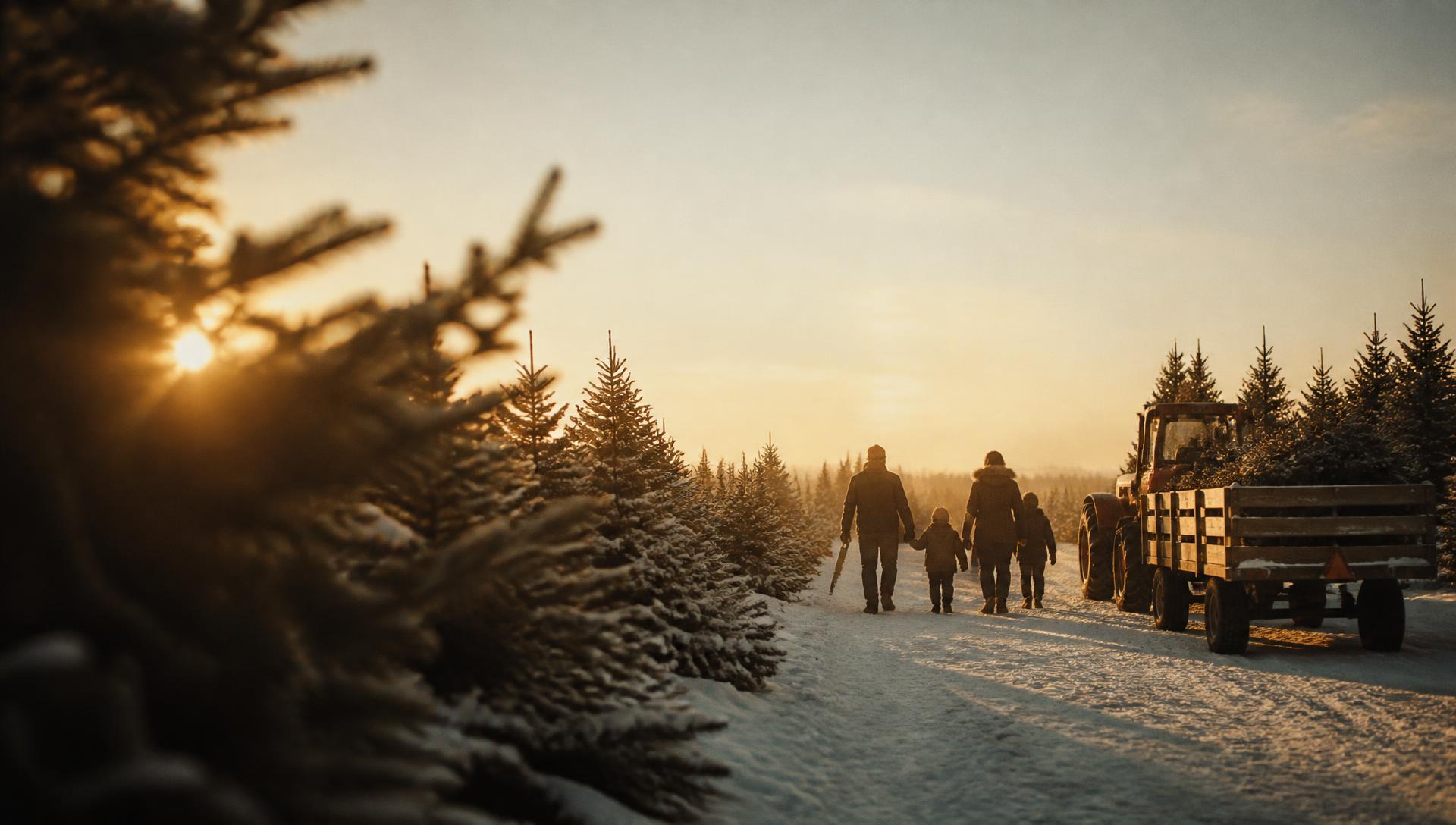
Family walking a snowy row of growing fir trees carrying a handsaw at a choose-and-cut Christmas tree farm

The underwriting problem

Choose-and-cut hands a saw to a family in a frozen field and asks them to walk back out carrying the result.

A tree farm compresses an entire season into five weekends, in the dark half of the year, on ground that freezes and thaws between them. Underwriters read the saw policy, the wagon route, and the lighting plan as a single statement about how seriously the farm takes a crowd it can only see in fragments. Unlike a summer u-pick operation, a choose-and-cut season sells most of its inventory in the final two weekends before the holiday, which means the farm has almost no time to correct a control gap once the season is underway — whatever the saw procedure, the parking plan, and the closing checklist looked like on opening day is effectively what the farm is underwritten on for the whole run. That compressed timeline is exactly why carriers weight documented pre-season readiness so heavily: a farm that inspected its wagon, trained its seasonal staff, and photographed its signage before the first customer arrived is a fundamentally different risk from one making those decisions on the fly during its busiest weekend of the year.

Severity driver
Customer-operated saws and wagon transport
Season shape
A full year of exposure in five weekends
Overlooked hazard
Dusk trading with no field lighting plan
Handsaw beside a freshly cut stump in frosted grass on a choose-and-cut farm
Choose-and-cut plantation · frost morning
Cut-your-own

You hand the public a saw and then lose sight of them

Choose-and-cut converts a plantation into a public attraction for six weekends, with edged tools, tractor traffic, and frozen ground in the same frame.

6
Weekends carrying the entire public exposure
2
Distinct classes — farm and attraction — on one policy
100%
Of saw issue events that should be logged

Direct answers

What tree growers ask first

01

What is Christmas tree farm insurance?

Coverage for a working tree farm that also opens to the public for a choose-and-cut season. It combines farm liability and property with an agritourism liability grant covering customers in the fields, wagon transport, retail areas, and any food, animal, or ride attractions layered on the season.

02

How is it different from tree lot insurance?

A lot is short-term retail on leased ground with bought-in cut stock. A farm owns land and a growing crop, runs equipment year round, and hosts the public on its own uneven terrain — a materially broader premises and operations exposure.

03

What drives the price?

Season attendance, whether customers cut their own trees, whether wagon or tractor transport is offered, the number of ancillary attractions, and the documented control set. Attractions, not acreage, are usually the dominant rating factor.

04

Why do some tree farms get declined outright?

Chainsaw use by customers, unrestricted access to the entire growing acreage without marked cutting rows, and no documented saw or wagon control process are the three findings most likely to end a submission before pricing even starts. Each is fixable, but only if addressed before the season, not after a claim.

05

How does a multi-year policy work for a seasonal business like this?

Most tree farm placements renew annually rather than multi-year, because attendance, attraction mix, and signage compliance change enough season to season that a locked-in multi-year term rarely benefits either side. A clean prior-year file, though, is what earns a smoother, faster renewal the following year.

Exposure

Four exposures a farm form was never written for

Public in the field

Uneven ground, stumps, frozen ruts, and low light from mid-afternoon onward.

  • Stump height policy is a real underwriting question
  • Snow and mud change the terrain daily
  • Field lighting rarely extends to the cutting rows

Saws in customer hands

Handsaws issued to untrained members of the public, often with children present.

  • Bow saws only, never chainsaws, in nearly all appetites
  • Saw issue and return log is a credited control
  • Adult-only cutting rules materially reduce frequency

Transport

Tractor-drawn wagons moving customers and trees between the lot and the field.

  • Highest severity single activity on most tree farms
  • Rails, seating, and step height are inspected
  • Road crossings pull in auto exposure as well as GL

Retail and extras

Baling, shaking, hot drinks, gift barn, and sometimes animals or photo setups.

  • Food service can trigger a separate products exposure
  • Animal contact is separately rated or excluded
  • Baler and shaker are powered-equipment injury points

Parking and arrival flow

Field parking in winter mud or frost, with families and children crossing active vehicle lanes on foot.

  • Peak weekend arrival compresses hundreds of cars into a short window
  • Reversing tractors and arriving customers share the same gravel apron
  • Marked pedestrian lanes are a low-cost, high-value control

Closing and after-hours

Equipment left running, gates left open, or a straggling customer still in the field after posted closing time.

  • A documented sweep-and-lock procedure closes the day cleanly
  • Unlit fields after hours attract off-hours trespass and theft
  • Saw racks and fuel storage should be secured, not just idle

Underwriting

What moves a choose-and-cut rate

Underwriting factorWhy it mattersHow it can change appetite
Season attendanceTotal visitors across six weekends is the primary rating exposure, not acreage.Weekend peaks above a few thousand visitors push the risk from a small farm appetite into a commercial agritainment market.
Cutting modeCustomer-cut, staff-cut, and pre-cut sales are three different injury profiles.Customer chainsaw use is broadly uninsurable; handsaw-only with an issue log is standard appetite.
Wagon and tractor ridesLoading, unloading, and moving passengers behind farm equipment concentrates severity.No rides simplifies the placement considerably. With rides, driver training records and equipment maintenance logs become mandatory.
Additional attractionsMazes, animals, inflatables, and food each add a distinct class of loss.Inflatables and animal contact are commonly excluded unless separately scheduled with their own controls.
Terrain and parkingField parking in winter mud, plus the walk from car to lot, is a frequent slip and vehicle-contact point.Marked parking with attendants and a defined pedestrian route is a straightforward credit.
Statutory posting complianceMost agritourism statutes require specific warning signage, sometimes with prescribed wording and placement.Photographic evidence of compliant signage supports the defense position and is increasingly requested at bind.
Field lighting and dusk operating hoursA season that runs into December sells most of its trees after 3:30 p.m. local time, often in fading or artificial light.Documented lighting along walkways and cutting rows, with a hard closing time before full dark, is treated as a meaningful frequency control.
Prior-season loss history and reported near missesA tree farm's claims are rare but concentrated, so underwriters weigh a documented near-miss log almost as heavily as an actual claim.A farm that can show minor incidents were logged and corrected is priced as a managed risk; one with no record at all is priced as an unknown.

Coverage

The winter program, layer by layer

Farm liability with agritourism grant

The core: public access to the farm for a commercial season, explicitly scheduled rather than assumed incidental.

Confirm agritourism is named, not implied

Hayride / wagon transport endorsement

Passenger transport behind farm equipment, usually with conditions on rails, seating, driver age, and route.

Products and food service

Hot drinks, baked goods, and packaged retail sold on site — including anything prepared in the farm kitchen.

Farm property and equipment

Barns, retail structures, tractors, balers, and shakers; the same equipment doing double duty in the public season.

Crop / standing timber

Multi-year growing exposure to fire, drought, hail, and pest — separate from anything the liability policy does.

Workers' compensation

Year-round and seasonal staff, with the cutting and baling stations driving frequency.

Umbrella / excess

Standard once wagon rides or attendance above a few thousand per season are in play.

Business interruption / seasonal income

Reimburses lost sales when a storm, closure order, or equipment failure shortens the already-narrow public-access window.

Equipment breakdown

Baler, shaker, and refrigeration failures during the season, when replacement equipment cannot be sourced before the weekend ends.

Often overlooked because the farm equipment schedule already lists the items

Loss control

Controls that carriers credit

Hazard

Customer laceration from an issued handsaw.

Control

Bow saws only, issued and returned against a log, adult-only cutting rule, and a spoken safety brief at issue.

Hazard

Fall boarding or leaving a moving wagon.

Control

Full stop for all boarding, staff at both steps, rails and seating maintained, and a posted no-standing rule.

Hazard

Trip on a hidden stump in a cut row.

Control

Maximum stump height standard enforced at end of each day, with cut rows walked and flagged before reopening.

Hazard

Pedestrian struck in the field parking area.

Control

Attended parking with a single marked walking route and no vehicle movement during peak pedestrian flow.

Hazard

Statutory agritourism defense unavailable after a claim.

Control

Signage installed to the state's prescribed wording and location, photographed and dated each season.

Hazard

Vehicle-pedestrian contact in the parking field.

Control

Marked walking lanes, attendants directing traffic, and a rule against vehicle movement during peak arrival hours.

Hazard

Injury from equipment left energized after closing.

Control

A written closing checklist covering baler, shaker, and tractor shutdown, signed off by the last staff member on site.

Season

The operating year

Spring to autumn

Growing season

Crop exposure dominates; public access is incidental and the farm form does most of the work.

October–November

Pre-season readiness

Wagon and tractor inspection, stump walk, signage installation, staff training sign-off, parking layout set.

Late November–December

Public season

Peak weekend exposure. Daily open and close hazard walks, saw logs, and incident reporting discipline.

January

Close and review

Incident log reviewed with the broker, attendance reconciled against projection, controls updated for renewal.

Decision

One blended policy or two separate schedules?

Growers ask this every renewal once the retail season starts pulling in real attendance.

Option A

A blended farm form can still work

Small choose-and-cut operations with light public traffic

  • A few hundred visitors across the whole season
  • No wagon or tractor rides offered
  • Pre-cut and staff-cut sales only, no customer saw use
  • No food service beyond a simple hot-drink stand

Option B

Separate agritourism scheduling is the safer call

Choose-and-cut with wagons, attractions, or real volume

  • Several thousand visitors across five or six weekends
  • Wagon or tractor-drawn transport between rows
  • Customer handsaw use as the primary cutting mode
  • Additional attractions such as a maze, animals, or hot food service

Glossary

Carrier language, translated

Agritourism grant

The specific policy endorsement or provision that names public admission to the farm as a covered activity, rather than leaving it to be inferred from a general farm liability form.

Wagon transport endorsement

A scheduled addition covering passenger movement behind farm equipment, typically conditioned on rails, seating, boarding procedure, and driver qualifications.

Stump height standard

An internal operating rule limiting how tall a cut stump may be left in the field, reducing trip-and-fall exposure for the next group walking the row.

Statutory signage compliance

Posting the state's exact prescribed agritourism warning language, in the required placement, as a condition of relying on the statute's liability limitation.

Products liability

Coverage for injury or illness arising from something sold to the public — hot cider, baked goods, or a wreath with a hidden defect — distinct from premises liability.

Issue-and-return log

The paper or digital record tracking every handsaw handed to a customer and confirmed returned, used both as a daily inventory control and as evidence of supervision after a laceration claim.

Business interruption, seasonal

Coverage responding to lost income when a weather event, equipment failure, or closure order shortens or cancels the farm's narrow public-access selling window.

Standing-timber valuation

The method used to value a multi-year growing crop for property or crop coverage purposes, typically weighing acreage, age of stand, species mix, and replacement cost rather than simple retail price per tree.

Claims scenarios

Two ways a choose-and-cut weekend turns into a claim

The unsupervised saw

A family is issued a bow saw at the barn with no briefing and no log entry. A child attempts to help cut and sustains a laceration. Because the farm had no documented issue-and-return process and no adult-only cutting rule, the defense has nothing to point to beyond "we usually tell people to be careful" — exactly the kind of gap an underwriter was trying to close by asking about the saw procedure during the submission.

The moving wagon

A wagon begins pulling away from the loading area while a guest is still stepping up, and the guest falls between the wagon and the platform. The farm's policy excludes hayride transport because it was never scheduled as an endorsement — the underwriter had asked at renewal whether rides were offered and the answer on file was "no." The farm is left defending the claim without the transport coverage it needed.

The dusk fall

A family stays in the field past 4:30 on a December afternoon, well after the light has faded, because no closing time was posted or enforced. A parent trips on a stump that would have been visible in daylight and breaks a wrist. The farm had field lighting installed at the retail barn but never extended it to the cutting rows, and no staff member was posted to clear the field at dusk. Because the underwriting submission had described a defined operating-hours plan that was not actually followed on the ground, the carrier's defense rests on a policy condition the farm itself failed to meet, turning a routine trip-and-fall into a coverage argument rather than a straightforward liability claim.

Contracts

Who asks the farm for what

  1. Layer 01

    Wholesale buyers and lots

    Typically asks for
    Supply agreements with indemnity flowing to the buyer and evidence of products liability.
    Where it goes wrong
    Farm indemnifies a lot operator for retail conduct it does not control.
  2. Layer 02

    On-site vendors

    Typically asks for
    Food trucks, craft sellers, and photographers carrying their own liability and naming the farm.
    Where it goes wrong
    Vendor certificates collected once and never checked for expiry mid-season.
  3. Layer 03

    Bus and group tours

    Typically asks for
    School and church groups whose operators require the farm's certificate before booking.
    Where it goes wrong
    Group bookings accepted with signed waivers that state law does not enforce for minors.
  4. Layer 04

    Municipality / highway authority

    Typically asks for
    Traffic management approval where queueing customers back onto a public road.
    Where it goes wrong
    Roadside queueing becomes an auto liability event outside the farm's premises grant.
  5. Layer 05

    Equipment rental or leasing company

    Typically asks for
    Proof of coverage for any leased baler, shaker, or wagon brought in to cover peak-weekend demand.
    Where it goes wrong
    A leased unit is assumed covered under the farm's owned-equipment schedule when it is not.

Submission

The submission that gets quoted first

014 items

The farm

  • Acreage planted and acreage open to the public
  • Season dates and projected total attendance
  • Site map showing parking, retail, fields, and wagon route
  • Buildings, tractors, and powered equipment schedule

024 items

Activities

  • Cutting mode: customer-cut, staff-cut, pre-cut, or mixed
  • Whether wagon or tractor rides are offered and the route
  • Every ancillary attraction, including animals and food
  • Admission or parking fees charged

034 items

Controls

  • Saw issue procedure and safety briefing script
  • Wagon inspection and driver training records
  • Photographs of installed agritourism signage
  • Three to five years of loss runs and the incident log

FAQ

Tree farm questions

Does a standard farm policy cover the public-access season?

Frequently not. Many farm liability forms contemplate incidental visitors, not thousands of paying customers walking fields, riding wagons, and handling saws. Once retail admission becomes a business activity, most carriers require the agritourism exposure to be scheduled — and some farm policies exclude it outright.

Do agritourism liability statutes protect the farm?

They help, but they are not coverage. Most state statutes limit liability for the inherent risks of agritourism when specific signage and, in some states, written acknowledgement requirements are met. They generally do not protect against negligence — an unmaintained wagon, an untrained driver, a hidden hazard — which is exactly where claims arise.

Is it safer to cut trees for customers than let them cut?

It changes the exposure rather than removing it. Customer saw use creates laceration frequency; staff cutting shifts that into a workers' compensation exposure and creates a queue and wait-time dynamic. Most farms run a hybrid and underwriters price on which mode dominates and how it is supervised.

Are wagon and tractor rides covered automatically?

No. Hayrides and wagon transport are commonly excluded or separately endorsed, and they are the single largest severity driver on a tree farm. Expect questions about the tractor, hitch and trailer, seating, rails, driver training, and route grade.

What about the growing crop itself?

Standing trees are a multi-year asset exposed to fire, drought, hail, and pest loss. That is a crop or property conversation, separate from the public-access liability, and is often overlooked because the liability question is more urgent, even though a single bad drought year can represent a far larger dollar loss than any single injury claim the farm is likely to face.

How much does a saw-related injury typically cost the farm if uninsured?

It varies with severity, but even a minor laceration requiring stitches and a follow-up visit can run into the thousands once an ER visit is involved, and a deeper cut requiring surgery moves well beyond that. The point of the coverage is not to predict the number — it is to make sure the farm is not funding it out of pocket the same week it is trying to run its busiest weekend of the year.

Do we need a separate policy for the retail barn and gift shop?

Usually not a separate policy, but it does need to be named on the schedule. Retail sales, hot drinks, and gift items sold from the barn carry a products and premises exposure that is different from the field exposure, and an underwriter will want both described rather than assumed to be covered under one generic farm liability line.

What happens if a customer brings their own saw or tool onto the property?

Most farms prohibit it, and for good reason: a customer-supplied blade has not been inspected, is not logged against the issue-and-return process, and removes the farm's ability to control the single riskiest tool on the property. Underwriters treat a written no-outside-tools policy, posted at the entrance and enforced at check-in, as a meaningful control, and its absence is frequently flagged during a site visit.

Does the farm need flood or weather-related crop coverage on top of liability?

It is a separate purchase decision, not a bundled add-on. A late-season freeze, an early ice storm, or a wet fall that prevents field access can damage saleable inventory or shorten the cutting season without a single visitor ever being hurt, and that loss sits entirely on the crop or business-interruption side of the program rather than anywhere near the liability policy.

Does species — fir, spruce, or pine — change how the farm is underwritten?

Not directly for liability, but it matters for the crop conversation. Different species carry different growth cycles, drought tolerance, and pest exposure, which changes how a standing-timber valuation is built. It does not change how customer saw use, wagon transport, or retail operations are rated, since those hazards are about the activity, not the tree.

Should the farm carry coverage for a Santa visit or photo setup?

Yes, and it needs to be named specifically. A seasonal Santa visit, whether staffed by an employee, a costumed volunteer, or a contracted performer, plus any photo backdrop with props, lighting, or a small set, is an added premises and sometimes products exposure that a general farm liability description will not automatically capture unless it is listed.

How does the farm document terrain hazards for an underwriter who never visits in person?

Dated photographs of the marked pedestrian route, the parking apron, and the cutting rows taken at the start of the season carry real weight with a remote underwriter, especially when paired with a simple written description of drainage, grading work completed, and how thaw-related soft spots are identified and re-routed around during the public weeks.

Does a farm with a diversified species mix get better crop terms than a single-species plantation?

Often, yes. A planting spread across fir, spruce, and pine varieties with different drought tolerance and pest susceptibility spreads out the risk of a single disease or weather event wiping out a large share of the marketable crop, and underwriters pricing the standing-timber value take that diversification into account alongside acreage and age of stand.

What is the single fastest way to shorten the underwriting timeline on a new tree farm submission?

Send the season calendar, the saw and wagon control documents, and dated signage photographs together in the first submission rather than in response to follow-up questions. Underwriters spend most of their time chasing missing documentation on agritourism accounts, and a complete file at first contact is consistently quoted faster than a partial one.
Next step

Send the site map and the attraction list

Attendance, cutting mode, and whether you run wagons decides almost everything about this placement. Send those and we can tell you which markets will look at it.

Season close-out

What the last week of the season decides about next year's renewal

Renewal terms on a choose-and-cut farm are set long before the quote arrives. Underwriters reading a second-year submission look for evidence that the operation closed the season the same way it opened it: wagons parked and chocked, saw racks emptied and locked, netting and baler equipment de-energized, and a written incident log that accounts for every first-aid entry rather than only the ones that turned into claims. A farm that hands over a clean close-out file is treated as a managed account; a farm that hands over nothing is rated as a seasonal unknown, and the rate reflects that difference more than any single loss does.

The same file settles the arguments that surface after the season ends. A guest who reports a fall in January, weeks after the lot closed, is far easier to defend when the daily condition log shows when the field was sanded, when the wagon route was rerouted around a soft patch, and which staff member signed off on the final walk of the day. Without that record, the adjuster is left with the guest's account alone, and the reserve is set accordingly. Keeping the log is a fifteen-minute-a-day discipline that buys leverage at exactly the moment the operation has none.

Close-out is also when the contract file should be reconciled. Every wreath vendor, hayride operator, food concession, and photography setup that worked the lot during the season should have a certificate on file that names the farm as an additional insured for the dates they actually worked, not for a range that expired mid-November. Underwriters ask for that stack at renewal, and a gap in it is read as an uninsured subcontractor exposure that the farm's own policy silently absorbed for the balance of the season.

Species and terrain

Why the same acreage prices differently in different states

Two farms with identical attendance, identical wagon routes, and identical saw procedures can still land in different rating tiers once terrain and climate enter the conversation. A hillside plantation in a wet region carries a heavier slip-and-fall frequency than a flat, well-drained field in a drier climate, and underwriters ask about grade, drainage, and typical ground condition during the public season for exactly that reason. A farm that has graded its most heavily trafficked rows, added gravel or mulch paths through the wettest sections, and posted alternate routes during thaw periods is presenting a materially different terrain risk than one that lets customers find their own way across whatever the ground happens to be doing that weekend.

Species mix affects the crop side of the placement more than the liability side, but it is worth separating the two conversations clearly in a submission. Fraser fir, balsam, and various spruce and pine varieties differ in growth rate, drought tolerance, and susceptibility to root rot or bark beetle damage, all of which affect how a standing-crop valuation is built and how quickly a lost planting can be replaced. A farm relying on a single species across its entire acreage carries a concentrated crop risk that a diversified planting does not, and that diversification is a fact worth including alongside the attendance and attraction details rather than leaving it to be inferred.

None of this changes the core liability underwriting, which stays anchored to saws, wagons, and the public season regardless of what is growing in the ground. But a submission that addresses terrain and species as clearly as it addresses attendance and attractions reads as a more complete picture of the operation, and completeness is consistently rewarded with faster quoting and fewer follow-up questions before a policy can bind.

One more terrain factor deserves its own mention: the walk from parking to the fields themselves. On many farms this is the longest unsupervised stretch a visitor covers all day, often across open ground with no defined path, shared with tractors moving between the barn and the growing rows. Farms that mark a single pedestrian route with flags or rope, keep vehicle traffic on a separate lane, and post a low-speed limit for any equipment crossing that route are addressing an exposure that rarely shows up in a saw or wagon conversation but shows up often enough in loss data that most underwriters ask about it directly during a site visit or phone call before binding a new account.

General information about how choose-and-cut farm placements are commonly structured. Agritourism statutes and their signage requirements are state-specific and change. This is not legal advice and nothing here confirms coverage.