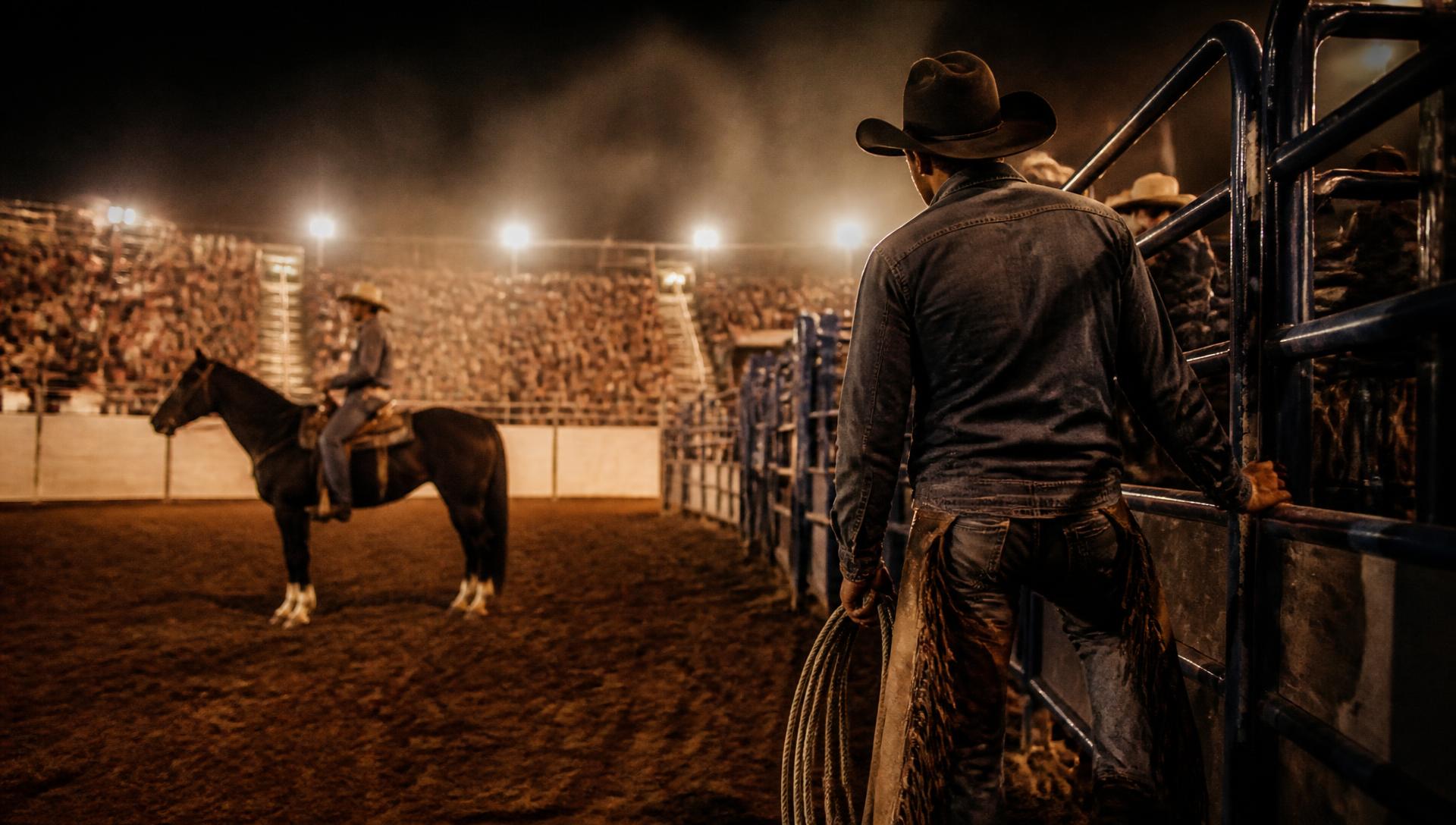
Professional Rodeo Insurance
A professional rodeo is never one insured. It is a committee, a stock contractor, an arena owner, and a sanctioning body, each carrying a different slice of the same night, and the whole card doesn't sanction until every slice is on paper.
- ●
Committee, contractor, arena, and sanction as four separate layers
- ●
Contestant accident medical as the sanction's real gate
- ●
Mutton busting and calf scramble rated on their own
- ●
Facility use agreements that turn on proof of coverage
The underwriting problem
A professional rodeo is a single night with four insureds, three contracts, and one arena floor everyone shares at once.
The committee sells the tickets and runs the beer garden. The stock contractor owns the animals and the trucks that haul them. The arena owner owns the dirt, the chutes, and the panels. The sanctioning body sets the rules that make the card count toward a world standing. None of those four parties can be underwritten as if the other three didn't exist, and a broker who treats the committee's policy as the whole program will miss the gap that actually produces the claim. Each of the four insureds also has its own renewal cycle, its own carrier relationships, and its own appetite for risk that shifts independently of the other three, which is why a professional rodeo's insurance program has to be re-verified every season rather than assumed to carry over intact. A stock contractor who changes carriers, an arena that lets its facility policy lapse, or a sanctioning body that raises its minimum limit mid-cycle can each quietly reopen a gap that was closed the year before, and the committee is the party left holding it if nobody checks.
- Named insured
- The rodeo committee, not the cowboys
- Sanction's real requirement
- Proof of contestant accident medical
- Separately rated events
- Mutton busting and the calf scramble
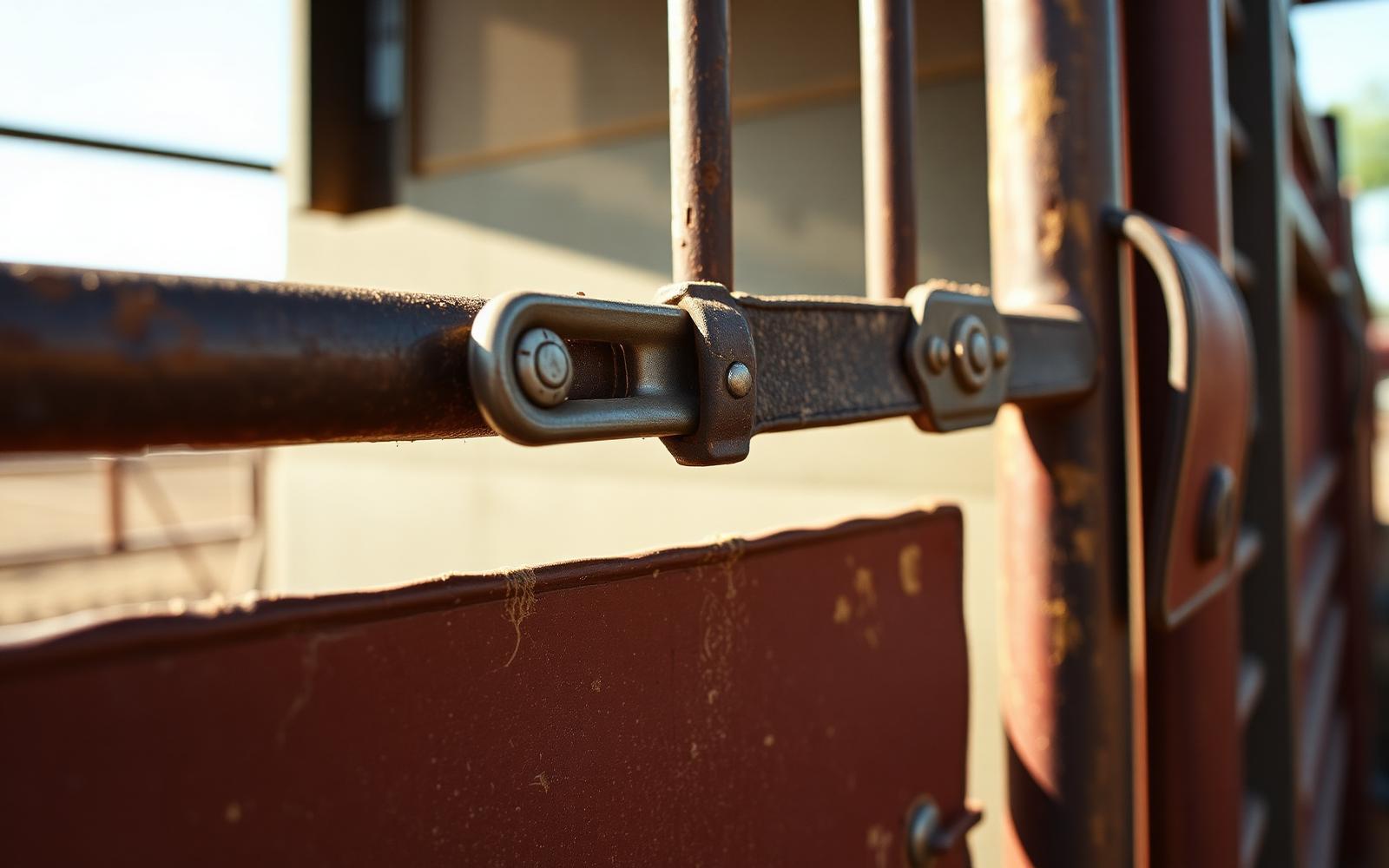
The chute line is where four insureds meet on one piece of steel
- 4
- Distinct insureds a single performance typically carries
- $1–5M
- Typical sanction-required GL limit range for the committee
- 0
- Contestants competing without proof of accident medical
Direct answers
What committees actually ask us
What is professional rodeo insurance?
Liability and accident coverage built around a sanctioned professional rodeo, split across the rodeo committee, the stock contractor, the arena owner, and the sanctioning body. It covers spectator injury, contestant accident medical, livestock exposures, and the contract requirements each party imposes on the others.
Who needs to be named as additional insured?
The venue or fairgrounds owner, the sanctioning body, and often the municipality if the arena sits on public land. Stock contractors and concessionaires typically add the committee back, creating a web of cross-additional-insured endorsements that a broker has to reconcile before the card is sanctioned.
What limits does a sanction typically require?
Sanctioning bodies commonly set a general liability minimum in the one to five million dollar range per occurrence for the committee, plus proof of contestant accident medical, with the exact figure varying by association, venue capacity, and whether events like bull riding are on the card.
Site
The performance, read as an exposure chain
Gate, grandstand, and rail
Ticketed spectators packed along the rail and chute area, closest point of contact to loose stock and flying equipment.
- Rail height and setback to code
- Posted equine/livestock activity signage
- Ushers trained on evacuation route
Beer garden and concessions
Alcohol service adjacent to a crowd that is also standing near an arena fence, with its own liquor liability exposure.
- Licensed server training (TIPS or equivalent)
- Liquor liability endorsement confirmed
- Cut-off and ID checkpoints staffed
Chute and bucking area
Contestants, stock contractor crew, and pickup men working in close quarters with roughstock under load.
- Pre-performance chute and panel inspection
- Mounted pickup men positioned and briefed
- Flank strap and gate protocol enforced
Mutton busting and calf scramble
Untrained children or volunteer spectators placed in direct contact with an animal for a crowd-participation event.
- Age minimums and parental waiver on file
- Dedicated spotters per child or team
- Separately scheduled on the policy
Medical standby and ambulance
On-site EMS positioned for both contestant injury and spectator medical events across the full performance.
- Ambulance and crew on site per sanction requirement
- Radio contact with chute boss
- Transport route to nearest trauma center confirmed
Animal transport and stalling
Roughstock trailered in and held overnight in temporary pens, with mortality and escape as live exposures off the clock.
- DOT-compliant livestock trailers
- Secured overnight stalling and headcount
- Mortality coverage confirmed pre-haul
Underwriting
Seven facts that set your rate
| Underwriting factor | Why it matters | How it can change appetite |
|---|---|---|
| Sanctioning body and card content | A PRCA/WPRA-style sanction sets minimum limits, additional-insured requirements, and contestant medical rules that the committee's program has to match exactly. | Bull riding on the card, rather than a timed-event-only performance, moves the account to a narrower set of markets. |
| Stock contractor's own program | The committee is exposed if the contractor arrives without adequate liability and mortality coverage of their own. | A current certificate naming the committee and venue as additional insureds is close to a hard requirement before the gate opens. |
| Arena and facility condition | Footing depth, panel maintenance, and chute hardware age drive both contestant injury and animal escape frequency. | A documented pre-performance inspection, signed by both the arena owner and stock contractor, materially improves terms. |
| Spectator proximity to the rail and chutes | Grandstand distance and fence specification determine how exposed the crowd is to a loose animal or flying tack. | Facilities built or retrofitted to current arena fencing standards broaden the available market noticeably. |
| Crowd-participation events | Mutton busting and the calf scramble put untrained participants in direct animal contact, a different class than professional contestants. | Running either event without separate scheduling and age controls is a common reason for decline. |
| Alcohol service | A beer garden next to a crowd standing at a fence line compounds both liquor liability and spectator injury frequency. | Licensed, trained servers and a confirmed liquor liability endorsement are treated as baseline, not optional. |
| Medical standby and mounted personnel | Pickup men and on-site EMS both shorten the time between an incident and a controlled response. | Sanction-compliant ambulance staffing and confirmed pickup men on the roster are usually non-negotiable line items on the submission. |
Coverage
The program, layer by layer
Rodeo committee general liability
The base policy for the entity that sells tickets, holds the facility use agreement, and runs the event — spectators, vendors, and the grounds.
Confirm the sanction's minimum limit is met, not assumed
Stock contractor liability and mortality
Carried by the contractor for the animals, trucks, trailers, and crew; mortality coverage for roughstock in transit and on site.
Contestant accident medical
No-fault medical benefit for contestants injured competing, usually required by the sanction as a condition of entry.
Participant legal liability
Responds when a contestant's own negligence injures another contestant, a spectator, or committee staff during the event.
Liquor liability
For the beer garden and any alcohol sold or served on the grounds, whether run by the committee or a licensed vendor.
Arena and facility property
Chutes, panels, grandstand, lighting, and sound systems, typically carried by the venue owner but confirmed against the committee's exposure.
Umbrella / excess
Standard on sanctioned professional cards given the spectator counts, alcohol service, and roughstock exposure stacked into one night.
Workers' compensation
Committee and contractor staff, ushers, ticket takers, and grounds crew, classified separately from contestants who are not employees.
Loss control
Controls that change the price
Hazard
Loose or escaped animal reaches the rail or grandstand.
Control
Arena fencing built to current specification, mounted pickup men on every roughstock event, and a rehearsed catch-pen procedure.
Hazard
Contestant is injured with no accident medical in force.
Control
Entry office verifies current accident medical proof before issuing a back number; no exceptions logged and enforced.
Hazard
Chute gate or panel fails mid-performance.
Control
Written pre-performance inspection co-signed by the stock contractor and arena owner, with any flagged hardware pulled from use.
Hazard
Overserved spectator becomes disorderly near the rail.
Control
Licensed server training, visible cut-off policy, and security stationed at the beer garden perimeter.
Hazard
Child injured during mutton busting or the calf scramble.
Control
Age minimums, signed parental waiver, dedicated spotter per participant, and the event scheduled and rated separately from professional events.
Hazard
Delayed medical response to a chute-side injury.
Control
Ambulance and crew positioned on site per sanction requirement, with a direct radio line to the chute boss.
Contract
Who carries what, and where it fails
Layer 01
Sanctioning body
- Typically asks for
- Minimum committee GL limit, additional-insured status, proof of contestant accident medical for every entrant, and often a copy of the arena inspection.
- Where it goes wrong
- Sanction is issued on a stale certificate, or the accident medical program lapses mid-season without the committee noticing.
Layer 02
Facility / fairgrounds owner
- Typically asks for
- Certificate naming the venue as additional insured, minimum GL limit, and often proof of participant medical before the use agreement is countersigned.
- Where it goes wrong
- Committee signs the facility use agreement before confirming the stock contractor's certificate is also current and compliant.
Layer 03
Stock contractor
- Typically asks for
- Own liability and mortality coverage, DOT-compliant transport, and a signed chute/panel inspection acknowledgment for each performance.
- Where it goes wrong
- Contractor arrives on a certificate that lists a different venue or an expired policy period than the actual performance date.
Layer 04
Concessionaire / beer garden operator
- Typically asks for
- Liquor liability certificate naming the committee as additional insured, and licensed server documentation.
- Where it goes wrong
- Vendor pours alcohol under a liability policy that excludes liquor liability entirely.
Submission
The submission that gets quoted first
014 items
The event
- Sanctioning body and card events including whether bull riding is scheduled
- Expected attendance and grandstand capacity
- Number of performances and dates
- Whether mutton busting or a calf scramble is on the program
024 items
The parties
- Rodeo committee's legal entity and prior years' loss runs
- Stock contractor's current certificate and mortality coverage
- Arena/facility use agreement and any additional-insured requirements
- Concessionaire and beer garden vendor certificates
034 items
Controls
- Pre-performance chute and panel inspection procedure
- Ambulance and medical standby plan
- Contestant accident medical verification process at entry
- Signage confirming state equine/livestock activity statute wording
Comparison
Sanctioned performance vs. jackpot or practice roughstock event
Option A
Sanctioned professional rodeo
Ticketed public performance under a PRCA/WPRA-style card
- Sanctioning body sets minimum limits and additional-insured rules
- Contestant accident medical verified at entry
- Spectators present at scale, with alcohol service
- Facility use agreement typically requires proof of every layer
Option B
Jackpot or practice roughstock event
Unsanctioned, smaller, often at a private arena
- No sanctioning body minimums to meet
- Contestant medical often left to the individual, not verified
- Spectators limited mostly to family and other competitors
- Facility agreement, if any, is far less prescriptive
Calendar
A sanctioning season, month by month
Nov – Jan
Sanction application and date filing
The committee files for its sanctioned date with the association and opens the insurance conversation early enough that limits and additional-insured requirements are known before any contract is signed.
Feb – Apr
Contracts and certificates
Stock contract, facility use agreement, and concessionaire agreements are negotiated and signed, with each party's certificate collected as the paper is executed rather than chased afterward.
May – Jun
Facility walk and pre-performance planning
Arena owner and stock contractor jointly schedule the chute and panel inspection, and the medical provider contract is confirmed against the sanction's ambulance and staffing requirement.
7 days out
Entry office verification
Contestant accident medical proof is checked against the entry list, back numbers are withheld from anyone without current coverage, and mutton busting or calf scramble waivers are collected in advance.
Show days
Performance weekend
The card runs under the sanction's rules, with crowd-participation events staffed and scheduled separately from professional competition exactly as filed with the carrier.
Within 30 days
Post-event reconciliation
Any incident reports are filed, loss experience is logged for next year's renewal, and the committee confirms every additional-insured certificate collected during the season is archived.
Routing
Where your program overlaps
Bull riding insurance
Bull riding is on the card and needs its own rated line.
Livestock show insurance
The same grounds also host a livestock show or 4-H exhibition.
County fair insurance
The rodeo runs as one attraction inside a larger county fair.
Rodeo insurance
You need a rodeo insurance overview before focusing on a specific event type.
Related coverage
Explore Coverage
Guides & resources
FAQ
Professional rodeo questions
Who is actually the named insured on a professional rodeo policy?
Usually the rodeo committee — the local nonprofit or association that holds the sanction, signs the facility use agreement, sells tickets, and runs the beer garden. The stock contractor, sanctioning body, and often the arena owner carry their own separate policies that attach alongside the committee's, not underneath it.
Why does the stock contractor need their own policy?
The stock contractor owns the animals, the trucks and trailers that haul them, and the crew that handles them chute-side. Their liability for an animal escaping, a chute malfunction, or a mortality is distinct from the committee's liability for running the event, and most sanctioning bodies require the contractor to carry it independently.
What does the sanctioning body actually require?
A PRCA/WPRA-style sanction typically sets a minimum general liability limit for the committee, requires the sanctioning body and often the host facility be added as additional insureds, and requires proof of contestant accident medical either through the sanction's own program or a comparable policy before a card can be sanctioned.
Is contestant accident medical the same as general liability?
No. General liability responds to the committee's or contractor's negligence toward third parties. Contestant accident medical is a no-fault benefit that pays a contestant's medical bills after a covered injury regardless of fault, which is what most sanctioning bodies actually require contestants to carry to compete.
Do mutton busting and the calf scramble need separate coverage?
In most programs, yes. Both put untrained children or spectators into direct contact with an animal, which is a different severity and frequency profile than professional contestants who know the stock. Carriers commonly require these listed and rated as their own class, sometimes with age minimums, waivers, and a dedicated staffing plan.
Why does a venue ask for proof of participant medical before signing the facility use agreement?
Because the facility owner is exposed the moment a contestant is hurt on their arena floor regardless of who ran the event. Proof that contestants are carrying accident medical, layered under the committee's and contractor's liability, is often the single document that unlocks the signature on the use agreement.
What happens if the sanctioning body raises its minimum limit mid-season?
The committee's existing policy period usually runs to its own renewal date regardless of when the sanction updates its rulebook, but a mid-season increase can still leave a gap if the committee's limit was set to the old floor. Committees running a multi-date season under one sanction should confirm the current minimum before each performance, not just at the start of the year, since sanctioning bodies do occasionally revise limits between seasons.
Can the committee be added as additional insured on the stock contractor's mortality coverage?
Mortality coverage on the animals themselves typically protects the contractor's own financial interest in the stock rather than a third party's liability, so it is not the same endorsement as general liability additional-insured status. What the committee should confirm instead is that the contractor's liability and care-custody-control coverage names the committee and arena, which is the layer that actually responds if an animal causes injury or damage.
Does the committee's general liability cover the announcer, judges, and rodeo clowns?
Contracted officials and specialty performers such as announcers, judges, and rodeo clowns are typically independent contractors carrying their own liability rather than employees automatically covered under the committee's policy. Their contracts should require a certificate naming the committee as additional insured, particularly for clowns and bullfighters working inside the arena during live stock events.
What happens if a contestant is injured practicing before the sanctioned performance actually starts?
Sanction-required contestant accident medical typically attaches only to the sanctioned performance window, not to unsanctioned practice or warm-up runs on the same grounds. Committees allowing pre-performance practice on the arena should confirm in writing whether that window is covered or whether a separate waiver and supervision protocol is required.
How does a multi-performance weekend change the sanction's insurance requirement?
Each performance is typically its own sanctioned event even under one weekend ticket, and contestant rosters, stock assignments, and even weather conditions can differ meaningfully between a Friday and Saturday show. Confirming that accident medical proof and additional-insured documentation are current for every performance, not just the opening night, is a common gap on multi-day cards.
Send the sanction, the card, and the stock contractor's certificate
Which sanctioning body, whether bull riding and mutton busting are on the program, and the current stock contractor certificate are the three facts that move a rodeo committee's quote fastest. Send those and we'll tell you where the account sits.
General information about how sanctioned professional rodeo placements are commonly structured. Sanctioning body requirements, equine and livestock activity statutes, and facility use agreement terms vary by association, venue, and jurisdiction. Not legal advice; nothing here confirms coverage.