Networking Event Insurance
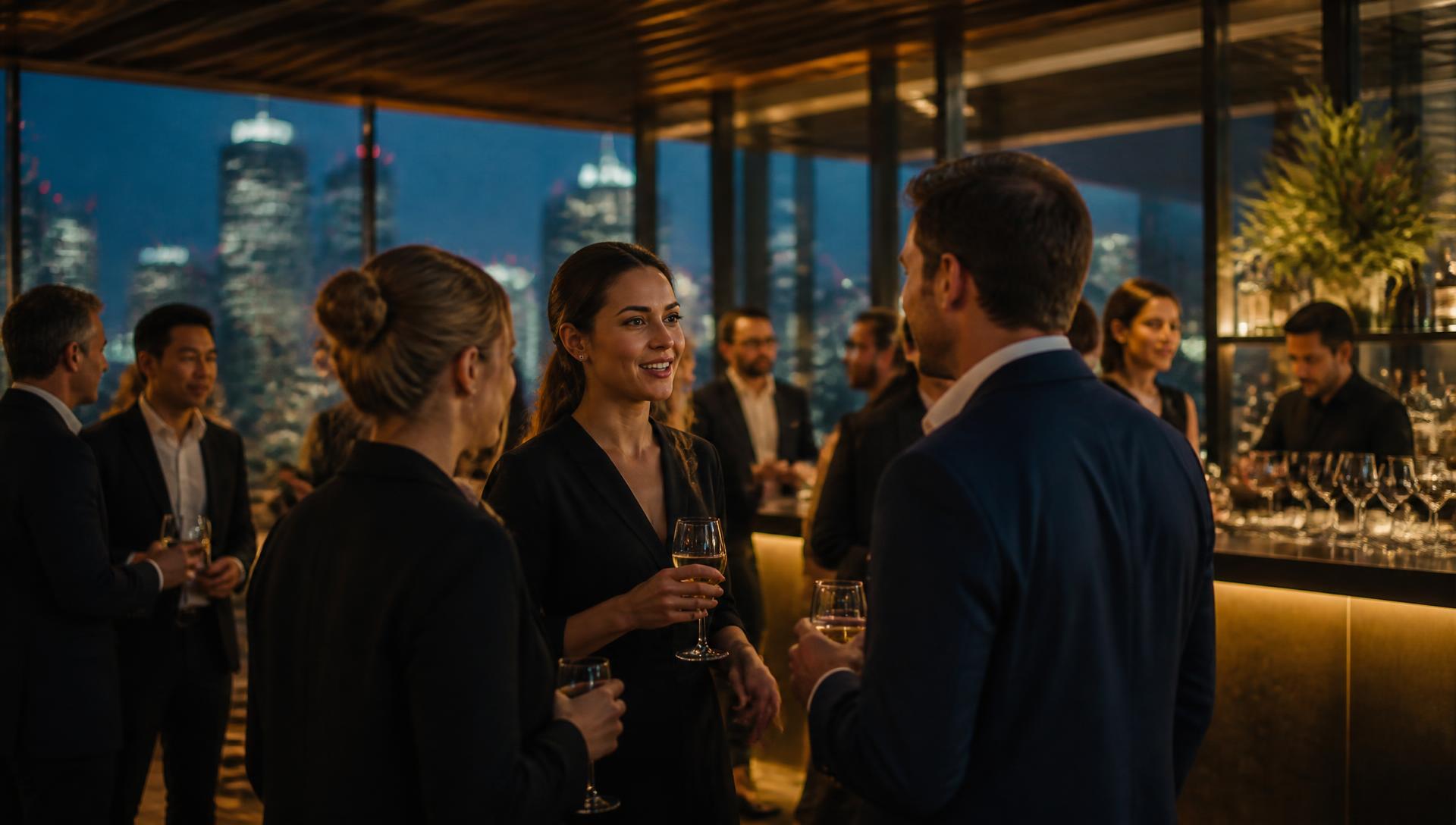
A networking mixer looks low-risk because nobody is on a stage or a ride. What underwriters actually see is an open bar, a rooftop edge, a guest list nobody vetted, and a venue certificate requirement that has to be matched exactly before the doors open.
- 01
Host liquor vs liquor liability, decided by the drink model
- 02
Venue additional insured wording and occupancy limits
- 03
Annual program economics for a recurring series
- 04
Assault and battery sublimits on a late-finish crowd
The underwriting problem
A mixer is not one exposure — it is three overlapping ones: the venue's, the bar's, and the guest list's, and only one of them is written down anywhere.
Chambers and associations often think of a happy hour as an extension of the office, not an event. Underwriters read it the opposite way: an unticketed crowd of strangers, drinking, on a rooftop or in a leased ballroom whose insurance requirements were never read past the certificate holder line. The account that gets quoted cleanly is the one that names its drink model precisely, matches the venue's exact endorsement wording, and states — in writing — whether this is a single date or a calendar of them. What makes networking mixers underwrite differently from a wedding or a concert is the absence of a single obvious risk owner: there is no ticketing platform tracking headcount in real time, no production company insuring the stage, and often no professional event staff at all, just a volunteer committee, a rotating cast of sponsors, and a venue whose own risk manager is quietly assuming the host has already handled everything the lease requires. That gap between assumption and documentation is where most mixer claims turn into coverage disputes rather than straightforward payouts, and it is why the submission that leads with drink model, venue wording, and calendar cadence — instead of a generic description of a networking event — is the one that reaches bind in days rather than weeks.
- Fastest bounce-back
- Additional insured wording that doesn't match the venue lease
- Quietest exposure
- A cash bar sold under a host-liquor-only policy
- Break-even for a program
- Roughly 4–6 events a year vs single-event minimums
The drink model decides the coverage form before anything else does
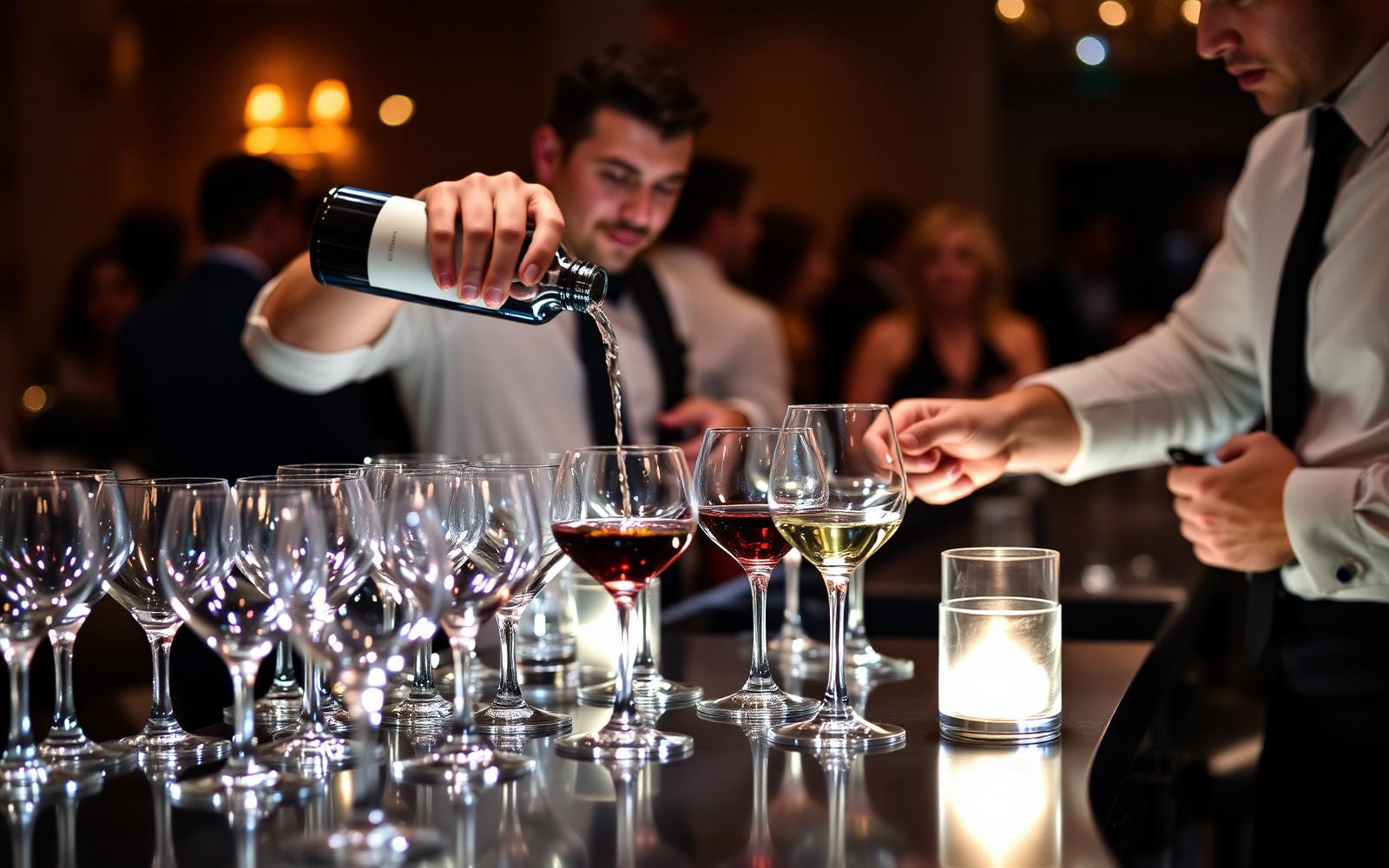
Free and host-poured, cash bar, or a ticket price that bundles drinks are three different liquor liability answers, not stylistic variations on the same one.
- Typical venue-required limit, per occurrence / aggregate
- $1M/$2M
- Events a year where an annual program beats single-event pricing
- 4–6
- Common assault and battery sublimit inside a $1M policy
- $25K
Direct answers
What organizers actually ask us
What is networking event insurance?
General liability, and liquor liability where alcohol is sold or bundled into admission, written for mixers, chamber and association after-hours events, happy hours, and rooftop or venue receptions. It covers bodily injury and property damage to third parties, extends additional insured status to the venue, and can be bought per event or as an annual program for a recurring series.
What is the difference between host liquor and liquor liability?
Host liquor liability is a narrow grant inside a general liability policy for events where alcohol is served free and incidental to the gathering. Liquor liability is a separate coverage part triggered whenever alcohol is sold, whenever a ticket price includes drinks, or whenever a third-party vendor pours for a fee — it responds to intoxication-related injury claims that host liquor exclusions carve out.
How is a recurring monthly mixer priced differently from a one-off?
A single event buys one date at a minimum premium. A recurring program prices the full annual calendar of mixers under one policy, typically at a lower blended per-event cost once the series clears four to six dates a year, and allows venues and headcounts to be added by endorsement without a new binder each month.
What role does an assault and battery sublimit play in pricing a mixer?
It caps the policy's response to altercation-related bodily injury separately from, and usually well below, the main per-occurrence limit, and carriers price it against crowd profile, bar hours, and prior incident history rather than the venue alone.
Do sponsors need their own additional insured endorsement at a mixer?
Frequently, yes. A title sponsor or activation partner running a branded booth or sampling table often negotiates its own additional insured status and indemnity language separate from the venue's requirement, and that request should be scoped before the sponsorship agreement is signed rather than after.
Is a hotel ballroom mixer underwritten differently than a bar or lounge rental?
The hotel's insurance requirement is usually embedded inside its banquet event order and catering contract rather than a standalone venue lease, often naming a management entity distinct from the brand on the building, and frequently requiring liquor liability confirmation even when hotel staff pour under the hotel's own liquor license.
Site
An evening reception, read as an exposure chain
Booking and venue paperwork
Lease or rental agreement sets occupancy, additional insured wording, and certificate deadline, often weeks before the event.
- Certificate matched to lease wording
- Occupancy limit confirmed
- Waiver of subrogation issued
Check-in and guest list
Registration desk, name badges, and often a sign-in sheet for a membership or invited-guest crowd rather than ticketed general admission.
- Attendee count tracked live
- ID checked at the bar, not the door
- Uninvited-guest procedure
Bar and drink service
Open bar, cash bar, or drink tickets poured by venue staff, a licensed caterer, or a third-party bartending vendor.
- TIPS/RBS-trained servers
- Last-call time set
- Cutoff and refusal protocol documented
Rooftop, balcony, or terrace
Elevated or open-edge space carrying its own occupancy cap, rail height standard, and weather contingency separate from the indoor room.
- Rail height verified
- Hard occupancy cap enforced
- Weather hold-point in the run sheet
Close and departure
Guests who have been drinking for two to three hours disperse to rideshares, parking garages, or their own vehicles.
- Rideshare pickup zone designated
- No self-serve after last call
- Staff visible through last guest
Underwriting
Seven facts that set your rate
| Underwriting factor | Why it matters | How it can change appetite |
|---|---|---|
| Drink model | Free and host-poured, cash bar, and ticket-bundled drinks each trigger a different coverage grant. | Any sale of alcohol, direct or bundled into admission, moves the account out of host liquor and into a standalone liquor liability form. |
| Frequency and format | A one-off holiday mixer and a monthly chamber after-hours series carry very different loss-frequency math. | A firm or estimated annual calendar unlocks program pricing that beats stacking single-event minimum premiums. |
| Venue additional insured wording | Venues price their own risk transfer by requiring exact endorsement language, not a generic AI form. | Matching the lease's precise wording on the first submission avoids re-issuance delays that can miss the event date. |
| Occupancy and space type | Rooftops and balconies carry rail-height, egress, and weather exposures a ground-floor ballroom does not. | A hard-enforced occupancy cap tied to the fire marshal's posted number is close to a minimum expectation on elevated venues. |
| Crowd profile and guest control | Open networking events with plus-ones and walk-ins are harder to control than a closed membership roster. | A managed guest list and a documented uninvited-guest procedure reduce the assault and battery conversation. |
| Volunteer and board involvement | Committee members and board volunteers often staff check-in, the bar, or the door without being formally scheduled. | Naming volunteers as insureds and separating that from any workers' compensation gap is now a standard submission question. |
| Sponsor participation | Sponsors underwriting the bar or the venue often want indemnity flowing back to them if a guest is hurt. | Sponsor indemnity and additional insured requests should be scoped before the sponsorship agreement is signed, not after. |
| Venue category — hotel, bar/lounge, rooftop, or private residence | A hotel embeds its insurance requirement in a banquet event order, a bar or lounge often pours under its own liquor license, and a private residence has no professional venue operator reviewing certificates at all. | Private-residence and unlicensed-space mixers draw more underwriting questions about occupancy, egress, and who actually holds the liquor license for the night. |
| Loss history on the series | A recurring program with three to five years of clean loss runs prices very differently from a first-year series with no track record at all. | Clean history at renewal supports flatter pricing even as attendance grows; a prior assault or liquor-related claim usually triggers a sublimit review before the next term. |
Coverage
The program, layer by layer
General liability — single event or annual program
The base grant for bodily injury and property damage to third parties at the mixer, priced per date or across a scheduled calendar.
Confirm which and get the schedule in writing
Liquor liability
Required whenever alcohol is sold, whenever it is bundled into ticket price, or whenever a paid vendor pours — separate from host liquor language in the base GL.
Additional insured — venue and management
Endorsement naming the venue and its management company exactly as required by the lease, with primary and noncontributory wording.
Assault and battery buy-back
Raises or removes the sublimit that otherwise caps altercation-related bodily injury claims well below the main limit.
Host liquor endorsement
Applies only where alcohol is genuinely free and incidental — not a substitute for liquor liability once money changes hands for drinks.
Directors and officers / volunteer accident
For chambers, associations, and boards whose volunteers staff the event and whose governance decisions could be alleged as negligent oversight.
Umbrella / excess
Common once venue-required limits, sponsor indemnity demands, or a rooftop's rail exposure push past a base $1M/$2M program.
Non-owned and hired auto
Relevant where staff or volunteers shuttle equipment, signage, or bar supplies between venues in personal or rented vehicles across a multi-date series.
Loss control
Controls that change the price
Hazard
Cash bar or ticket-bundled drinks run under a host-liquor-only policy.
Control
Confirm the drink model at booking and bind standalone liquor liability the moment any charge attaches to alcohol.
Hazard
Rooftop or balcony occupancy exceeds the posted fire code limit on a popular night.
Control
Hard headcount at the door, a documented cap tied to the fire marshal's number, and a hold-at-capacity procedure.
Hazard
An ejected or over-served guest becomes aggressive on the way out.
Control
TIPS/RBS-trained bartenders, a defined last-call time, and visible staff or security through the last guest's departure.
Hazard
An intoxicated attendee drives home from the venue.
Control
Designated rideshare pickup zone, printed rideshare codes at check-out, and staff empowered to intervene before keys are handed over.
Hazard
Venue certificate is rejected the week of the event over wording.
Control
Request the venue's exact additional insured and waiver-of-subrogation language at lease signing, not at certificate request.
Hazard
A sponsor's branded activation runs without its own liability coverage or indemnity terms scoped.
Control
Collect the sponsor's certificate before load-in and confirm additional insured and indemnity language in the sponsorship agreement, not verbally on-site.
Timeline
How a recurring mixer program comes together
2–3 months out
Calendar drafted
Chamber or association drafts the year's mixer dates, rotating venues, and expected drink model per date.
6–8 weeks out per date
Venue paperwork collected
Each venue's lease and exact additional insured wording gathered ahead of that month's certificate request.
Once per year
Program submitted
The full calendar, drink model, and venue list submitted together rather than one event at a time.
Ongoing
Certificates issued by date
Certificates issued to each venue as its date approaches, drawn from the same annual program.
As needed
Mid-year additions
New venues or an added date scheduled onto the existing program by endorsement rather than a fresh binder.
Program structure
Single mixer vs. annual recurring program
Option A
Single mixer, purchased once
One date, one venue, bought on its own
- Straightforward for a one-off holiday party or a single sponsor event
- Full minimum premium paid on every separate purchase
- Certificate and underwriting file has to be rebuilt each time
- No blended pricing benefit from a full year of dates
Option B
Annual recurring program
A calendar of mixers, priced together as one series
- Fits a chamber or association's monthly after-hours series
- Blended per-event cost, once the series clears roughly four to six dates
- New venues and dates added by endorsement, not a new application
- One certificate-issuance workflow instead of a dozen separate ones
Submission
The submission that gets quoted first
014 items
The event
- Single date or full annual calendar of mixer dates and venues
- Expected attendance and whether admission is free, ticketed, or membership-only
- Drink model: host-poured free bar, cash bar, or drinks bundled into admission
- Indoor room, rooftop/terrace, or both, and posted occupancy limit
023 items
Venue and vendors
- Venue's exact additional insured and waiver-of-subrogation wording
- Bartending vendor or caterer and their own liquor liability coverage
- Sponsor names and any indemnity or additional insured requests
034 items
Controls
- Server training program (TIPS/RBS or equivalent) and last-call policy
- Guest list or check-in procedure and uninvited-guest protocol
- Rideshare or safe-departure plan
- Three to five years of loss runs if this is a recurring series
Routing
Where your program overlaps
Annual event promoter insurance
You run more than a handful of events a year across formats, not just mixers.
Foreign event insurance — annual, multiple events
Your mixer series includes dates or venues outside the United States.
Municipal event insurance
The venue is a city-owned space or the event is co-hosted with a municipality.
Related coverage
Explore Coverage
Related coverage
Guides & resources
FAQ
Networking event questions
Our mixer is free to attend — do we still need liquor liability?
Free admission does not settle it. The trigger is whether alcohol is sold or its cost is bundled into a paid ticket, sponsorship pass-through, or membership dues that fund the bar. A truly free, host-poured event with no charge tied to alcohol typically sits under host liquor liability within your general liability form. The moment a cash bar, drink-ticket sale, or ticketed admission that includes drinks appears, most carriers require a standalone liquor liability policy, because host liquor exclusions in GL forms are written narrowly and a venue's certificate holder request will usually spell out which one they expect to see.
The venue wants us as additional insured with a specific limit — is that normal?
Yes, and it is the single most common reason a networking mixer submission gets bounced back before quote. Rooftop and hotel venues commonly require $1,000,000 per occurrence / $2,000,000 aggregate, an additional insured endorsement naming the venue and its management company by exact legal name, a waiver of subrogation, and primary and noncontributory wording. Get the venue's certificate requirements in writing before binding — endorsement language that does not match what the lease or rental agreement specifies is the most frequent day-of-event holdup.
We run this mixer monthly — is an annual program cheaper than buying single-event policies each time?
Almost always, once you clear roughly four to six events a year. A single-event policy carries a minimum premium that repeats every time you buy one, so twelve separate purchases stack twelve minimum premiums. An annual or scheduled multi-event program prices the whole calendar once, lets you add or swap venues by endorsement, and gives you one certificate-issuance workflow instead of twelve. The trade-off is that an annual program wants a firm calendar or a reasonable estimate of dates, attendance, and venues up front, and it is priced on your worst realistic month, not your average one.
Are our volunteers and board members covered if something goes wrong at the mixer?
Only if they are named or described as insureds. Chambers, associations, and alumni or industry groups that run mixers with volunteer greeters, board members checking people in, or committee members handling the bar need the policy's definition of insured to extend to volunteers acting within the scope of the event, and often want directors and officers coverage sitting alongside the event liability for governance-level allegations like negligent event oversight. A volunteer who is hurt while working the check-in table is a workers' compensation question your event GL does not answer — that gap needs its own conversation.
What does an assault and battery sublimit actually limit?
It caps what the policy pays for bodily injury arising from an altercation — a shoving match at the bar, an ejected attendee who throws a punch on the way out — separately from, and usually far below, the main per-occurrence limit. A $1,000,000 policy might carry only $25,000 or $50,000 for assault and battery, or exclude it entirely without a specific buy-back. Networking mixers with open bars, late finish times, and mixed-crowd guest lists are exactly the profile underwriters price this sublimit against, so ask for the number in writing rather than assuming the headline limit applies.
We hire a different bartending vendor almost every month — does that complicate the annual program?
Not if it is tracked consistently. An annual program can accommodate rotating bartending or catering vendors as long as each event's certificate is collected before that specific date and matched against the same additional insured standard every time. The complication shows up when vendor certificates are collected inconsistently — some months documented, others not — which is exactly the pattern a carrier will flag at renewal.
Does a rooftop venue require different coverage than an indoor ballroom mixer?
The underlying general liability and liquor liability structure is the same, but a rooftop or terrace layers in its own occupancy cap, rail-height standard, and weather contingency that an indoor ballroom does not carry. Underwriters typically ask rooftop events to confirm a hard-enforced occupancy limit tied to the posted fire-code number before quoting favorably.
Does the co-host arrangement between two chambers or associations complicate the policy?
It does if it is left undocumented. Joint mixers hosted by two or more organizations should name every co-host as a named insured or additional insured, and the group should agree in writing who actually purchases the policy and holds the venue relationship, since a claim naming an undocumented co-host as a defendant with no coverage of its own is a common and avoidable gap.
What happens if attendance runs well over the number we told the underwriter?
A material misstatement of attendance can complicate a claim, particularly on a rooftop or capacity-limited venue where occupancy is tied directly to the fire code and the liability rating. If a mixer regularly draws more than the number submitted, updating the underwriter before the next date, not after an incident, keeps the policy's representations accurate and the coverage undisputed.
Does a hotel ballroom mixer carry different requirements than a standalone bar or lounge rental?
Hotels typically fold their insurance requirement into the banquet event order rather than a standalone lease, and the additional insured wording is buried inside the hotel's own catering contract boilerplate rather than a dedicated exhibit. That makes it easy to miss, because organizers who have handled a dozen straightforward venue leases assume a hotel's paperwork works the same way. It rarely does — hotels commonly require the management company and a separate ownership entity, sometimes different from the brand on the sign, and they frequently want liquor liability confirmed in writing even when the hotel's own staff and TIPS-certified bartenders are pouring under the hotel's liquor license rather than the organizer's. Confirming who actually holds the liquor license for that specific event, the hotel or the host, changes which liquor liability policy needs to respond first.
Can sponsors require their own additional insured status separate from the venue?
Yes, and it is increasingly common on mixers with a title sponsor or an activation partner running a branded photo booth, product sampling table, or a branded step-and-repeat. A sponsor contributing money or product to the event will frequently negotiate its own additional insured endorsement and sometimes an indemnity clause requiring the organizer's policy to defend claims arising from the sponsor's activation as well as the core mixer. That request should be scoped and priced before the sponsorship agreement is countersigned, because retrofitting an additional insured onto an already-bound policy after the sponsor's marketing team has locked its own internal sign-off timeline is a common source of last-week friction.
How does an underwriter treat a mixer held at a member's private residence or rooftop apartment instead of a commercial venue?
Differently, and usually with more scrutiny. A private residence or a residential rooftop was never designed around commercial occupancy codes, egress standards, or a management company that reviews certificates for a living, which means the organizer effectively inherits the landlord's role of confirming rail height, occupancy, and fire egress without a professional venue operator checking that work. Underwriters typically ask more questions about guest count, parking and street noise for neighbor complaints, and whether the residence carries its own homeowners policy that could be asked to respond alongside the event policy — a coordination-of-benefits question a commercial venue rarely raises.
Send the drink model and the venue's certificate requirements
Whether alcohol is sold, how many events are on the calendar, and the venue's exact additional insured wording are the three facts that move a mixer quote most. Send those and we will tell you where the account sits.
General information about how networking and mixer events are commonly insured. Liquor liability rules, venue certificate requirements, and assault and battery sublimits vary by carrier, state, and venue. Not legal advice; nothing here confirms coverage.