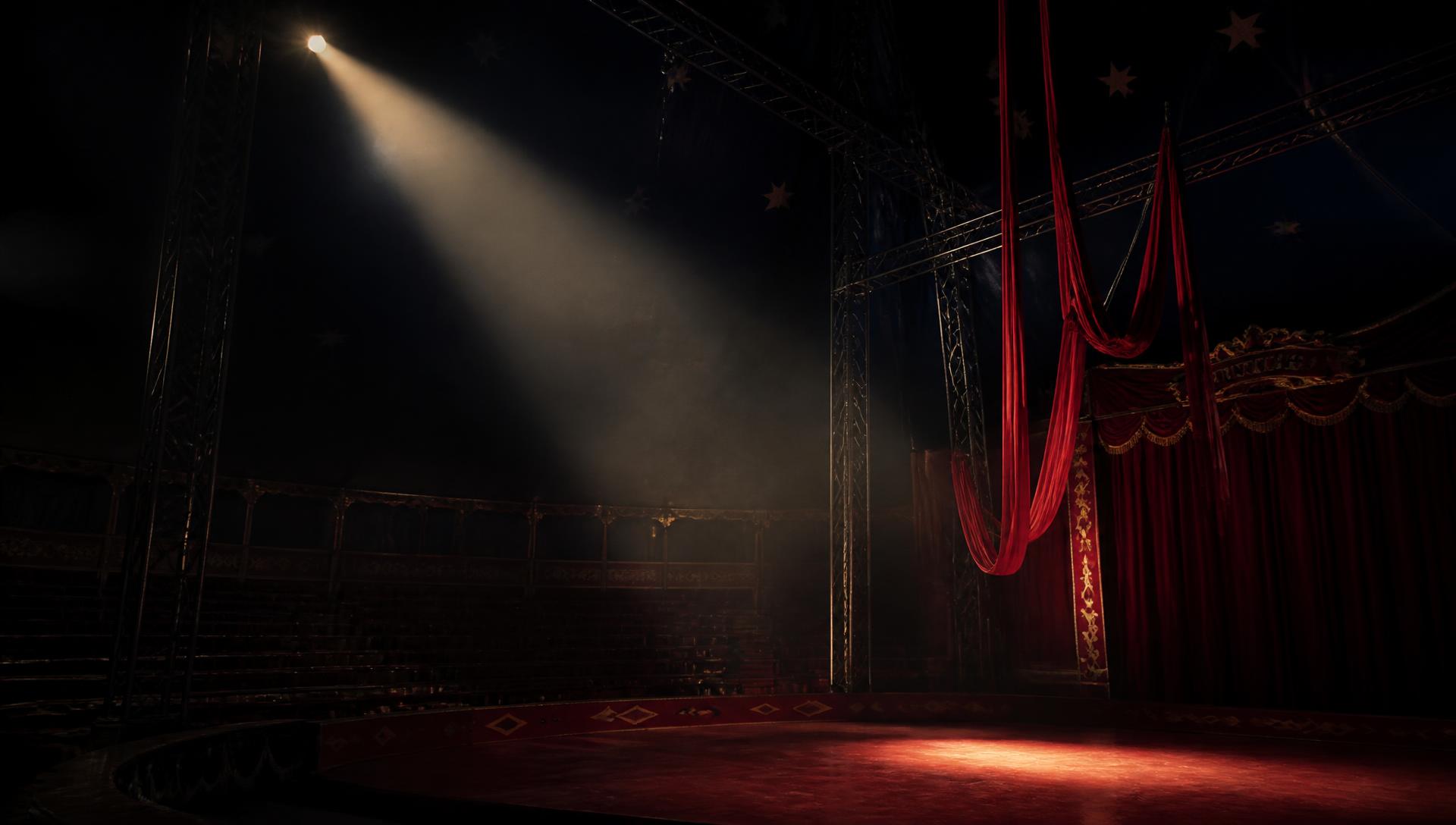
Circus Event Insurance
Circus concentrates every hard underwriting question into one tent: load-bearing rigging over a seated crowd, performers doing what other policies exclude, and a structure the producer put up last week.
- 01
Rigging plots, engineering sign-off, and inspection records
- 02
Aerial and acrobatic performer exposure placed separately
- 03
Temporary structure permits and wind-load limits
- 04
Touring schedules and per-stop additional insured
The underwriting problem
A circus builds a stadium in a field on Tuesday, fills it with the public on Wednesday, and takes it down on Sunday.
Rigging, aerial acts, tent structures, and traveling crews mean the exposure moves with the show. Every ground condition, wind loading calculation, and engineer's sign-off is what stands between an appetite and a decline. Safety nets and crash mats carry their own inspection discipline distinct from the tent itself, and a scheduled act that gets swapped for an unscheduled replacement mid-tour is, from the carrier's perspective, an undisclosed exposure regardless of how similar the two acts look from the seats. Training facilities and circus schools running repeated student sessions are read as a related but separate class from a rehearsed touring production.
- Severity driver
- Aerial rigging and tent structural failure
- Rating lever
- Engineer sign-off and wind management plan
- Overlooked hazard
- Load-in and load-out with public nearby
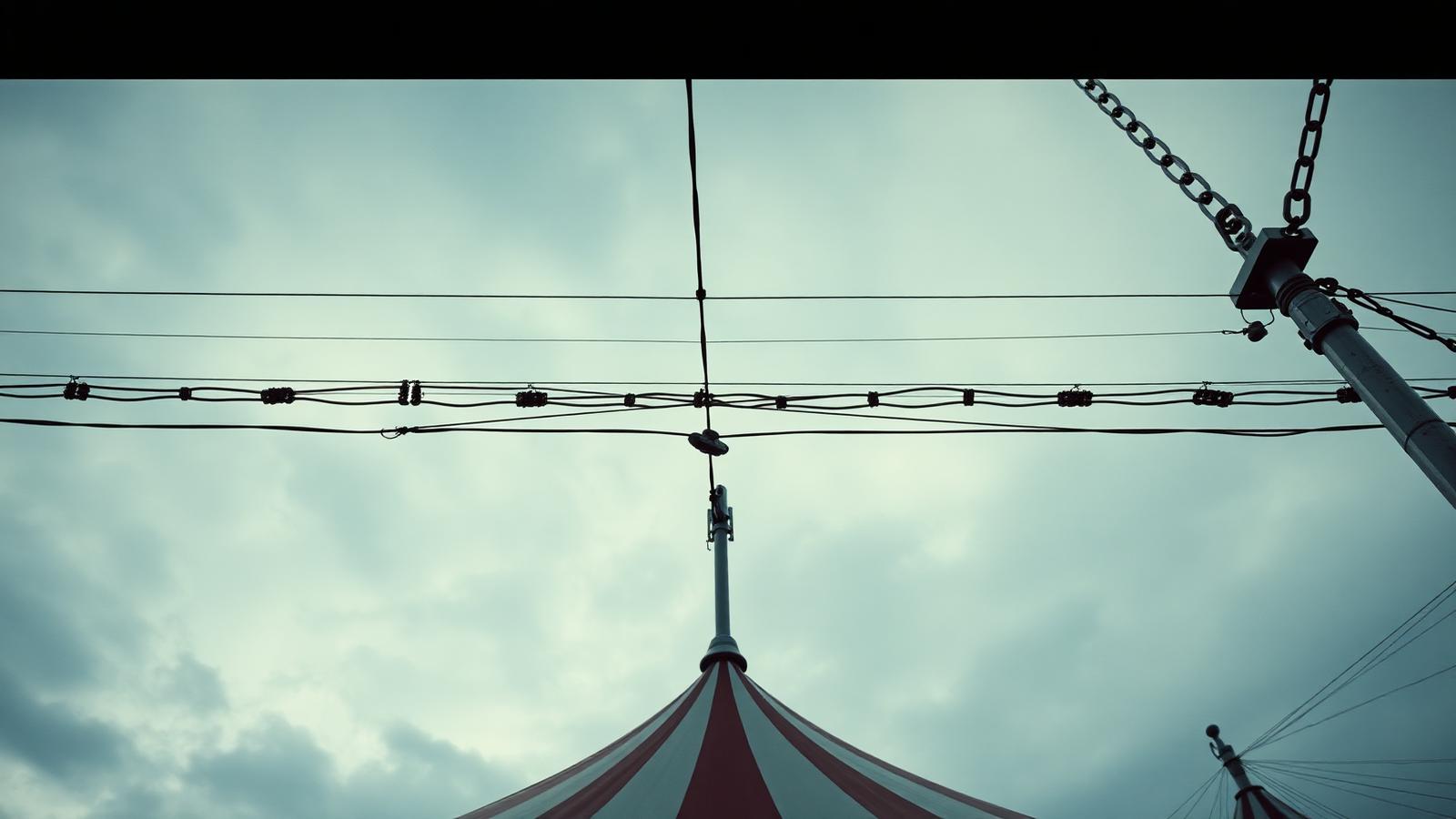
Everything hangs from decisions made before the doors open
- 35 mph
- Common wind threshold triggering evacuation plans
- Daily
- Aerial rigging inspection log carriers expect
- Signed
- Engineer certificate for the structure on file
Direct answers
What circus operators ask first
What is circus insurance?
A specialist entertainment placement covering a circus production's public liability, temporary structures, rigging, equipment, and touring movements, alongside separate arrangements for performer injury. It is written around engineering documentation rather than around attendance alone.
Who needs to be named?
Typically the venue or landowner, the municipality issuing the permit, any presenting partner, and often the tent supplier. Touring shows also need each stop's venue added, which is why blanket additional insured wording matters on a routed tour.
What is the fastest way to improve terms?
Complete rigging documentation. A submission with a rigging plot, engineering sign-off, inspection records, and named qualified riggers is treated as an entirely different risk from one that describes 'aerial acts'.
Site
A circus stop, from empty field to strike
01
Ground prep and build
Stake driving, mast raising, and canvas lift, with heavy plant and crew working at height and under load.
- Utility locate
- Exclusion zone
- Named crew chief
02
Rigging and focus
Suspension points installed, loads calculated, safety systems tested before any performer leaves the ground.
- Rigging plot
- Load calc sign-off
- Pre-use inspection
03
Front of house
Ticketing, queueing, seating banks, aisles, and concessions inside a temporary structure.
- Marked exits
- Aisle stewards
- Capacity count
04
Performance
Aerial, acrobatic, and ground acts running above and around a seated audience.
- Nets/mats per act
- Drop zone kept clear
- Show-stop protocol
05
Strike and move
Teardown under fatigue and time pressure, then convoy movement to the next stop.
- Fatigue rules
- Load securing
- Convoy plan
Underwriting
What sets a touring rate
| Underwriting factor | Why it matters | How it can change appetite |
|---|---|---|
| Rigging documentation | Overhead load above a seated audience is the defining severity exposure of the class. | Complete plots, engineering sign-off, and inspection records can be the difference between a quote and a decline. |
| Act inventory | Aerial silks, trapeze, wheel of death, fire, knife throwing, and human cannonball are individually rated. | Fire and projectile acts frequently need separate scheduling; some are outside every standard appetite. |
| Structure type | A big top, an arena booking, and a theatre run carry different permitting and structural exposures. | Producer-erected tents require manufacturer engineering data and a wind-management plan before terms. |
| Animal acts | Species, containment, handler qualification, and local law all bear on availability. | Exotic animals are widely declined; domestic acts are written with containment and handler conditions. |
| Performer engagement model | Employed troupe, contracted acts, and guest artists sit in different places for injury cover. | Contracted acts without their own accident and liability cover push exposure back to the producer. |
| Touring schedule | Number of stops, states crossed, and build/strike frequency drive both GL and auto exposure. | High stop counts with short turnarounds raise fatigue-related loss expectations and rate accordingly. |
| Net and mat inspection discipline | Fall-arrest equipment is only as good as its last inspection and its match to the act's actual working height. | A named rigger's pre-performance inspection log is expected wherever aerial work is performed above a net or mat. |
| Schedule discipline for act substitutions | An act performing without being added to the policy schedule is, in coverage terms, undisclosed. | A written change-notification process for cast and act substitutions protects coverage continuity mid-tour. |
Format
Touring big top or fixed-venue booking
Option A
Touring big top
Producer erects its own structure at every stop
- Structure engineering and permitting repeat at every stop
- Ground condition and utility locates checked before each build
- Rigging plot rebuilt and re-inspected at every venue
- Blanket additional insured wording essential across the route
- Fatigue and turnaround time between stops drive crew-injury exposure
Option B
Fixed-venue booking
Performing inside an arena or theatre's own structure
- Venue's fixed rigging points and fire systems already certified
- Egress and capacity plans are the venue's, not the producer's
- Structural exposure narrows to the act's own apparatus
- Single certificate cycle rather than a rolling one
- Local fire marshal relationship already established by the venue
Coverage
How the placement is built
Commercial general liability
Audience and third-party exposure across build, show, strike, and the site as a whole at every scheduled stop.
Blanket AI is essential on a routed tour
Temporary structure / tent
The big top, seating banks, and support structures as property, with wind and collapse considerations.
Rigging and equipment
Lifting gear, trusses, motors, lighting, and audio traveling between stops and in storage.
Performer accident and workers' compensation
Injury to the troupe, placed as comp where employed and as specialist accident cover for contracted aerialists and acrobats.
Commercial auto and cargo
Trucks, trailers, and living units moving the show, plus the equipment in them between stops.
Animal liability
Where animal acts are present, with containment, handler, and licensing conditions attached.
Event cancellation
Weather, venue failure, and non-appearance across a routed schedule with substantial fixed costs per stop.
Claims scenario
Where a rigging claim actually starts
An aerial silk act performs nightly for a two-week engagement. The rigging point was engineered and signed off for the opening night, but the tour adds a second performer to the same point mid-run to freshen the show, without re-running the load calculation. On night nine the point fails during a routine drop. The producer's general liability responds to the audience-side injury, but the performer's own claim becomes a workers' compensation or specialist accident matter depending on how she was engaged — and the carrier's first document request is the rigging plot, specifically whether it was updated the day the second performer was added.
The tent scenario is more mundane and more common. A storm front arrives faster than forecast, the on-site anemometer reads above the tent's rated wind speed, and the house manager delays the evacuation call by several minutes waiting for confirmation from someone off-site. A section of seating bank sustains wind damage during the evacuation. The claim turns on one document: was there a named, on-site decision-maker with standing authority to call the evacuation the moment the threshold was crossed, or did the plan require an approval chain that could not act fast enough.
Loss control
The controls that matter overhead
Hazard
Rigging point fails during an aerial act above the audience.
Control
Engineered plot with calculated loads, independent pre-use inspection, and named qualified riggers signing off each build.
Hazard
Wind exceeds the tent's rating mid-performance.
Control
On-site anemometer with a written evacuation trigger at a stated wind speed, rehearsed with front-of-house staff.
Hazard
Audience member enters a drop zone or backstage area.
Control
Physical barriers on all drop zones, stewarded backstage access, and a show-stop protocol every performer knows.
Hazard
Strike-crew injury during a rushed teardown.
Control
Maximum working-hour rules between stops, a named crew chief per shift, and no lifting operations after a stated hour.
Hazard
Animal escapes containment during a move.
Control
Documented containment and recapture plan, handler qualifications on file, and route notification to local authorities.
Tour calendar
How the year is structured
6–9 months out
Route planning
Confirm stops, structures, and any jurisdiction with animal or temporary structure restrictions before contracts are signed.
3–5 months out
Engineering and placement
Rigging plots, tent engineering, and act schedule finalised; GL, structure, auto, and accident lines bound together.
Rolling, 2–4 weeks per stop
Per-stop compliance
Local permits, fire marshal sign-off, and certificates naming each landowner and municipality issued in advance.
Off-season
Season close
Equipment inspection and recertification, incident review, and act schedule updated for renewal.
Contracts
Who has to be satisfied
Layer 01
Landowner or venue per stop
- Typically asks for
- AI status, waiver of subrogation, and often a ground-restoration bond or deposit.
- Where it goes wrong
- Certificates issued to the presenting promoter but not the landowner, leaving the site agreement unsatisfied.
Layer 02
Municipality and fire marshal
- Typically asks for
- Temporary structure permit, flame-retardancy certificates for the canvas, exit and capacity approval.
- Where it goes wrong
- Canvas certification expired, discovered at inspection on the day of the first show.
Layer 03
Contracted acts
- Typically asks for
- Their own liability and accident cover, plus evidence of equipment inspection for their apparatus.
- Where it goes wrong
- Guest act arrives with its own rigging and no documentation, and is rigged into the producer's structure anyway.
Layer 04
Presenting partner or sponsor
- Typically asks for
- Indemnity from the producer plus evidence of limits, often $5M or more.
- Where it goes wrong
- Indemnity signed for the partner's own negligence, which the policy does not fund.
Submission
The submission that gets quoted first
014 items
The production
- Full route with dates, venues, and structure type per stop
- Seating capacity and projected attendance per performance
- Complete act schedule including guest spots
- Whether animals are used, and which species
024 items
Engineering
- Rigging plot with suspension points and calculated loads
- Tent manufacturer data including wind rating and flame certification
- Lifting equipment inspection and certification records
- Named riggers with qualifications
034 items
People and fleet
- Performer roster and engagement model for each act
- Crew headcount and build/strike working-hour rules
- Vehicle and trailer schedule with driver records
- Five years of loss runs across prior tours
Glossary
Circus placement language, translated
Rigging plot
A scaled drawing of every suspension point, its calculated load, and the equipment hanging from it. Underwriters read it before they read the act list, because it is the only document that shows whether the structure was engineered for what is actually performing on it.
Additional insured (AI)
A party — a landowner, a municipality, a presenting sponsor — added to the producer's liability policy so a claim against them arising from the show is also defended and paid under that same policy, rather than requiring their own separate coverage.
Waiver of subrogation
A promise that the producer's carrier will not turn around and sue the landowner or venue after paying a claim, even where that party contributed to the loss. Most site agreements require it before the field is released for use.
Wind action plan
The written, rehearsed threshold and chain of authority for stopping a show and securing or evacuating a temporary structure as measured wind speed rises toward the tent's rated limit.
Certificate of insurance (COI)
A summary document proving coverage is in force, issued per stop on a touring schedule. It is evidence of the policy, not the policy itself, and does not by itself amend coverage terms.
Scheduled peril / scheduled act
An exposure individually listed and priced on the policy — a fire act, a knife act, a specific animal act — as opposed to a general description that leaves the carrier guessing at what is actually being performed.
Related coverage
Explore Coverage
Guides & resources
FAQ
Circus questions
What makes circus harder to place than other live entertainment?
Three things stack: overhead rigging above a seated audience, performers doing the exact activity that would be an exclusion anywhere else, and often a temporary structure the producer erects themselves. Each is manageable alone; together they narrow the market to specialist carriers.
Are performers covered by the producer's liability policy?
Generally no. General liability responds to third parties — the audience, the venue, passers-by. Performer injury sits with workers' compensation where they are employees, or with the act's own accident and liability cover where they are contracted. Aerialists and acrobats are frequently excluded from standard accident forms and need specialist placement.
What rigging documentation do carriers expect?
A rigging plot showing every suspension point and load, engineering sign-off on the structure or venue's capacity, current inspection records for all lifting equipment, and named riggers with verifiable qualifications. Where a big top is used, the tent manufacturer's engineering documents and wind-loading limits are also requested.
Do animal acts change the placement?
Substantially. Many carriers now decline exotic animal acts outright, several states and municipalities restrict or ban them, and where they are written the animal handler's own coverage, containment plan, and USDA licensing are all reviewed. Domestic animal acts such as horses and dogs are more widely available but still separately rated.
What about weather and the tent?
Big tops have documented wind speed limits, and a written evacuation trigger tied to measured wind speed is expected, not optional. Weather-driven cancellation and structure damage are separate covers from liability, and the producer's contract with the landowner usually assigns responsibility for both.
Does a fixed-venue circus run differ from a touring big top?
Substantially. A show booked into an arena or theatre inherits that venue's fixed rigging points, fire systems, and egress plan, which simplifies the structural conversation considerably. A traveling big top rebuilds its own structure at every stop, so the engineering and permitting burden repeats on the producer's own schedule rather than the venue's.
Are pyrotechnics ever covered under a standard circus placement?
Rarely on the base policy. Flame and pyrotechnic effects are almost always scheduled separately, with their own operator licensing, a fire watch requirement, and often a standalone pyrotechnic liability policy layered on top of the production's general coverage.
How are understudies and last-minute cast changes handled?
Any performer taking an aerial or acrobatic role needs the same rigging familiarity and coverage status as the act they are replacing. A submission that names only the primary cast leaves an understudy performing on opening night with no confirmed accident or liability arrangement in place.
What does 'scheduled' mean when a carrier talks about an act?
It means the act is individually listed on the policy schedule with its own description, so the carrier has actually agreed to the exposure rather than absorbing it as an undisclosed variation of 'aerial acts.' An act that performs but was never added to the schedule is treated the same as an act that was never disclosed at all.
What is a wind action plan, in plain terms?
It is a written, rehearsed procedure that names the wind speed at which the show stops, who has authority to call it, and how the crowd and structure are secured once that call is made. Carriers treat the plan itself, not just the tent's rated wind speed, as the underwriting document.
How is a safety net or crash mat inspected and who signs off on it?
Nets and mats sit on their own inspection schedule, separate from the tent structure, checked before every performance for tears, stretch, and anchor integrity by a named rigger, not the performer themselves. A net that has never been load-tested to the act's actual working height is treated as absent equipment, not a diminished safety margin.
Does a circus school or training facility carry the same exposure as a touring show?
Different, not lower. A training facility runs repeated sessions with students at varying skill levels rather than a rehearsed act, which shifts the exposure toward instructor supervision ratios and progressive skill certification rather than touring logistics, and is typically underwritten as its own class distinct from a touring production.
What happens if a scheduled act is replaced by an unscheduled one mid-tour?
The replacement act is, in coverage terms, undisclosed until it is formally added to the policy schedule. A last-minute substitution performed without notifying the carrier — even one of similar apparent risk to the act it replaces — can leave that specific performance without confirmed cover if a claim arises.
Send the rigging plot and the act schedule
Those two documents decide the placement. With the route and structure type alongside them, a specialist market can give a realistic view quickly.
General information about how circus placements are commonly structured. Temporary structure permitting and animal regulation are state and municipal specific. Nothing here is a quote, binder, or confirmation of coverage.