50,000+ Events Insured
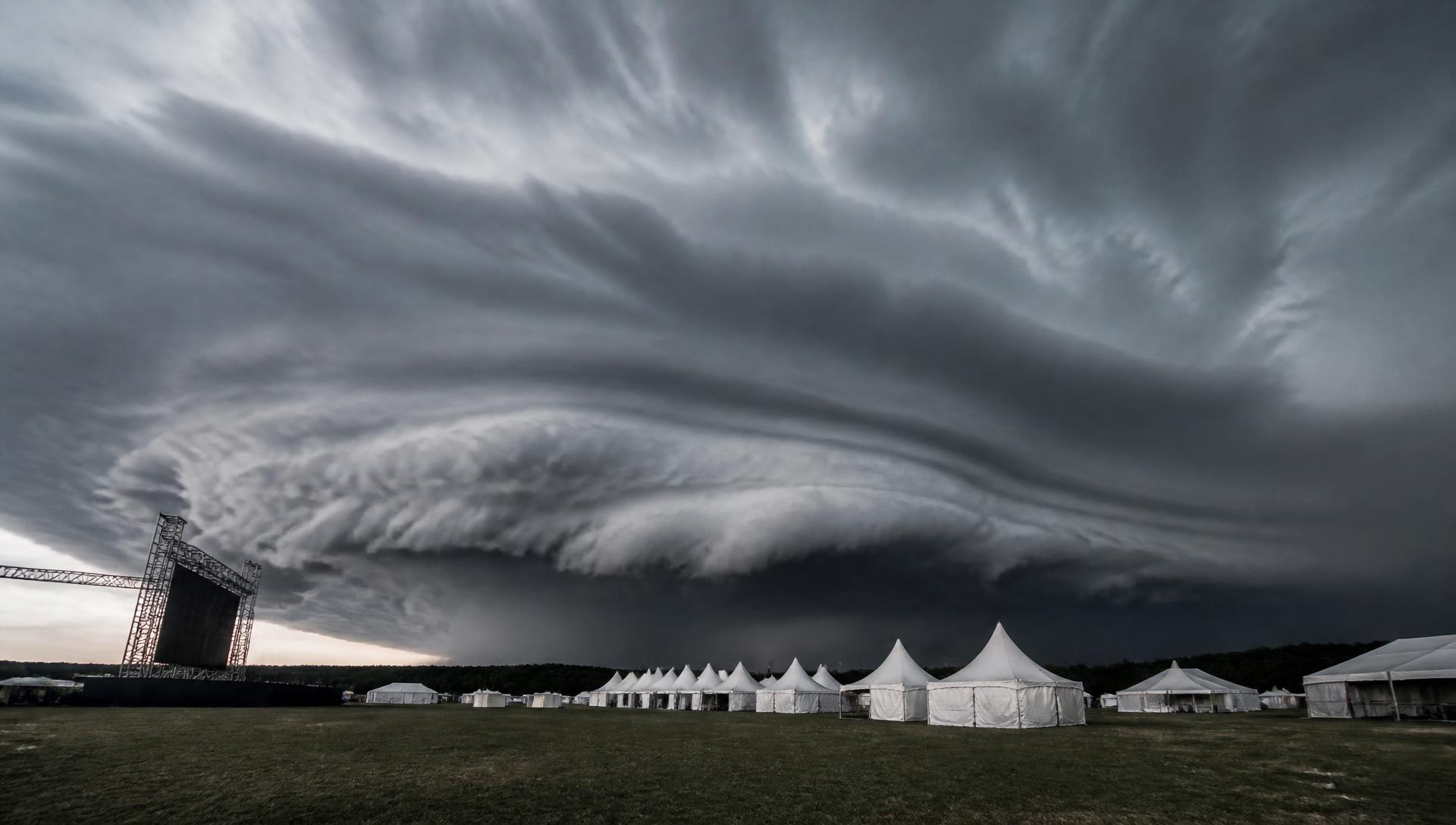
Wide view of an open-air event ground under a shifting sky, storm clouds gathering at the horizon beyond the stage
EV / 52 · Agreed-value cover for a measured sky

Weather Insurance for Events

A rain gauge, a wind sensor, or a thermometer at a designated station decides this policy — not an adjuster's estimate. Parametric weather insurance pays a pre-agreed sum the moment the measured index crosses the line, with no proof-of-loss and no waiting on a claims file.

Proof-of-loss filings required to trigger payment

0 docs

The station reading is the entire claim.

  • Index built around your actual failure mode: rain, wind, heat, or snow
  • Measurement tied to a named NOAA station or third-party index agent
  • Agreed-value payout the day the trigger is confirmed
  • Structured to sit alongside, not replace, your cancellation program

The underwriting problem

A parametric policy does not ask what happened to your event. It asks what a designated station measured.

Weather insurance built on an index is a deliberately different instrument from a cancellation policy's weather clause, and organizers who buy it expecting dollar-for-dollar reimbursement of their actual loss are buying the wrong product. The entire structure is set at binding: an index is chosen to match the way weather actually disrupts the specific event, a station or third-party data source is designated as the sole source of truth, a trigger window defines exactly which hours count, and a payout scale is agreed in advance — often a flat sum, sometimes a sliding scale that increases as the measured value moves further past the threshold. From that point forward, the claims conversation disappears entirely. There is no estimate, no negotiation over lost revenue, and no waiting for a loss adjuster; there is only a station reading and a contract that says what that reading is worth. The tradeoff organizers accept for that speed and certainty is basis risk — the gap between what the station recorded and what actually happened on the ground — and every decision in the placement process exists to shrink that gap as far as it reasonably can go.

What decides payment
A single designated station or index agent reading, nothing else
What is never required
Financial proof of loss, ticket-revenue reconciliation, or adjuster sign-off
What buyers give up
Exact dollar-for-dollar matching to their real loss, in exchange for speed
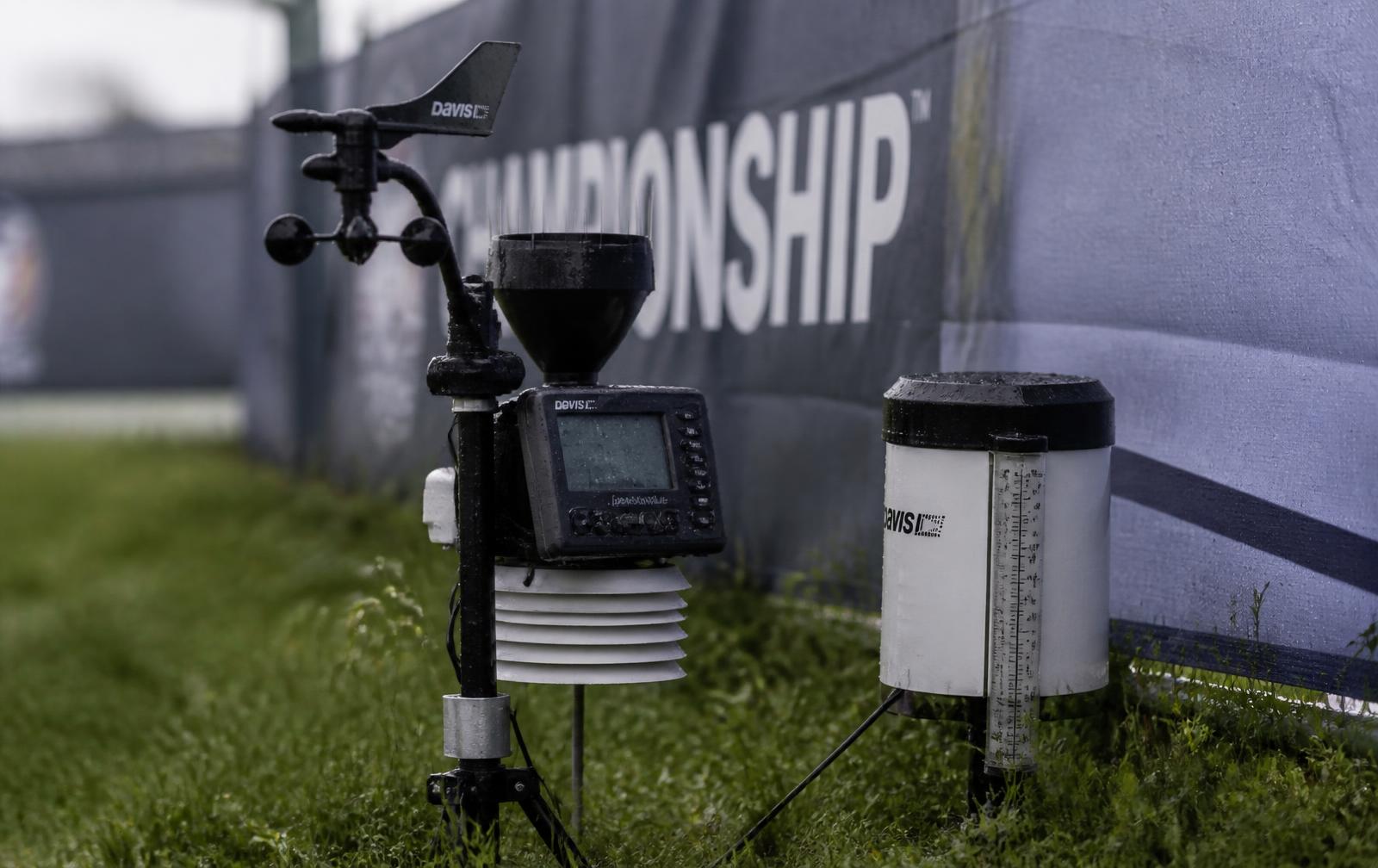
Close view of a weather monitoring instrument and rain gauge mounted at the edge of an open event field
Event field · index measurement point
Field evidence

The whole claim lives inside this instrument

Whatever this station records during the trigger window is the entire basis for payment — not the mud on the field, not the empty parking lot, not the canceled set.

60–90 days
Typical lead time required before an event date
1 station
Usually the sole determinant of the payout
Hours, not days
How trigger windows are commonly structured

Direct answers

What organizers ask before they buy

01

What is weather insurance for events?

A parametric or indemnity policy that pays an organizer when a specific, independently measured weather condition — rainfall, wind speed, temperature, or snowfall — crosses an agreed threshold during a defined window around the event date.

02

Who buys it?

Outdoor festival and concert promoters, sports event and tournament operators, wedding and private-event planners, fairs and carnivals, agricultural and tourism attractions, and any organizer whose attendance or revenue is directly weather-sensitive.

03

How is it different from a cancellation policy's weather clause?

A cancellation policy's weather peril pays the organizer's proven financial loss only if the event is actually canceled or curtailed. A standalone parametric weather policy pays a pre-agreed sum the moment the index trigger is met, whether or not the event proceeds, and with no proof-of-loss requirement.

Claim scenario

A festival that never officially canceled

A two-day outdoor music festival buys a parametric rainfall policy tied to a nearby NOAA reporting station, with a trigger set at one inch of accumulated rainfall between noon and midnight on either festival day. On day two, a slow-moving system drops just over an inch and a half on the region between two and nine in the evening. The festival's organizers make the difficult judgment call to keep the gates open rather than cancel outright, since the main stage structure remains safe and a large share of ticket holders are already on site — but attendance for the evening slate collapses, food and beverage revenue falls by more than half, and the muddy grounds require a five-figure remediation the following week.

None of that financial detail matters to the parametric policy. The designated station confirms 1.6 inches fell inside the trigger window, the threshold of one inch was crossed, and the agreed payout is due in full — regardless of whether the festival technically canceled anything. Had the organizers relied solely on a cancellation policy's weather clause instead, this exact scenario would likely have produced no claim at all, since the event was never actually called off; the parametric layer exists precisely to catch the financial damage a storm causes on a day the show still goes on.
Glossary

Terms that decide what the policy actually pays

Index

The single measurable weather variable the policy is built around — accumulated rainfall, sustained wind speed, temperature, or snowfall — chosen to match the event's actual failure mode.

Trigger window

The defined block of hours or days during which the index is measured; a mismatch between the window and when weather actually mattered is the most common cause of buyer disappointment.

Basis risk

The gap between what the designated station or index agent measured and what actually happened at the event site, accepted in exchange for a faster, simpler payout.

Attachment point

The index value at which the policy begins to pay, set during binding based on historical climatology for that location and date.

Exhaustion point

The index value at which the payout reaches its maximum, on policies structured with a sliding rather than flat payout scale.

Index agent

A licensed third-party provider of gridded or interpolated weather data used as the measurement source where no single station is close or reliable enough.

Compare

Parametric index trigger vs. indemnity weather clause

Most well-structured outdoor programs end up buying both, layered rather than substituted for one another.

Option A

Parametric index trigger

Standalone policy paid against a measured index

  • Agreed-value payout with no proof-of-loss requirement
  • Settles in days once the station confirms the reading
  • Pays even if the event technically proceeds despite the weather
  • Exposed to basis risk between the station and the actual site

Option B

Indemnity weather clause

Built into a cancellation policy's named-peril schedule

  • Pays the organizer's proven actual financial loss
  • Requires a full proof-of-loss and adjuster review
  • Only responds if the event is actually canceled or curtailed
  • No basis risk, since the loss itself is what is measured

Exposure

Six weather patterns underwriters index against

Rainfall and accumulation

Outdoor festivals, markets, and agricultural events lose attendance and site usability once accumulated rainfall crosses a workable threshold.

  • Field and parking-lot drainage failure past a set accumulation
  • Vendor and concession revenue collapse on wash-out days
  • Multi-day accumulation triggers distinct from a single downpour

Sustained wind

Tents, rigging, inflatables, and aerial elements all carry a hard engineering wind limit before a shutdown is mandatory.

  • Sustained-speed thresholds distinct from momentary gusts
  • Tented structure and staging shutdown triggers
  • Aviation and balloon-event grounding thresholds

Extreme temperature

Heat and cold indices protect against public-safety cancellations that occur without any physical storm damage at all.

  • Heat-index thresholds triggering medical-safety shutdowns
  • Cold-snap thresholds affecting outdoor ceremonies and markets
  • Heat-sensitive attendance drop-off on marginal days

Snowfall and winter conditions

Winter markets, sports, and outdoor ceremonies carry an accumulation exposure most standard cancellation forms rate poorly.

  • Accumulated snowfall thresholds over a defined window
  • Access-road and parking closure triggers
  • Combined snow-and-wind index structures for exposed venues

Trigger-window mismatch

The single largest source of buyer disappointment is a window that does not match when the weather actually mattered.

  • Overnight rainfall missed by a daytime-only window
  • Single-day trigger on a multi-day festival with one bad day
  • Hourly block structure not aligned to gates-open and load-out

Station and data-source risk

The payout depends entirely on what a specific station recorded, not on what happened at the venue itself.

  • Distant NOAA station under-reporting a localized cell
  • Airport station reporting materially different wind than the site
  • Third-party index agent's interpolation model diverging from ground truth

Underwriting

What sets the rate on a weather index program

Underwriting factorWhy it mattersHow it can change appetite
Historical climatology at the chosen stationPricing is built almost entirely from decades of recorded data at the specific location and date, not general seasonal averages.A trigger set close to the historical norm for that date costs more than one set against a genuinely rare extreme.
Distance from station to venueThe further the designated station sits from the actual site, the larger the basis risk both parties are accepting.A gridded third-party index source, rather than a single distant station, narrows the gap for exposed rural or coastal venues.
Trigger window designA window that does not match the hours when weather actually disrupts the event produces a payout that feels wrong even when the contract performed exactly as written.Narrowing the window to gates-open hours, or splitting it by festival day, aligns the payout with the real exposure.
Index selection versus actual failure modeRain, wind, heat, and snow each fail an event differently, and the wrong index leaves the real exposure uninsured.Matching the index to the specific engineering or attendance threshold that actually forces a shutdown improves accuracy.
Lead time before the eventOnce a forecast exists for the specific date, the fortuity the policy depends on begins to erode rapidly.Binding sixty to ninety days out preserves normal pricing; binding inside two weeks sharply limits availability.
Payout structure — flat vs. sliding scaleA flat payout is simpler but less proportionate; a sliding scale tracks severity more closely but costs more to structure.High-value programs increasingly choose a sliding scale between a defined attachment and exhaustion point.
Layering against an existing cancellation programA parametric layer sitting behind or alongside an indemnity weather clause changes how much basis risk the organizer is left carrying.Coordinating both placements together avoids duplicated premium and gaps between the two triggers.

Operations

A placement, read as a decision chain

01

Failure-mode review

The organizer and broker identify exactly how weather would actually disrupt this specific event.

  • Historical weather-related disruptions reviewed
  • Engineering thresholds for tents and rigging confirmed
  • Attendance sensitivity to rain, wind, or heat estimated

02

Index and station selection

A specific measurable index and data source are chosen to match that failure mode.

  • Nearest reliable station or index agent identified
  • Distance and terrain to the venue assessed
  • Historical climatology at that station reviewed

03

Structuring the trigger

The window, attachment point, and payout scale are set and priced.

  • Trigger window aligned to gates-open and load-out hours
  • Attachment and exhaustion points agreed
  • Flat or sliding payout scale selected

04

Binding

The policy attaches well ahead of any forecast for the specific date.

  • Bound sixty to ninety days ahead of the event
  • Coordinated against any existing cancellation program
  • Certificate and schedule confirmed with all named parties

05

Measurement and settlement

The event proceeds, the window closes, and the station reading is pulled.

  • Official reading obtained from the designated source
  • Trigger comparison confirmed against the schedule
  • Payment issued without a proof-of-loss filing
A parametric placement is almost entirely front-loaded into the structuring conversation before the event.

Coverage

How the program is actually assembled

Rainfall index

Pays against accumulated rainfall over a defined window at the designated station, matched to the event's drainage and mud exposure.

Commonly measured in inches or millimeters

Sustained wind index

Pays against a sustained wind-speed threshold, matched to tenting, rigging, or aerial-element shutdown limits.

Distinguished from momentary gust readings

Temperature index

Pays against a heat or cold threshold tied to public-safety shutdown practice rather than physical storm damage.

Snowfall index

Pays against accumulated snowfall over a defined window, suited to winter markets, sports, and outdoor ceremonies.

Combined and sliding-scale structures

Blends two indices or scales the payout between an attachment and exhaustion point rather than a single flat trigger.

Priced individually against each component

Coordinated cancellation weather clause

An indemnity layer inside a cancellation policy responding to proven financial loss if the event is actually called off.

Recommended alongside, not instead of, the index

Contracts

Who is asking you for what, and where it breaks

  1. Layer 01

    Index agent or data provider

    Typically asks for
    A defined, licensed source of independent weather data the payout will be measured against.
    Where it goes wrong
    The organizer never confirms which specific station feeds the index and discovers it is further from the site than assumed.
  2. Layer 02

    Venue and site operations

    Typically asks for
    The actual engineering and safety thresholds — wind limits on tents, drainage capacity — that the index is meant to reflect.
    Where it goes wrong
    The chosen index does not match the venue's real shutdown threshold, so a payout and an actual disruption diverge.
  3. Layer 03

    Sponsors and vendors

    Typically asks for
    Contracts that may reference weather contingencies of their own, separate from the organizer's policy.
    Where it goes wrong
    A vendor's own weather clause pays out on different terms, creating confusion about which recovery applies.
  4. Layer 04

    Cancellation insurer

    Typically asks for
    Coordination so the parametric layer and the cancellation policy's weather clause do not overlap or leave a gap.
    Where it goes wrong
    Both policies are bought independently with no coordination, duplicating premium in some scenarios and leaving a gap in others.
  5. Layer 05

    Ticketing and refund platform

    Typically asks for
    A refund policy that may or may not align with whether a parametric trigger was actually met.
    Where it goes wrong
    Ticket holders expect refunds tied to the weather itself, while the parametric payout is contractually unrelated to the refund obligation.

Risk control

What underwriters want to see controlled

Hazard

Trigger window misaligned with actual event hours

Control

Set the window to match gates-open through load-out, split by day for multi-day programs.

Hazard

Designated station too distant from the actual site

Control

Request a gridded or interpolated third-party index source where no close station exists.

Hazard

Wrong index chosen for the real failure mode

Control

Map the index to the specific engineering or attendance threshold that would actually force a shutdown.

Hazard

Binding delayed until a forecast already exists

Control

Place the policy sixty to ninety days ahead of the event, before any date-specific forecast is available.

Hazard

No coordination with the cancellation program's weather clause

Control

Structure both placements together so the parametric layer and the indemnity clause do not duplicate or leave a gap.

Hazard

Buyer expectations set around indemnity-style reimbursement

Control

Confirm in writing that the payout is agreed-value against the index, not a match to actual financial loss.

Submission

What we need from you to quote

014 items

The event

  • Event name, dates, venue address, and indoor or outdoor components
  • Specific weather sensitivity: drainage, tenting, aerial elements, heat exposure
  • Historical attendance or revenue impact from prior weather events
  • Any existing cancellation program already in place

024 items

The index

  • Preferred index: rainfall, wind, temperature, or snowfall
  • Desired trigger window, by hour and by day
  • Preferred payout structure: flat or sliding scale
  • Any nearby station already known to be close to the site

034 items

The timeline

  • Target binding date, ideally sixty to ninety days ahead
  • Confirmation no relevant forecast yet exists for the date
  • Sponsor or contract deadlines the placement needs to meet
  • Contact for the operations team who will confirm the reading

FAQ

Weather insurance for events questions

What is the difference between parametric and indemnity weather coverage?

An indemnity policy pays what you can prove you actually lost — lower ticket revenue, refunds issued, extra costs incurred — which requires a full proof-of-loss process after the event. A parametric policy pays a pre-agreed sum the moment an independently measured index crosses a pre-agreed trigger, regardless of what the organizer's actual financial loss turns out to be. Parametric cover is faster to settle and far simpler to administer, but it can either overpay or underpay the true loss depending on how closely the chosen index tracked what actually happened on site, which is the basis risk every buyer accepts in exchange for that speed.

How do you choose the right index for my event?

The index has to match the specific way weather actually disrupts your event, not weather in general. A rainfall index measured in accumulated inches over a defined window suits an outdoor festival where mud and drainage are the real problem. A sustained-wind index suits a program with tents, rigging, or aerial elements where a gust threshold forces a shutdown. A temperature index — heat or cold — suits an event where extreme readings trigger a public-safety cancellation rather than physical damage. Snowfall indices suit winter markets, sports, and outdoor ceremonies. Choosing the wrong index for the actual failure mode is the single most common reason a parametric payout disappoints a buyer who expected it to behave like an indemnity claim.

What is a measurement station and why does it matter so much?

The policy does not measure weather at your event; it measures weather at a designated station or a specified data source — a NOAA reporting station, an airport weather station, or a licensed third-party index agent providing gridded or interpolated data. The distance and terrain between that station and your actual site is the primary source of basis risk: a station eight miles away can report far less rainfall than fell on your field, or vice versa. Confirming the exact station or data source, and its distance from the venue, before binding is the single most important technical step in a parametric placement.

What is basis risk and can it be reduced?

Basis risk is the gap between what the index measured and what actually happened on your ground — the reason a parametric payout and your real financial loss are not the same number by design. It can be reduced, though never eliminated, by selecting the closest reliable station, using a gridded or interpolated third-party data source rather than a single point station, narrowing the trigger window to the hours that matter most, and, where available, layering a modest indemnity weather add-on inside your cancellation policy behind the parametric layer to catch the difference.

Why don't I need to prove a loss to collect?

Because the payout is contractually tied to the index reading, not to your financial outcome — the moment the designated station confirms the trigger was crossed within the defined window, the agreed sum is payable. This removes the adjuster's estimate, the negotiation over revenue projections, and the weeks of documentation an indemnity claim requires, which is the entire commercial reason organizers buy parametric cover for weather in the first place: certainty and speed of settlement, accepted in exchange for giving up the precise dollar-for-dollar matching an indemnity form provides.

How does weather insurance sit alongside my event cancellation policy?

The two instruments answer different questions and are frequently bought together rather than as substitutes. A cancellation policy's weather peril responds to the organizer's actual insured financial loss once the event is called off, subject to proof-of-loss and a duty to mitigate. A standalone parametric weather policy responds to the measured index alone, independent of whether the event was ultimately canceled, postponed, or simply degraded by the weather without being called off at all — meaning it can pay even on a day the show technically went ahead but attendance and concessions revenue collapsed because of the rain.

How far ahead do I need to buy it, and how is it priced?

Binding at least sixty to ninety days ahead of the event date is standard practice, since pricing is built from decades of historical climatology at the chosen station and index agents need lead time to model the specific window and trigger requested. Pricing rises the closer the requested trigger sits to the historical norm for that date and location — insuring against a one-inch rainfall threshold in a location where that occurs one year in three costs meaningfully more than insuring against a genuinely rare extreme, and binding close to the event date, once a forecast already exists, either sharply increases the premium or removes the ability to buy the cover at all.

Related

Where this sits in the program

Coverage descriptions are general and illustrative. Index structures, stations, triggers, and payout terms vary by carrier and program. Nothing on this page confirms coverage or amends any policy.

Next step

Pick the index before you pick the forecast

Tell us your venue, your date, and what weather actually shuts your event down, and we will structure a station, a window, and a trigger before a forecast exists for your day.