50,000+ Events Insured
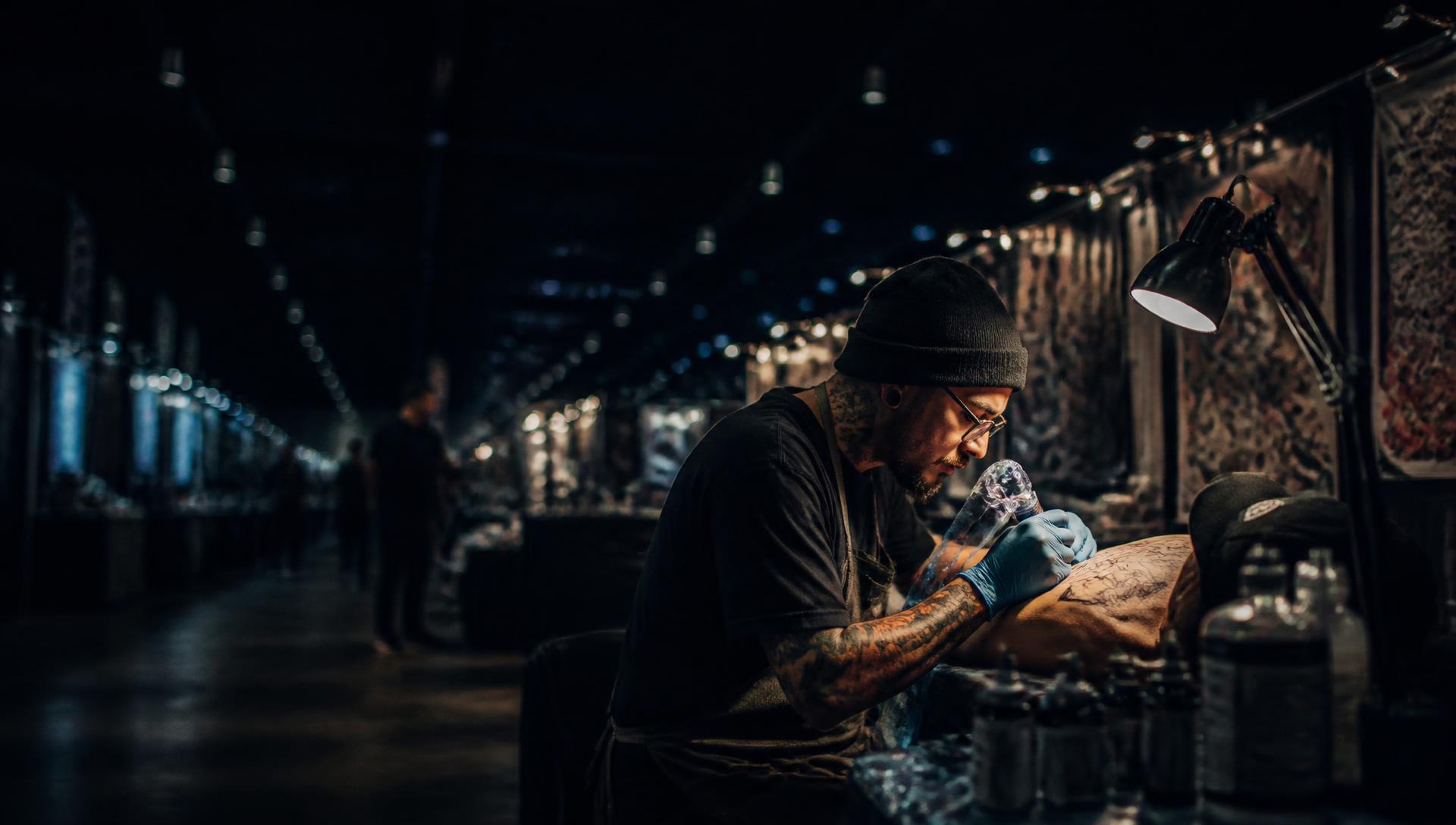
Tattoo artist in black gloves working on a client's forearm at a convention booth under an adjustable lamp
EV / 09 · Conventions · body art

Tattoo Convention Insurance

Coverage placed — not auto-quoted

A tattoo convention is two risks in one hall. The promoter owns the crowd, the aisles, and the bar. Each artist owns the needle. Placing the show correctly starts with refusing to let those two merge.

Tattoo artist in black gloves working on a client's forearm at a convention booth under an adjustable lamp
  1. 01Promoter GL vs artist professional and BBP liability
  2. 02County health department permits and inspections
  3. 03Sharps disposal, sink placement, and sterilisation
  4. 04Artist certificate verification before badge issue

The underwriting problem

A tattoo convention is two hundred independent medical procedures happening simultaneously under one promoter's name.

The promoter does not hold the needle, but the promoter sold the ticket, leased the hall, and vetted the artist. Underwriters price the vetting file: licenses, bloodborne-pathogen training, sharps disposal, and the certificate chain that keeps artist liability with the artist. That file also has to survive a walk-up substitution, a sub-leased chair, or a last-minute vendor swap without anyone waving through an unverified badge under show-week pressure. The strongest submissions treat verification as a standing process run by one accountable person, not a folder assembled the week before doors open, and they can show a prior edition's loss run to prove the process actually held.

Severity driver
Bloodborne pathogen and infection claims
Contract pivot
Artist certificates naming the promoter
Overlooked hazard
Sharps handling and waste disposal
Booth standard

Hundreds of independent practitioners, one certificate of insurance

A convention is a temporary licensed premises. Bloodborne pathogen control, sharps disposal, and artist evidence collection are the underwriting file.

Tattoo artist's convention station with barrier film, machine and ink caps under booth lighting
Convention floor · artist station
100%
Artist COIs collected before load-in
$1M
Typical per-artist limit venues demand
0
Tolerance for unlogged sharps disposal

Direct answers

What promoters ask first

01

What is tattoo convention insurance?

Event liability for the promoter of a body-art convention. It covers the show's own premises and operations exposure — crowds, aisles, staging, load-in, and any entertainment or alcohol service — and sits alongside, not on top of, each participating artist's own professional and bloodborne-pathogen coverage.

02

Who carries what?

The promoter carries event general liability, host liquor or scheduled liquor liability, and cancellation. The venue carries its own building coverage. Each artist carries professional liability with bloodborne pathogen, general liability, and their license. Vendors carry their own products liability.

03

What stops the show going ahead?

Almost always the health department, not the insurer. Temporary body-art permits, per-artist permits, sink placement, and sharps disposal are inspected before opening and are the most common reason a floor plan has to be rebuilt on setup day.

Carrier language

Terms that show up in every quote letter

Additional insured (AI)

A party — typically the venue — added to the promoter's policy so it shares in the defense and indemnity for claims arising from the promoter's operations at that location.

Primary and non-contributory

Wording that forces the promoter's policy to pay first, ahead of the venue's own insurance, rather than the two policies splitting the loss.

Waiver of subrogation

A promise that the promoter's insurer will not turn around and sue the venue to recover what it paid out, even where the venue bears some fault.

Bloodborne pathogen (BBP) grant

A specific extension on an artist's professional liability policy that responds to infection or exposure claims; a generic malpractice form without it does not cover needle work.

Host liquor liability

Coverage for incidental alcohol service by event staff, distinct from liquor liability proper, which applies once alcohol is sold under a license.

Hold-harmless clause

A contract term shifting responsibility for certain losses from one party to another, usually paired with — but not a substitute for — an insurance requirement.

Responsibility

Four exposures and who actually owns each

The show floor — promoter

Crowding, aisle width, trip hazards, cabling, staging, and load-in and load-out.

  • Aisle width is both a fire-code and a claims issue
  • Cable management across booth rows is a standard control
  • Load-in injuries are frequently the first claim of the show

The needle — artist

Infection, allergic reaction, scarring, wrong artwork, and bloodborne pathogen exposure.

  • Sits on the artist's professional liability, not the promoter's GL
  • Certificates must be verified before badge issue
  • Requires a stated BBP grant, not a generic malpractice form

Compliance — shared

Temporary body-art event permit held by the promoter; individual permits held by artists.

  • Sink-to-station distances drive the floor plan
  • Licensed sharps disposal contract is usually mandatory
  • Inspection typically happens on setup day, before doors

Everything else — promoter

Bar, entertainment, contests, merchandise, security, and after-parties.

  • Alcohol on an active tattoo floor needs hard separation
  • Contests and stage shows add their own participant exposure
  • After-parties at another venue need their own certificate

Underwriting

What sets a convention rate

Underwriting factorWhy it mattersHow it can change appetite
Artist vetting standardThe promoter's exposure is largely a function of who is allowed to work the floor.A documented pre-show verification of license, insurance, and BBP training is the single biggest credit on this class.
Attendance and hall capacityCrowd density in narrow aisles between fixed booths is the promoter's main frequency driver.Selling to fire-code capacity with a dense booth grid raises rate; timed sessions and wider aisles lower it.
Alcohol serviceServing on the same floor as active stations is both a legal and an underwriting problem.Separated bar area with documented refusal-of-service policy is workable; open service among stations frequently is not.
Health department relationshipThe permit process gates the show and demonstrates operational maturity.Prior-year permits and clean inspection reports meaningfully improve terms for a returning show.
Ancillary programmingSuspension performances, piercing, sideshow acts, and contests are separate hazard classes.Suspension and extreme performance are commonly excluded and must be disclosed if present.
Security and age controlAge verification and crowd control are the promoter's direct responsibility.Licensed security with a written age-verification protocol is expected on any ticketed show.
Equipment and inventory value on the floorPortable machines, ink stock, and merchandise inventory carried by artists and vendors represent a theft and transit exposure distinct from the liability program.Artists and vendors expected to carry their own inland marine or scheduled property coverage rather than relying on the promoter's policy.
Specialty station mixPiercing, scarification, and suspension stations sit outside a standard tattoo-artist class and carry their own licensing and infection profile.Undisclosed specialty stations found at inspection commonly trigger a coverage dispute or a mid-show exclusion.

Coverage

The show program, layer by layer

Event general liability

The show itself: premises, operations, crowd, aisles, and load-in/load-out at the venue.

Not a substitute for artist professional liability

Additional insured — venue

Convention centers and hotels require AI status, waiver of subrogation, and primary and non-contributory wording as standard.

Liquor liability

Scheduled separately wherever the promoter holds the license or shares alcohol revenue, with a documented service separation from stations.

Event cancellation

Protects non-refundable venue, marketing, and artist travel commitments; often the most valuable purchase for a first-year show.

Exhibitor / vendor requirements

Not a policy but a contract control: minimum limits and AI status imposed on every artist and merchandise vendor.

Hired and non-owned auto

Rented trucks and staff vehicles moving equipment and artists during setup and teardown.

Umbrella / excess

Commonly venue-mandated at $5M for a convention-center booking.

Contracts

The paperwork chain

  1. Layer 01

    Venue / convention center

    Typically asks for
    $1M–$5M CGL, AI status for the center and its management, waiver of subrogation, and often exclusive in-house services.
    Where it goes wrong
    In-house exclusivity clauses conflict with the show's own security or catering plan, discovered late.
  2. Layer 02

    County health department

    Typically asks for
    Temporary body-art event permit, per-artist permits, approved floor plan with sink locations, and pre-opening inspection.
    Where it goes wrong
    Floor plan approved by the venue but not by the health department, forcing a rebuild on setup day.
  3. Layer 03

    Participating artists

    Typically asks for
    Professional liability with BBP, general liability, promoter and venue as AI, current license, BBP training certificate.
    Where it goes wrong
    Certificates collected but never checked for a BBP grant, so the artist's cover excludes the exact loss.
  4. Layer 04

    Merchandise and food vendors

    Typically asks for
    Their own products liability naming the promoter and venue.
    Where it goes wrong
    Expired certificates accepted at load-in under time pressure.

Loss control

What good looks like on the floor

Hazard

An artist works the show without valid insurance or a license.

Control

No badge without verified license, insurance certificate with BBP, and current training — checked centrally, not at the booth.

Hazard

Sharps injury to a member of the public or a cleaner.

Control

Licensed sharps contract, rigid containers at every station, and a documented end-of-day collection route.

Hazard

Crowd crush in a narrow aisle during a peak hour.

Control

Aisle widths above fire-code minimum, timed entry on peak days, and stewards on the main cross-aisles.

Hazard

An intoxicated attendee is tattooed.

Control

Bar physically separated from stations, wristband system, and a written refusal policy every artist signs.

Hazard

A minor is tattooed with a forged consent.

Control

Door-level ID check, documented age-verification protocol, and a per-station consent form audit.

Show calendar

When each item has to exist

6–9 months out

Venue and permit scoping

Confirm the county's body-art event requirements before signing the venue, because sink and layout rules can rule a hall out.

3–5 months out

Artist onboarding

Collect and verify licenses, insurance certificates with BBP, and training records as a condition of the booth contract.

6–10 weeks out

Bind and floor plan approval

Event GL and liquor bound, cancellation in place, and the floor plan signed off by both venue and health department.

Show week

Setup and inspection

Health inspection before doors, final certificate check at badge issue, sharps contract confirmed for each show day.

Format

One-day pop-up versus a multi-day flagship show

Option A

One-day pop-up show

Single session, smaller booth count

  • Faster health-department permit turnaround in most counties
  • Lower total exposure hours but a compressed vetting window
  • Artist onboarding often finished the morning of the show
  • Lower cancellation value but the same permit dependency

Option B

Multi-day flagship convention

Two to three days, full hall booking

  • Deeper vetting window but higher cumulative attendee-hours
  • Overnight security and load-in/load-out repeated each day
  • Ancillary programming — contests, after-parties — accumulates
  • Cancellation and prior-year loss history carry more weight

Claims scenario

How a single booth incident actually unwinds

An attendee at a two-day convention develops a localized infection three weeks after a piece was completed. She reports it to her physician, who documents a likely link to unsterile technique. She then contacts the promoter, not the artist, because the promoter's name is on the ticket and the show's marketing.

The promoter's first move is to pull the artist's file: license, professional liability certificate with a stated BBP grant, and the signed booth agreement naming the promoter as additional insured. If that file is complete and current, the claim routes to the artist's professional liability carrier and the promoter's event GL is never triggered. If the certificate on file had lapsed two weeks before the show, or never carried a BBP grant at all, the promoter's own policy becomes the only responsive coverage — and it was never rated to carry a bloodborne-pathogen exposure.

This is why verification at badge issue, not collection at booth signing, is the control underwriters actually credit. A folder of certificates nobody checked is not meaningfully different from no certificates at all.
Submission

The submission that gets quoted first

014 items

The show

  • Venue, dates, and contracted hall capacity
  • Projected attendance per day and ticketing model
  • Number of artist booths and merchandise vendors
  • Full programming list including contests and performances

024 items

Compliance

  • County health department requirements in writing
  • Prior-year permits and inspection reports if returning
  • Sharps disposal contract
  • Artist vetting checklist and who administers it

034 items

Operations

  • Floor plan with aisle widths and sink locations
  • Security contractor, license, and staffing ratio
  • Alcohol arrangement and physical separation plan
  • Loss runs for prior editions of the show

FAQ

Promoter questions

Does the promoter's policy cover the artists tattooing?

No, and it should not be presented as if it does. The promoter's general liability covers the show: the venue, the aisles, the crowd, the staging. Each artist's needle work is professional liability with a bloodborne-pathogen exposure that has to sit on the artist's own policy. Promoters who blur this find their GL responding to a claim it was never rated for.

What should the promoter require from every artist?

A current professional liability certificate with a stated bloodborne-pathogen grant, general liability, the promoter and venue named as additional insured, evidence of their state or county tattoo license, and current bloodborne-pathogen training. Verify before the badge is issued, not at the door.

What do health departments require?

Requirements are county-specific and strict. Common items include a temporary body-art event permit, individual artist permits, approved sterilisation and single-use practice, handwashing sinks within a set distance of each station, a sharps disposal contract, and a licensed inspection before the doors open.

Is minor tattooing a coverage question?

It is a license and criminal-exposure question first. State law sets minimum ages and parental consent rules, and violating them typically voids the artist's license and gives the insurer a clear defense. A written age-verification protocol at the door is a basic control on any show.

How do alcohol and tattooing interact?

Badly, from an underwriting perspective. Many jurisdictions prohibit tattooing an intoxicated person, and a show serving alcohol on the same floor as active stations needs a hard operational separation, documented refusal policy, and separately scheduled liquor liability.

What is the difference between an artist's certificate of insurance and an actual additional-insured endorsement?

A certificate is a summary snapshot produced on request; it is not, by itself, a coverage grant. Only the policy's additional-insured endorsement legally extends coverage to the promoter and venue. Many disputes trace back to a promoter accepting a certificate at face value without ever confirming the endorsement was actually issued and matches the certificate's stated terms.

Does the promoter's policy respond if a booked artist sub-leases their booth to a guest artist?

Not automatically, and this is a common gap. A sub-leased or guest chair means an unvetted individual is now tattooing under someone else's booth contract. The promoter's onboarding process should require every working artist to be individually listed and individually verified, guest chairs included, rather than treating the booth as a single unit.

Should artist policies be occurrence-based or claims-made for a one-weekend show?

Occurrence-based coverage is generally preferred for a single event because it responds based on when the tattoo happened, not when a claim is later filed. A claims-made policy that lapses before a slow-developing infection or scarring claim surfaces months later can leave both the artist and the promoter exposed, so promoters should ask which form each artist carries.

Does travel or transport of ink, machines, and equipment need its own coverage?

Usually yes, separate from the show's GL. Artists frequently carry portable equipment worth several thousand dollars across state lines, and a promoter's event policy does not extend to an artist's machines, power supplies, or ink stock lost or damaged in transit. Inland marine or a scheduled equipment floater on the artist's own policy fills that gap.

What happens if an artist's guest chair collapses or a booth structure fails?

That is a premises and equipment claim against whoever supplied or approved the booth build, not a professional liability matter. Promoters requiring booth vendors to carry their own products and completed-operations coverage, and inspecting rigging before doors open, keep a structural failure from becoming an uninsured event-GL loss.

Do piercing or scarification stations at the same show change the placement?

Yes. Piercing and scarification carry their own licensing regime and infection profile distinct from tattooing, and many carriers treat them as a separate class requiring disclosure. Folding them into the tattoo artist roster without flagging them to the underwriter is a common reason a claim gets contested at the class-of-business level.

How should a promoter handle a walk-up artist who was not part of the original booth contract?

Treat every walk-up the same as a booked artist: no working chair without a verified license, current professional liability with a BBP grant, and a signed booth agreement naming the promoter as additional insured. A last-minute replacement admitted without paperwork is one of the fastest ways an otherwise clean show picks up an uninsured claim.

Next step

Send the floor plan and the artist count

Booth count, attendance, alcohol arrangement, and your artist vetting process is enough to structure the promoter placement and tell you what to require from artists.

General information about how tattoo convention placements are commonly structured. Body-art regulation and permit requirements are state and county specific. Not legal advice; nothing here confirms coverage or compliance.